Centers for Disease Control and Prevention
 CDC Home Search Health Topics A-Z

Division of Parasitic Diseases
Parasitic Disease Information

Alphabetical Listing | Travel
DPD Logo

Home
Professional Info
Public Info

About DPD
Announcements
Recent Publications
DPD Search

Provisional Data Report on Malaria Surveillance and Use of Antimalarial Chemoprophylaxis
August - December 2000

Malaria Epidemiology Branch
Division of Parasitic Diseases
National Center for Infectious Diseases
Centers for Disease Control and Prevention

Prepared by:

Abrium G. Escárzaga, M.B.A.
Monica E. Parise, M.D.
Jacquelin M. Roberts, M.S.

Questions should be directed to Malaria Branch, phone 770/488-7760.

On this Page:

Provisional Data Report on Malaria Surveillance and Use of Antimalarial Chemoprophylaxis
August - December 2000

Introduction
Go to Top

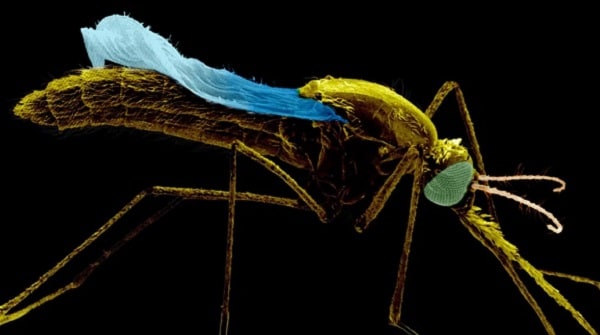
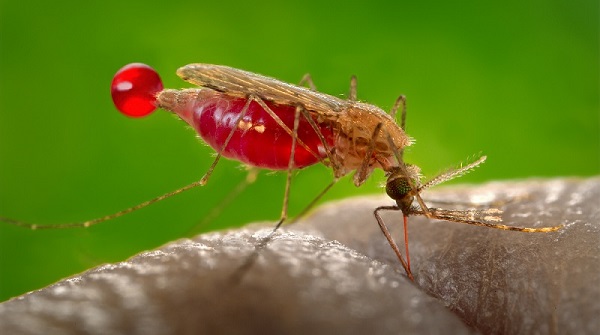
Malaria is caused by infection with any of four species of the protozoan parasite Plasmodium (i.e., P. falciparum, P. vivax, P. ovale, P. malariae). The Plasmodium parasite is transmitted by the bite of an infected anopheline mosquito. Until the 1940s, malaria was endemic in the United States. Since then, malaria case surveillance has been conducted by CDC to monitor malaria infections and patient characteristics and risk factors, to detect locally acquired cases, and to monitor patterns of antimalarial chemoprophylaxis failures among U.S. travelers.

The Malaria Epidemiology Branch at the Centers for Disease Control and Prevention (CDC) makes recommendations for chemoprophylaxis use for U.S. residents traveling to malarious areas. CDC currently recommends chloroquine as the antimalarial drug of choice for those persons visiting malarious areas that do not have reported strains of chloroquine-resistant P. falciparum. Since 1990, U.S. travelers visiting areas where chloroquine-resistance has been reported are advised by CDC to use the antimalarial drugs mefloquine or doxycycline for prophylaxis.

In July 2000, the Food and Drug Administration approved MalaroneTM, a fixed combination of atovaquone and proguanil, for the treatment and prevention of P. falciparum malaria. Based on data that showed the efficacy of Malarone for the prevention of malaria in nonimmune persons, CDC revised its malaria prevention guidelines in November 2000 to add Malarone as one of three antimalarial drug options for persons traveling to areas where chloroquine-resistant P. falciparum has been reported.

To monitor evidence of prophylaxis failure among U.S. travelers, CDC performed an interim analysis of provisional malaria surveillance data on reported cases with onset of illness from August 1, 2000 to December 31, 2000.

Methods
Go to Top

Definition of Terms

The following definitions are used in this report:

  • Laboratory criteria for diagnosis: demonstration of malaria parasites in blood films.
  • Confirmed Case: symptomatic or asymptomatic infection that occurs in the United States in a person who has microscopically confirmed malaria parasitemia, regardless of whether the person had previous attacks of malaria while in other countries. A subsequent attack of malaria is counted as an additional case if the demonstrated Plasmodium species differs from the initially identified species.

This report also uses terminology describing antimalarial prophylaxis regimens:

  • Recommended drugs: one of the four drugs that CDC recommends for travel to malarious areas, which include chloroquine, doxycycline, Malarone, and mefloquine (1).
  • Non-recommended drugs: other drugs that may or may not have antimalarial properties but are not among those recommended by CDC for travelers to malarious areas.

Sources of Data

Data regarding malaria cases are reported to both the National Malaria Surveillance System (NMSS) and the National Notifiable Diseases Surveillance System (2). Although both systems rely on passive reporting, the numbers of reported cases might differ because of differences in the collection and transmission of data and in the timing of case reports. Data received through the NMSS serve as the basis for this report.

NMSS also receives detailed clinical and epidemiologic data regarding each case (e.g., information concerning the area to which the infected person has traveled). Healthcare providers and/or laboratories identify cases of blood-smear-confirmed malaria. Each slide-confirmed case is reported to local and/or state health departments and to CDC on a uniform case report form that contains clinical, laboratory, and epidemiologic information. CDC staff review all report forms at the time of receipt and request additional information if necessary (e.g., when no recent travel to a malarious country is reported). Reports of other cases are telephoned directly by healthcare providers to CDC, usually when assistance with diagnosis or treatment is requested. All cases that have been acquired in the United States are investigated, including all induced and congenital cases and possible introduced or cryptic cases. Information derived from uniform case report forms is entered into a database and analyzed.

Results
Go to Top

General Surveillance

From August 1, 2000 to December 31, 2000, CDC received 398 reports of malaria among persons in the United States through NMSS.

The infecting species of Plasmodium was identified in 353 (88.7%) of these cases (Table 1).

Three hundred ninety-four (99.0%) of the 398 cases were imported. Two hundred forty-six (62.4%) of the 394 cases were in U.S. civilians who acquired the infection outside the United States. The remainder of this report will focus solely on these civilian cases. Of the 246 cases, 153 (62.2%) were acquired in Africa, 45 (18.3%) in the Americas and 36 (14.6%) in Asia (Table 2).

The number of imported cases in U.S. civilians reported by state or territory is shown in Figure 1.

 
 Figure 1. Number of imported malaria cases in U.S. civilians, by state in which the disease was diagnosed – United States, August – December 2000 (n=246)

Use of Chemoprophylaxis in U.S. Civilians with Imported Malaria

Information concerning the use of chemoprophylaxis was known for 224 (91.1%) of the 246 U.S. civilians who had imported malaria. One hundred twenty (53.6%) of the 224 civilians had not taken any chemoprophylaxis and 24 (10.7%) had not taken a drug recommended by CDC for the area visited. Only 73 (32.6%) of the 224 U.S. civilians had taken a medication recommended by CDC (2). Seven (3.1%) persons who took a recommended drug in combination with a nonrecommended drug were excluded from this report.

Of the 73 case-patients who took one of the drugs recommended by CDC, 55 (75.3%) had taken mefloquine weekly and 11 (15.1%) had taken doxycycline daily. Seven (3.1%) case-patients who traveled to areas where chloroquine-resistant malaria had not been documented took chloroquine weekly. None took Malarone.

Of the 24 case-patients who took a nonrecommended antimalarial drug, 19 (79.2%) reported taking chloroquine for travel to areas where chloroquine resistance had been documented.

Malaria Infection After Use of Recommended Prophylaxis

Characteristics of Cases
The characteristics of case-patients who acquired malaria after taking one of the recommended drugs are shown in Table 3.

One of the four Plasmodium species (P. falciparum, P. vivax, P. ovale, P. malariae) was identified in 61 of the 73 case-patients who took a drug recommended by the CDC. Twelve were found to be either of mixed species (n = 2) or the species could not be determined (n = 10) and were excluded from the following analyses.

Cases of P. vivax or P. ovale. Among the 61 U.S. civilians who developed malaria after using recommended chemoprophylaxis, 39 cases (63.9%) were caused by P. vivax (n = 35) or P. ovale (n = 4). Thirty of these cases occurred more than 45 days after the patients returned to the United States and thus were consistent with relapsing infections and do not indicate prophylaxis failures. Nine cases of P. vivax (n = 9) occurred within 45 days after the patient returned to the United States. Details of the country of acquisition, drugs taken, and chemoprophylaxis (if known) are shown in Table 4. No blood specimen was available for testing drug levels in any of these cases.

Cases of P. falciparum or P. malariae. Among the 61 malaria-infected U.S. civilians who took a recommended prophylaxis, 19 (31.1%) had P. falciparum and 3 (4.9%) had P. malariae. Details of the country of acquisition, drugs taken, and chemoprophylaxis (if known; data missing on 5) are shown in Table 4. No blood specimen was available for testing drug levels in any of these cases.

Discussion
Go to Top

Three hundred and ninety-four cases of imported malaria, including 246 in U.S. civilians, were reported to CDC from August to December 2000.

One reason for conducting malaria surveillance is to monitor for failures of chemoprophylaxis, which may indicate the emergence of drug resistance in new areas. However, 144 (64.3%) of the 224 imported malaria cases among U.S. civilians who had information available regarding chemoprophylaxis occurred in persons who were either not taking prophylaxis or were taking nonrecommended prophylaxis for the region to which they were traveling. Of the 73 (32.6%) persons who reported taking recommended prophylaxis, 30 (41.1%) were likely relapses of P. vivax or P. ovale infections that would not be prevented by most of the available drugs such as mefloquine or doxycycline, which are blood schizonticides.

One of the limitations of this report was that some case-surveillance data was missing. Thirty-five (14.2%) of the 246 malaria case surveillance reports of imported malaria in U.S. civilians initially had missing information on chemoprophylaxis use. After contacting the healthcare provider or local/state departments of health, CDC was able to obtain additional information in 11 (31.4%) cases.

Denominator data were not available on the number of travelers who took the recommended antimalarial drug regimens and therefore it was not possible to make comparisons of prophylaxis failure rates among the different drugs. It is suspected that relatively small numbers of persons are using Malarone during this reporting period because it has just been approved in July 2000. In addition, the higher number of prophylaxis failures observed for mefloquine is likely related to a greater number of travelers using this medication. For example, a cross-sectional survey of U.S. airline passengers visiting East Africa in 1997 showed that 85% reported using mefloquine (M. Parise, personal communication).

Finally, the malaria-case surveillance report form used during the period August to December 2000 did not routinely include case-patient data on adherence to prophylactic regimens and reasons for nonadherence to prophylaxis. Any information presented on adherence to chemoprophylaxis regimens (Table 4) was obtained from CDC epidemiologists' notes during case consultation with clinicians or laboratorians. A new malaria-case surveillance report form that includes information on adherence to chemoprophylaxis was recently approved by the Office and Management of Budget (OMB) in July 2001. The use of the new surveillance form will facilitate future interpretation of data on potential chemoprophylaxis failures.

Acknowledgement
Go to Top

The authors gratefully acknowledge those health-care providers, laboratories, and local or state health departments for reporting data to the CDC.

References
Go to Top
  1. Centers for Disease Control and Prevention. Health information for international travel, 2001-2001. Atlanta: US Department of Health and Human Services, Public Health Service, 2001.
  2. Mungai et al., Malaria Surveillance - United States, 1996. In: CDC Surveillance Summaries, March 30, 2001. MMWR 2001; 50 (No. SS-1): 1-22.
Tables
Go to Top

Table 1. Total number of reported malaria cases -- United States, August - December 2000

Table 2. Number of imported malaria cases in U.S. civilians, by Plasmodium species and area of acquisition - United States, August - December 2000

Table 3. Characteristics of imported malaria cases in U.S. civilians who took recommended prophylactic regimens (n=73), August - December 2000

Table 4. Imported non-relapsing* malaria infections in U.S. civilians after use of recommended prophylaxis, (n = 33)

Table 5. Number of prophylactic failures, by Plasmodium species and recommended drug -- United States, August - December 2000


Top

Home | Professional Info | Public Info  
  About DPD | Recent Publications | DPD Search

CDC Home | CDC Search | CDC Health Topics A-Z

This page last reviewed November 8, 2001

Centers for Disease Control and Prevention
National Center for Infectious Diseases
Division of Parasitic Diseases

Privacy Policy | Accessibility