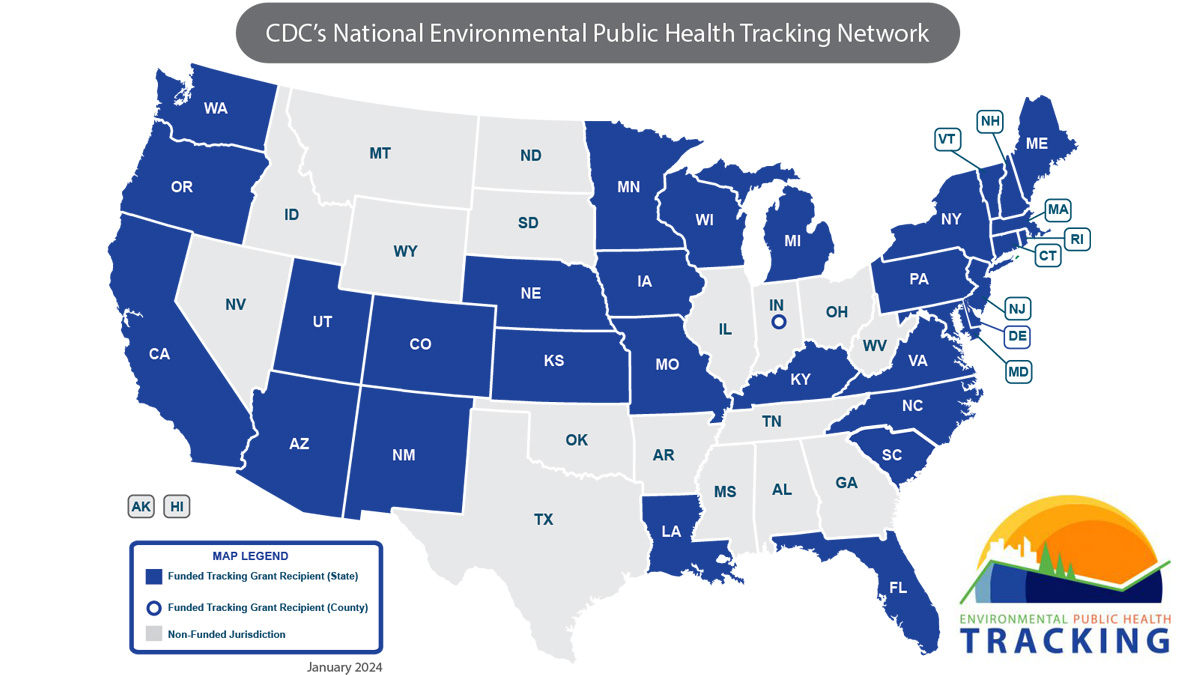
California's Success
Identifying the increases in preterm birth rates in Fresno County, California
What is the problem?
Research shows that preterm birth is associated with the mother's exposure to traffic pollutants and lead. A routine review of data on the California Tracking Network revealed a pattern in the risk of preterm birth in Fresno County, one of the major population centers in the state's Central Valley area.
What did Tracking do?
California's Environmental Health Tracking Network informed the Fresno Department of Public Health of the trends. The local health department asked the Tracking Network for more data about:
- Preterm birth trends reported by race and ethnicity.
- Maternal Infant Health (MIH) indicators, including very preterm birth (less than 32 weeks gestation).
- Rates by census tracts.
Improved public health
Fresno County used the information to identify locations for targeting activities that are related to childhood lead poisoning, air quality, and asthma. Fresno County officials reported that the data and assistance from the tracking network were very helpful to the local childhood lead poisoning prevention program.
Using a traffic tool in San Francisco city planning
What is the problem?
The San Francisco Planning Department needed a way to decide when to refer project sponsors or developers to the San Francisco Department of Public Health. The health department assesses the risk associated with exposure to roadway-related air pollutants, such as ozone, particulate matter, and nitrogen dioxide. These air pollutants can be triggers for asthma.
What did Tracking do?
The California Tracking Program developed a traffic tool that the Planning Department used as a screening instrument. The tool helped the Planning Department determine how close high-traffic roads were to a proposed project development. When residential or other sensitive uses such as a community space are proposed for sites within 500 feet of roads that more than 100,000 cars travel on daily, the Planning Department is required to perform a risk assessment to fully understand the potential effects of the project before approving it.
Improved public health
Local stakeholders used the California Tracking Program's traffic tool to identify and prevent potentially harmful environmental risks in city planning.
Improving community access to useful information
What is the problem?
Variations in health status most frequently occur at the community level, but health information often is available only at the county level. The challenge is how to use existing data to increase the public's knowledge about how the environment affects their community's health, without compromising individual privacy. The affected communities should be able to gain access to this information.
What did Tracking do?
The California Tracking Network used special analytic and mapping techniques to locate areas in Alameda County with:
- high rates of preterm birth.
- high rates of full term births with low birth weight.
- a range of asthma indicators.
The staff explored possible relationships between these outcomes and environmental hazards. The project demonstrated how the California Tracking Network can identify elevated rates of community health outcomes while maintaining individual confidentiality. The California Tracking Network also identified disparities in rates by race and ethnicity, income, and geography.
Improved public health
The California Tracking Program partnered with the Urban Strategies Council and several other organizations in a community collaborative called InfoAlameda-County (www.infoalamedacounty.org). The collaboration aimed to make these data available publicly and to provide technical assistance to promote equity and empowerment for low-income neighborhoods and communities of color in Alameda County. The information generated by the tracking network was incorporated into the InfoAlamedaCounty.org interactive mapping Web site so that community residents could continue to access the data even after the project ended.
Heat Wave Preparedness
What is the problem?
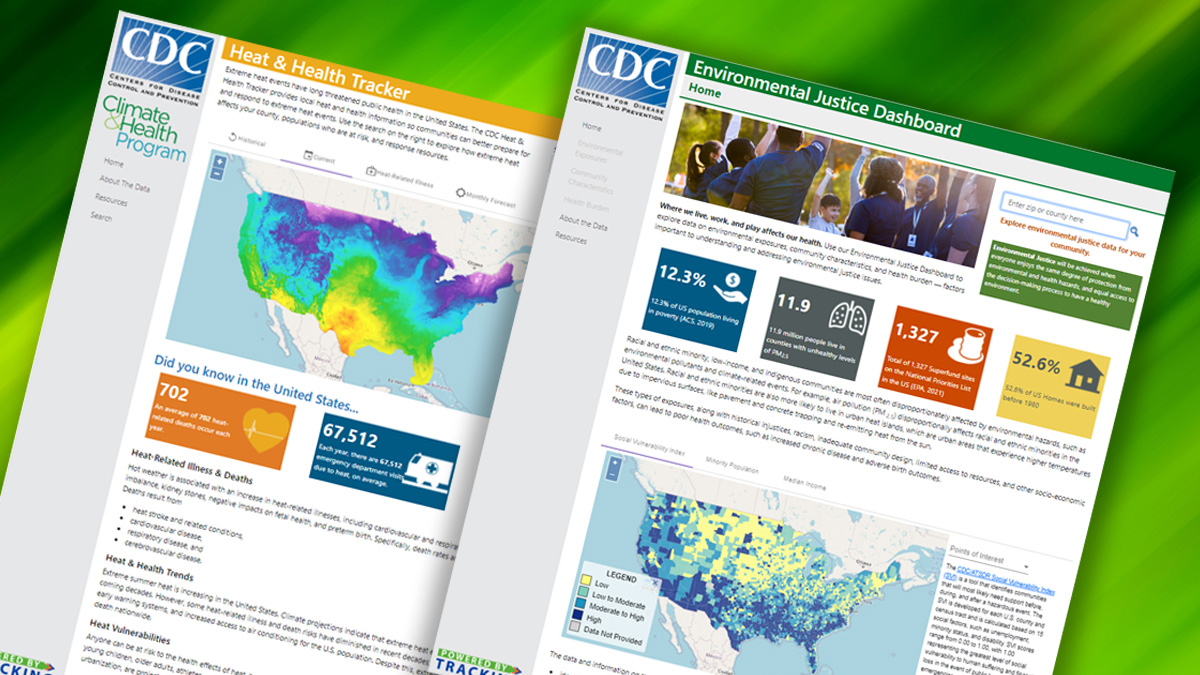
During the California 2006 heat wave, there were 140 confirmed deaths and an additional 515 suspected deaths due to extreme heat. An estimated $133 million in health-related costs was attributed to the heat wave, along with an estimated $500 million in agriculture-related costs from the loss of livestock. Heat waves have and will continue to impact all regions of California, including urban, rural, inland, and coastal areas. In California, heat waves are expected to become longer and more frequent over time.
What did Tracking do?
The California Tracking Program worked with the Bay Area National Weather Service (NWS) regional office to conduct a study to determine if heat alerts accurately predicted times when people suffered the most heat illness. NWS monitors temperature and issues heat alerts. The heat alerts serve as triggers for cities and counties to take preventative action, such as opening cooling centers where the public can gather for life-saving relief from the heat. The California Tracking Program showed that heat-related emergency room visits peaked immediately following heat alerts for the San Jose area and subsided when the heat alerts were discontinued. Due to budget cuts, the City of San Jose wanted scientific evidence from NWS to show there was a need for cooling centers during heat waves. Without this proof, decision-makers would not approve the opening of cooling centers as part of the city's heat alert response plan for the upcoming summer.
Improved public health
NWS presented the California Tracking Program study findings to City of San Jose decision-makers. Based on this evidence, the city decided to allow cooling centers to open as part of the city's heat alert response. The California Tracking Program is partnering with NWS to conduct similar studies for other regions in California, including Los Angeles. This information will help cities to make decisions about heat wave preparedness policies and help NWS refine its heat alert system for each region.
California's Grantee Profile
[PDF 335 KB]Contact Us:
- Centers for Disease Control and Prevention
1600 Clifton Rd
Atlanta, GA 30333 - 800-CDC-INFO
(800-232-4636)
TTY: (888) 232-6348
Contact CDC-INFO