Skip Navigation Links
Centers for Disease Control and Prevention
Safer Healthier People
 CDC Home Search Health Topics A-Z

National Center for Environmental Health: Radiation Studies
Radiation Studies Home
International Projects
Nasopharyngeal Radium Irradiation
Radon Research
Links to Related
Web Sites and Resources
 

On the CDC public health emergency response Web site:
Radiation Emergency Response


Profile showing location of thyroid
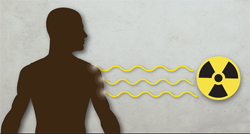
Because all people in the United States who were alive since 1951 received some  radiation exposure from fallout, some people may have an increased risk of cancer from this exposure, in particular, thyroid cancer. CDC and NCI scientists believe that although the potential for developing thyroid cancer from exposure to global fallout is small, it is important for people to be aware of the risks.

Iodine-131, called "I-131," which exposes the thyroid gland for about 2 months after each nuclear test, was the most important harmful radioactive material (isotope) in global fallout. People exposed to I-131, especially during childhood, may have an increased risk of thyroid disease, including thyroid cancer many years later. Thyroid cancer is uncommon and is usually curable. NCI has more information about I-131 and thyroid disease at its Web site at www.cancer.gov/i131/.

Other radioactive materials in fallout, such as strontium-90, can affect a person’s bone marrow and lead to an increased risk for leukemia. However all studies have shown the risk to be very small.  Scientists continue to study the risks from exposure to these isotopes and others.


Radioactive Fallout from Global Weapons Testing
About Global Fallout

How People Were Exposed

How Much Radiation Exposure People May Have Received

How Global Fallout Can Affect Your Health

What You Can Do If You're Concerned About Exposure

About the CDC/NCI Global Fallout Study

Resources


> Air Pollution and Respiratory Health > Environmental Public Health Tracking
> Asthma > Health Studies
> Division of Laboratory Sciences > Mold
> Emergency & Environmental Health Services >
>
Radiation Studies
U.S.-Mexico Border Environmental
> Environmental Hazards & Health Effects Health
 

NCEH Home| Programs | Publications  | Contact Us | Privacy | About NCEH
CDC Home
| CDC Search | Health Topics A-Z

This page last reviewed October 10, 2007