Skip directly to search Skip directly to A to Z list Skip directly to navigation Skip directly to site content Skip directly to page options
CDC Home

Drinking Water

A Drop of News – newsletter highlighting state and local waterborne disease surveillance activities and informal CDC updates on waterborne disease and outbreak surveillance initiatives

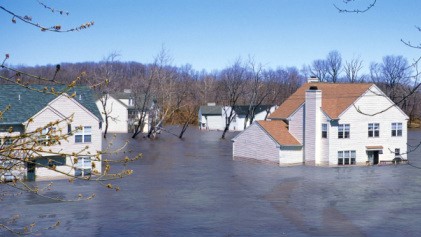
A Survey of the Quality of Water Drawn from Domestic Wells in Nine Midwest States [PDF - 760 KB] – 1994 survey to assess the presence of bacteria and chemicals in states severely affected by flooding in 1993

Drinking Water – CDC’s drinking water Web site; topics include public and private water systems, bottled water, and water fluoridation

NEW!
Drinking Water Advisory Communication Toolbox – provides a protocol and practical guide for communicating with stakeholders and the public about water advisories that is based on research and identified practices

NEW!
Emergency Water Supply Planning Guide for Hospitals and Health Care Facilities – helps health care facilities regardless of size or patient capacity develop Emergency Water Supply Plans as part of their overall emergency operations plans

Environmental Public Health Online Courses (EPHOC) – comprehensive online/on-demand package of courses for environmental public health practitioners including a module on potable water

Healthy Housing Reference Manual – revision provides information about the impact of housing on health and safety and includes a chapter on rural water supplies and water-quality issues

Parasites in Water – CDC information on parasites in drinking and recreational water

Public Health Issues Associated With Small Drinking Water Systems Not Regulated by the Safe Drinking Water – environmental public health concerns associated with small (i.e., not federally regulated) drinking water systems

Safe Water System – water quality intervention using technologies appropriate for the developing world to make water and water storage safe

South Bass Island Assessment [PDF - 1 MB] – environmental health assessment in 2004 identified potential sources of water contamination on Lake Erie's South Bass Island

Water Security – This section from Emergency and Terrorism Preparedness for Environmental Health Practitioners provides information on the protection of water supplies as well as on responding to contamination threats and incidents.

MMWR - Morbidity and Mortality Weekly Reports

Community Health Impact of Extended Loss of Water Service --- Alabama, January 2010

Surveillance for Waterborne Disease and Outbreaks Associated with Drinking Water and Water Not Intended for Drinking — United States, 2005–2006

Surveillance for Waterborne Disease and Outbreaks Associated with Drinking Water and Water Not Intended for Drinking — United States, 2003–2004

Reports by Environmental Public Health Leadership Institute (EPHLI) Graduates

These reports were prepared by graduates of CDC’s Environmental Public Health Leadership Institute. These documents have not been revised or edited to conform to agency standards. The findings and conclusions in these reports are those of the author(s) and do not necessarily represent the views of the Centers for Disease Control and Prevention.

Building Drinking Water Capacity in Native Alaskan Villages [DOC - 395 KB]

Developing a Non-Public Water Supply Program for the State of Georgia [DOC - 1.72 MB]

Developing a Tool to Help States Address Cyanobacteria Harmful Algal Blooms (HABs) in Freshwater and Drinking Water [PDF - 354 KB]

Enhancing Public Support of a Regional Source Water Monitoring Governance Structure in the Lake Huron to Lake Erie Corridor [DOC - 447 KB]

Examining Water Reuse Implementation Challenges in Texas: Identification of Education Deficits [PDF - 2.6 MB]

Implementing a Safe Drinking Water Program for Private Individual Water Wells [DOC - 328 KB]

Improving Data Quality and Consistency in the State of Alaska’s Drinking Water Program [DOC - 524 KB]

Increasing Public Awareness of Potential Groundwater Contamination from Pharmaceuticals and Personal Care Products at Homes with Private Wells and Onsite Sewage Treatment Systems [PDF - 285 KB]

Leveraging Local Health Departments to Provide GPS Coordinates on Well Testing Forms [PDF - 266 KB]

Mutual Aid Agreement for Water and Sewer Utilities [DOC - 420 KB]

New Deliverables for Virginia’s Onsite Sewage and Water Supply Programs: A Roadmap for Changing Services [DOC - 733 KB]

Public Drinking Water: Building Consumer Confidence through Education [DOC - 363 KB]

Public Health Protection for Private Unregulated Water Systems [DOC - 473 KB]

Public Health Significance of Unregulated and Untested Private Potable Wells [DOC - 3.63 MB]

Reducing Exposure to Arsenic in Drinking Water [DOC - 300 KB]

Utilizing the Media to Enhance Florida’s Educational Outreach Program for the Owners of Private Water Wells [PDF - 300 KB]

Links to Information from outside CDC

Best Practice: Well Water Regulations for the County of Bucks, PA [DOC - 132 KB] (Bucks County Department of Health) – regulations developed to establish minimum standards for location, construction, modification and abandonment of individual residential drinking water supply wells and system installation for the protection of the health and welfare of the public [developed with funding from the EHS capacity-building program]

Center for Watershed Protection – nonprofit 501(c)3 corporation that provides technical tools for protecting some of the nation’s most precious natural resources: our streams, lakes, and rivers

Copper in Drinking Water (National Academy of Sciences Commission on Life Sciences) – document about copper in drinking water

Guidelines and Requirements for Safe Handling of Drinking Water, Ice, and Dispensers [PDF - 22 KB] (Maricopa County, Arizona) – safe handling of drinking water, ice, and dispensers

Liquid Assets 2000: America's Water Resources at a Turning Point (U.S. Environmental Protection Agency) – snapshot of the economic value of clean water, problems faced in the new millennium, and actions to protect and restore the nation's water resources

National Contaminant Occurrence Database (NCOD) (U.S. Environmental Protection Agency) – database containing information about the occurrences of contaminants in public water systems

Safe Drinking Water Act (SDWA) (U.S. Environmental Protection Agency) – federal law that ensures the quality of Americans' drinking water

Safe Drinking Water is Essential (National Academy of Sciences' Koshland Science Museum) – examines the state of the world's water supply (sources, treatment, and distribution of drinking water) and what can be done to improve it

Safer Water (Rollins School of Public Health) – efforts to bring safe water to the developing world

The Stormwater Manager’s Resource Center (SMRC) – technical assistance on stormwater management issues

Toxic Substances Hydrology Program (U.S. Geological Survey) – provides objective scientific information on environmental contamination to improve characterization and management of contaminated sites, to protect human and environmental health, and to reduce potential future contamination problems

Top of Page


Contact Us:
  • Centers for Disease Control and Prevention
    1600 Clifton Rd
    Atlanta, GA 30333
  • 800-CDC-INFO
    (800-232-4636)
    TTY: (888) 232-6348
  • New Hours of Operation
    8am-8pm ET/Monday-Friday
    Closed Holidays
  • cdcinfo@cdc.gov
USA.gov: The U.S. Government's Official Web PortalDepartment of Health and Human Services
Centers for Disease Control and Prevention   1600 Clifton Rd. Atlanta, GA 30333, USA
800-CDC-INFO (800-232-4636) TTY: (888) 232-6348, New Hours of Operation 8am-8pm ET/Monday-Friday
Closed Holidays - cdcinfo@cdc.gov
A-Z Index
  1. A
  2. B
  3. C
  4. D
  5. E
  6. F
  7. G
  8. H
  9. I
  10. J
  11. K
  12. L
  13. M
  14. N
  15. O
  16. P
  17. Q
  18. R
  19. S
  20. T
  21. U
  22. V
  23. W
  24. X
  25. Y
  26. Z
  27. #