Skip directly to search Skip directly to A to Z list Skip directly to navigation Skip directly to site content Skip directly to page options
CDC Home

Diseases

Which diseases are considered Neglected Tropical Diseases?

Neglected Tropical Diseases (NTDs), a group of infectious diseases, include:

* Disease is controllable by mass drug administration (MDA) or effective intervention

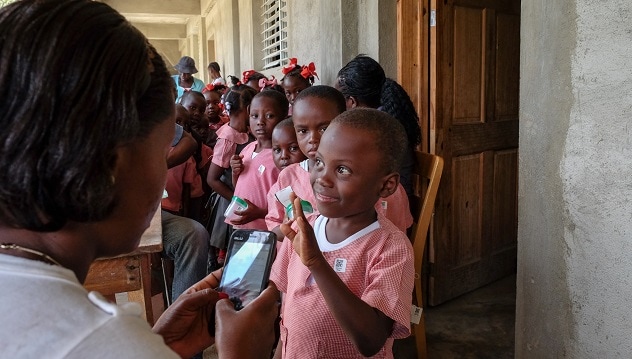
Six of the infections caused by NTDs (notated by asterisk, listed above) can be controlled or even eliminated through mass administration of safe and effective medicines (mass drug administration, MDA), or other, effective interventions. These diseases are known as targeted or "tool ready" NTDs. Along with MDA and interventions, efforts to control the vectors (e.g. mosquitoes, black flies) that transmit these diseases and to improve basic water, sanitation, and hygiene, are highly effective strategies against these NTDs.

MDA-based programs are considered one of the best buys in public health – with a low cost of about 10-50 cents per person per year – with the added benefit of helping treat or prevent several different diseases. These programs have benefited from donations of medications by major pharmaceutical companies including Eisai, GlaxoSmithKline, Johnson & Johnson, Merck and Co., Inc, and Pfizer, support from the United States Government (led by the United States Agency of International Development), the Bill and Melinda Gates Foundation, the Japan International Cooperation Agency, and the U.K. Department of International Development, among others

Who is Most Affected?

Seven of the most common NTDs can be found in a number of countries, primarily in low and middle income countries of Africa, Asia, and Latin America. NTDs affect the world’s poorest people and are especially common in tropical areas, where people have little access to clean water or proper ways to dispose of human waste. Women and children who live in unsanitary environments face the biggest threat of NTDs. The interactive map below illustrates the geographic distribution of the seven most common NTDs.

A key for the flash map above. The information from this map is available in a static image or in a table that are linked below.

*Global Overlap of six of the common NTDs. Specifically guinea worm disease, lymphatic filariasis, onchocerciasis, schistosomiasis, soil-transmitted helminths, trachoma.

**Soil-transmitted helminth infections can be caused by three different worms, all treated the same way.
Static Map | Content from Map

 
Contact Us:
  • Centers for Disease Control and Prevention
    1600 Clifton Rd
    Atlanta, GA 30333
  • 800-CDC-INFO
    (800-232-4636)
    TTY: (888) 232-6348
    24 Hours/Every Day
  • cdcinfo@cdc.gov
  • Page last reviewed June 6, 2011
  • Page last updated June 6, 2011
  • Content source: Global Health - Division of Parasitic Diseases and Malaria
  • Notice: Linking to a non-federal site does not constitute an endorsement by HHS, CDC or any of its employees of the sponsors or the information and products presented on the site.
USA.gov: The U.S. Government's Official Web PortalDepartment of Health and Human Services
Centers for Disease Control and Prevention   1600 Clifton Rd. Atlanta, GA 30333, USA
800-CDC-INFO (800-232-4636) TTY: (888) 232-6348 - Contact CDC–INFO
A-Z Index
  1. A
  2. B
  3. C
  4. D
  5. E
  6. F
  7. G
  8. H
  9. I
  10. J
  11. K
  12. L
  13. M
  14. N
  15. O
  16. P
  17. Q
  18. R
  19. S
  20. T
  21. U
  22. V
  23. W
  24. X
  25. Y
  26. Z
  27. #