Skip Navigation Links
  Home | About CDC | Press Room | A-Z Index | Contact Us
CDC Centers for Disease Control and Prevention Home Page
CDC en Español
Search:  
National Breast and Cervical Cancer Early Detection Program
divider
E-Mail Icon E-mail this page
Printer Friendly Icon Printer-friendly version
divider
 View by Topic
bullet About the Program
bullet Find a Local Program
bullet Program Highlights
bullet Reimbursement Policy
bullet Screening Program Data
bullet Publications
bullet Cervical Cancer and Specific Populations
bullet Training
bullet Legislation
bullet Partners
bullet Related Links

Contact Information Centers for Disease
Control and Prevention
Division of Cancer
Prevention and Control
4770 Buford Hwy, NE
MS K-64
Atlanta, GA 30341-3717

Call: 1 (800) CDC-INFO
TTY: 1 (888) 232-6348
FAX: (770) 488-4760

E-mail: cdcinfo@cdc.gov

Submit a Question Online

Chinese American Women

  • Cambodian American
  • Chinese American
  • Filipino American
  • Korean American
  • Native Hawaiian
  • Vietnamese American
  • Factors That May Lead to Being Screened Rarely or Never1

    Knowledge, Attitude, and Belief Barriers

    • Language: little to no English proficiency
    • Lack of specific symptoms or pain; feeling healthy
    • For elderly women, not thinking the Pap test applies to them

    External and Other Barriers

    • Access to health care
      • No regular health care provider
      • No physician referral or recommendation for Pap test
    • Acculturation: Short length of time in the United States

    Current Research on Outreach/Intervention Strategies1

    Logistics

    • Outreach intervention strategies should address access barriers, cost and insurance, and helping women to have a specific provider.


    • Outreach efforts should provide information on places or clinics to go for low-cost screening tests.


    • Community resources should be used in outreach efforts.

    Beliefs/Culture

    • The cultural concepts of traditional Chinese medicine, the yin and yang principles, should be applied to cancer screening behavior. Chinese are often attuned to taking tonic herbs to strengthen resistance to disease and to improve overall health and feelings of well-being. This holistic approach to health can be applied to the regular cancer screening behaviors as a concept of prevention in the Chinese culture.

    Health Professionals

    • Inreach with Chinese physicians should include creating educational materials about cancer prevention to overcome the notion that because nothing is wrong with the patient, no tests are necessary.


    • Reminder systems for physicians can be set up to promote regular cancer screening in addition to general checkup visits, and computer follow-up protocols can be installed to save physicians' time.

    Message Development

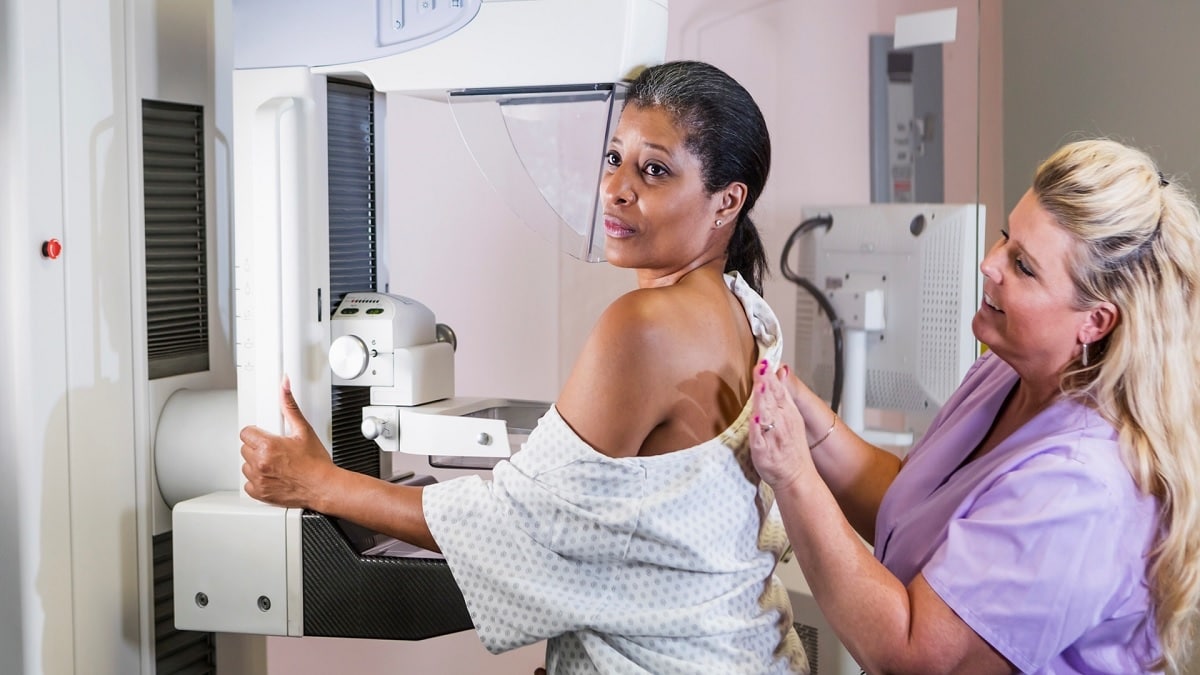
    • Messages should include resources available and information about staying healthy for the sake of the family. Messages should also address overcoming the concept that "because I am healthy, I do not need screening tests." Messages should also educate women about how to lower the anxiety of feeling discomfort during mammography and the embarrassment of undergoing Pap tests.

    Work Cited

    1. Lee M. Breast and cervical cancer early detection in Chinese American women. Asian American and Pacific Islander Journal of Health 6(2):351-357, 1998.
    Page last reviewed: June 21, 2007
    Page last updated: June 21, 2007
    Content source: Division of Cancer Prevention and Control, National Center for Chronic Disease Prevention and Health Promotion
      Home | Policies and Regulations | Disclaimer | e-Government | FOIA | Contact Us
    Safer, Healthier People

    Centers for Disease Control and Prevention
    1600 Clifton Rd, Atlanta, GA 30333, U.S.A.
    Public Inquiries: 1-800-CDC-INFO (232-4636); 1-888-232-6348 (TTY)
    USA.govDHHS Department of Health
    and Human Services