Skip directly to search Skip directly to A to Z list Skip directly to navigation Skip directly to site content Skip directly to page options
CDC Home

Colorectal Cancer Screening Rates

Prevention and Early Detection: Keys to Reducing Deaths

Reducing the number of deaths from colorectal cancer depends on detecting and removing precancerous colorectal polyps, as well as detecting and treating the cancer in its early stages.

  • Colorectal cancer can be prevented by removing precancerous polyps (abnormal growths), which can be present in the colon for as many as 10 years before invasive cancer develops.
  • When colorectal cancer is found early and treated, the 5-year relative survival rate is 90%. Because screening rates are low, less than 40% of colorectal cancers are found early.
  • One U.S. clinical trial reported a 33% reduction in colorectal cancer deaths and a 20% reduction in colorectal cancer incidence among people offered an annual fecal occult blood test (FOBT).

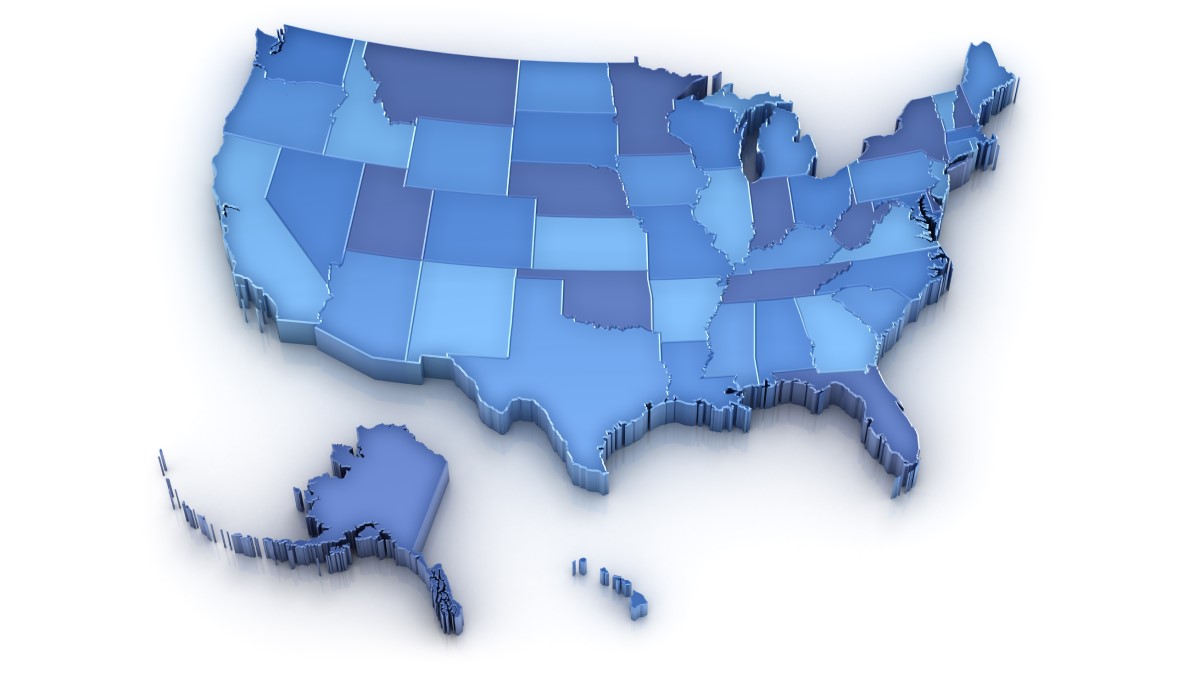
Percentage* of adults aged ≥50 years who reported receiving a FOBT within the past year and/or a lower endoscopy within the past 10 years, by state—Behavioral Risk Factor Surveillance System (BRFSS), United States, 2006

Map shows the percentage of adults aged 50 and older who reported receiving a fecal occult blood test within the past year and/or lower endoscopy within the past 10 years, by state, in 2006.
Color on Map Interval States
Light blue Less than 50.0 None
Medium blue 50.1 to 60.0 Alabama, Alaska, Arizona, Arkansas, California, Hawaii, Idaho, Illinois, Indiana, Iowa, Kansas, Louisiana, Mississippi, Missouri, Montana, Nebraska, Nevada, New Jersey, New Mexico, North Dakota, Oklahoma, Ohio, Pennsylvania, South Dakota, Texas, Tennessee, West Virginia, and Wyoming
Royal blue 60.1 to 70.0 Colorado, Delaware, District of Columbia, Florida, Georgia, Kentucky, Maine, Maryland, Massachusetts, Michigan, Minnesota, New Hampshire, New York, North Carolina, Oregon, South Carolina, Utah, Vermont, Virginia, Washington, and Wisconsin
Dark blue 70.1 and higher Connecticut and Rhode Island

*Age-standardized to the 2006 BRFSS population age ≥ 50.
Lower endoscopy refers to flexible sigmoidoscopy or colonoscopy.
Source: Centers for Disease Control and Prevention (CDC). Behavioral Risk Factor Surveillance System Survey Data. Atlanta, Georgia: U.S. Department of Health and Human Services, Centers for Disease Control and Prevention, 2007.

Percentage* of adults aged ≥50 years who reported receiving a FOBT within the past year and/or a lower endoscopy within the past 10 years, by state—Behavioral Risk Factor Surveillance System (BRFSS), United States, 2004

Map shows percentage of adults 50 years or older who reported receiving a fecal occult blood test within 12 months preceding survey and/or lower endoscopy within 10 years preceding the survey, by state, in 2004.
Color on Map Interval States
Light blue Less than 50.0 Arkansas, Idaho, Mississippi, Nevada, and Oklahoma
Medium blue 50.1 to 60.0 Alabama, Alaska, Arizona, California, Colorado, Florida, Georgia, Iowa, Kansas, Kentucky, Illinois, Indiana, Louisiana, Missouri, Montana, Nebraska, New Jersey, New Mexico, New York, North Dakota, Ohio, Oregon, Pennsylvania, South Carolina, South Dakota, Tennessee, Texas, Utah, West Virginia, and Wyoming
Royal blue 60.1 to 70.0 Connecticut, Delaware, District of Columbia, Maine, Maryland, Massachusetts, Michigan, Minnesota, New Hampshire, North Carolina, Rhode Island, Vermont, Virginia, Washington, and Wisconsin
Dark blue 70.1 and higher None
Gray No data Hawaii

*Age-standardized to the 2006 BRFSS population age ≥ 50.
Lower endoscopy refers to flexible sigmoidoscopy or colonoscopy.
Source: Centers for Disease Control and Prevention (CDC). Behavioral Risk Factor Surveillance System Survey Data. Atlanta, Georgia: U.S. Department of Health and Human Services, Centers for Disease Control and Prevention, 2005.

Underuse of Screening

  • Colorectal cancer screening remains underused, despite the availability of effective screening tests.
  • Screening for colorectal cancer lags far behind screening for breast and cervical cancers.
  • Findings from the National Health Interview Survey (NHIS), which is administered by CDC, indicate that in 2005, only 50% of U.S. adults age 50 or older had undergone a sigmoidoscopy or colonoscopy within the previous 10 years or had used a fecal occult blood test (FOBT) home test kit within the preceding year.
  • Screening for colorectal cancer was particularly low among those respondents who lacked health insurance, those with no usual source of health care, and those who reported no doctor's visits within the preceding year.
  • As many as 60% of deaths from colorectal cancer could be prevented if everyone age 50 and older were screened regularly.

For more information, visit Screening and Risk Factors Report.

 
View page in
1 in 3 adults has not been screened for colorectal cancer as recommended. CDC Vital  Signs
Contact Us:
  • Centers for Disease Control and Prevention
    Division of Cancer Prevention and Control
    4770 Buford Hwy NE
    MS K-64
    Atlanta, GA 30341
  • 800-CDC-INFO
    (800-232-4636)
    TTY: (888) 232-6348
    8am–8pm ET
    Monday–Friday
    Closed on Holidays
  • cdcinfo@cdc.gov
USA.gov: The U.S. Government's Official Web PortalDepartment of Health and Human Services
Centers for Disease Control and Prevention   1600 Clifton Rd. Atlanta, GA 30333, USA
800-CDC-INFO (800-232-4636) TTY: (888) 232-6348, New Hours of Operation 8am-8pm ET/Monday-Friday
Closed Holidays - cdcinfo@cdc.gov
A-Z Index
  1. A
  2. B
  3. C
  4. D
  5. E
  6. F
  7. G
  8. H
  9. I
  10. J
  11. K
  12. L
  13. M
  14. N
  15. O
  16. P
  17. Q
  18. R
  19. S
  20. T
  21. U
  22. V
  23. W
  24. X
  25. Y
  26. Z
  27. #