Primary Navigation for the CDC Web Site
CDC en Español
Colorectal (Colon) Cancer
divider
E-Mail Icon E-mail this page
Printer Friendly Icon Printer-friendly version
divider
 View by Topic
bullet Basic Information
bullet Statistics
bullet Compare by Race and Ethnicity
bullet Risk by Age
bullet Compare by State
bullet Screening Rates
bullet Trends
bullet What CDC is Doing
bullet Screen for Life Campaign
bullet Publications
bullet Related Links
bullet Glossary

Contact Information
Centers for Disease
Control and Prevention
Division of Cancer
Prevention and Control
4770 Buford Hwy, NE
MS K-64
Atlanta, GA 30341-3717

Call: 1 (800) CDC-INFO
TTY: 1 (888) 232-6348
FAX: (770) 488-4760

E-mail: cdcinfo@cdc.gov

Screening Capacity

In 2000, CDC began a national assessment of the capacity to perform colorectal cancer screening tests and follow-up for the U.S. population aged 50 and older. This national assessment concluded in 2004. With CDC technical support, state-level capacity assessments were initiated in 15 states beginning in 2002. State-level capacity assessments comprise:

  • The State-level Survey of Endoscopic Capacity (SECAP)
  • A forecasting model
  • A comparison of SECAP and forecasting model results

Both the national- and state-level capacity assessments provide baseline data for the planning of widespread colorectal cancer screening at the national, state, and local levels. For the purposes of the SECAP study, screening capacity is defined as the availability of endoscopists to perform screening by flexible sigmoidoscopy and/or colonoscopy.

Study Objectives

Each of these objectives applies to the national- and state-level studies.

  • Determine the current number of sigmoidoscopies and colonoscopies performed.
  • Determine the potential number of sigmoidoscopies and colonoscopies that could be performed.
  • Describe the difference in current and potential volume (available capacity) of colorectal cancer screening.
  • Estimate the number of persons currently unscreened for colorectal cancer.
  • Estimate the number of tests needed to screen the unscreened for colorectal cancer.
  • Compare the available capacity to test need to make an overall assessment of the capacity to provide colorectal cancer screening to the eligible population.
State-Level Survey of Endoscopic Capacity (SECAP) Sites
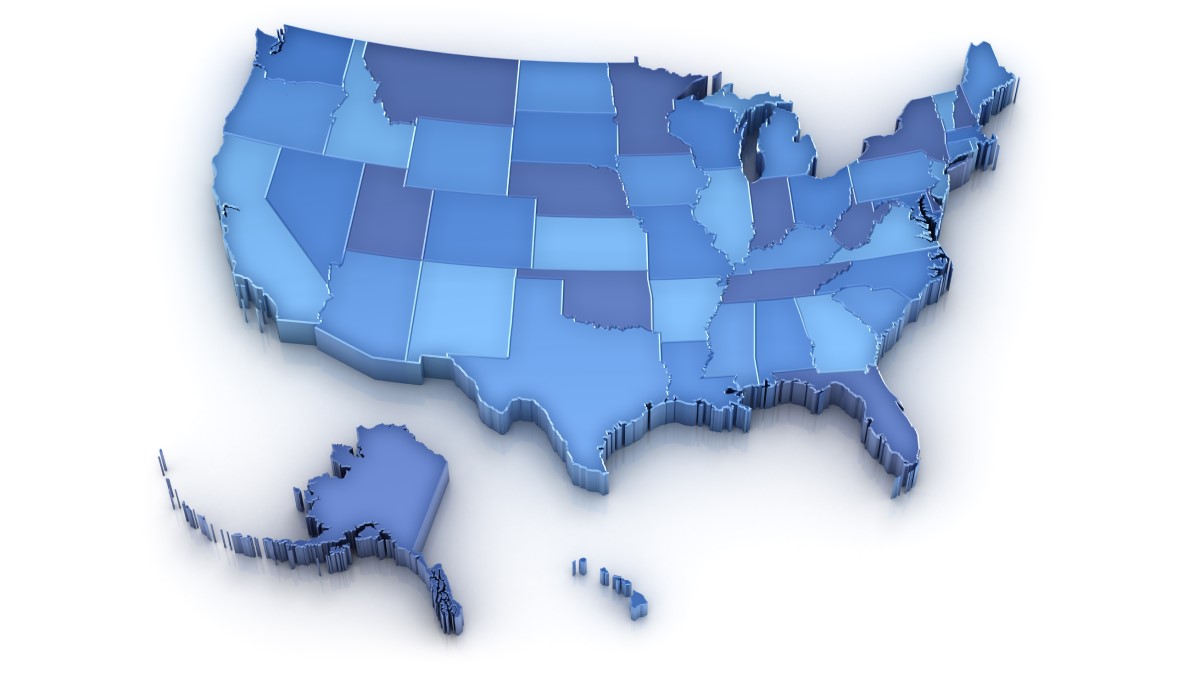
This map of the United States shows the locations of the sites of the state-level survey of endoscopic capacity. Year 1 sites are highlighted in the lightest color. During year 1 of the study, Iowa, Michigan and Texas were sites. Year 2 sites are highlighted with a medium color. During year 2, Maryland, Massachusetts, Minnesota, New Mexico, New York and Washington were sites. Year 3 sites are highlighted in the darkest color. During year 3, Colorado, Georgia, Maine, North Carolina, Ohio and South Carolina were sites.
Year 1 States
(2002-2003)
Year 2 States
(2003-2004)
Year 3 States
(2004-2005)
Iowa
Michigan
Texas
Maryland
Massachusetts
Minnesota
New Mexico
New York
Washington
Colorado
Georgia
Maine
North Carolina
Ohio
South Carolina


Methods

The colorectal cancer capacity study began with the development of the study protocol and survey instruments, the design of the sampling frame, and the design of a forecasting model.

The capacity assessment includes two separate but related research efforts:

Survey of Endoscopic Capacity (SECAP) conducted among U.S. physician practices to determine the current volume of sigmoidoscopies and colonoscopies performed.

down arrow
Survey instruments were designed in draft and reviewed by external practicing endoscopists of all specialties and by recognized colorectal cancer screening experts.
down arrow
Next, the survey instruments were pre-tested and then approved by the CDC Institutional Review Board for protection of human subjects and the U.S. Office of Management and Budget under the Paperwork Reduction Act.
down arrow
The sampling frame for SECAP included all U.S. medical facilities known to have purchased or leased lower endoscopic (sigmoidoscopy and colonoscopy) equipment between January 1, 1996, and December 31, 2000. For the state studies, the sampling frame was extended to include purchases/leases through 2002. This sampling frame is protected by legal agreements as proprietary and sensitive business information.
down arrow
After physician practices were selected from the sampling frame, a telephone screening questionnaire was administered to confirm study eligibility and to identify the most appropriate person at the practice site to receive the mail survey.
down arrow
A self-administered questionnaire survey was then sent by Federal Express to the identified respondent. Nationally, 74 percent of surveys were returned. Nationally, 82 percent of the survey respondents were physicians. Of those states that have been surveyed to date, between 79 percent and 91 percent of surveys have been returned.
down arrow
Forecasting Model used to describe the unscreened population.
down arrow
To determine the number of persons currently unscreened for colorectal cancer, we first estimated the total population 50 years and older and then identified and removed persons at high risk for colorectal cancer. This left an estimate of the population 50 years and older at average risk for colorectal cancer. We determined the number of person who had already been screened based on National Health Interview Survey (NHIS) data, and subtracted that number from the overall population to determine the number of persons not yet screened for colorectal cancer.
down arrow
To determine the number of tests needed to screen the unscreened population, several screening programs were proposed under which screening might occur, and the number of screening tests needed for each screening program was determined. The first program assumed that screening would occur with a combination of screening tests in proportions consistent with current tests used based on the 2000 NHIS. The other four programs were selected because they each represent screening options recommended by national guidelines. These programs assumed that the unscreened population would be screened with a) annual fecal occult blood test (FOBT) with diagnostic colonoscopy for positive tests, or b) FOBT plus sigmoidoscopy, or c) sigmoidoscopy with diagnostic colonoscopy for positive tests, or d) colonoscopy.
down arrow
While survey data were being collected, a forecasting model was designed using publicly available data, to determine the number of average risk persons aged 50 years or older at the national and state level who have not been screened for colorectal cancer. The forecasting model was used to estimate (1) the number of people in the United States requiring colorectal cancer screening and follow-up examinations and (2) the number of tests needed to screen the unscreened persons in a variety of hypothetical screening scenarios.
down arrow
The capacity from SECAP (the potential maximum number of procedures minus the current number of procedures) was compared to the number of tests needed in a variety of hypothetical screening scenarios. This helps to assess the capacity to offer screening to the unscreened population.

National- and State-Level Study Differences

The national- and state-level studies differed in the SECAP methods, the survey instruments and the forecasting model used.

  • SECAP methods. The survey instrument and data collection protocol used in the national and state studies are nearly identical. Unlike the national SECAP, which was administered to a national random sample of ~1,800 healthcare providers at facilities that perform colorectal cancer screening and follow-up procedures in the U.S., the state SECAPs obtained data from all of the facilities that perform these procedures in each of the selected states. Using the same sampling frame developed for SECAP, all healthcare facilities known to own flexible sigmoidoscopes and/or colonoscopes that were not sampled in the national SECAP were surveyed in the state surveys.


  • Survey instruments. Minor word changes were made to the national survey instrument to make it state-specific. The demographic subgroups were also slightly modified from the national- to state-level surveys.


  • Forecasting model. National-level data (population estimates, cancer prevalence or incidence, screening test prevalence) were used for the national forecasting model. State-specific data were used for the state models. Screening prevalence data from the National Health Interview Survey (NHIS) were used for the national forecasting model because the NHIS is a national health behavior survey. Data from the Behavioral Risk Factor Surveillance System (BRFSS) were used for the state-level forecasting model because BRFSS is a state-based health behavior survey.

Results and Publications

Results. The following key results are available from the SECAP capacity assessments. More detailed information is provided in the published articles listed below.

  • The percentage of flexible sigmoidoscopies and colonoscopies performed by physician specialists.
  • The weekly number of flexible sigmoidoscopies and colonoscopies performed by physician specialty.
  • The annual number of flexible sigmoidoscopies and colonoscopies performed by all physicians combined.
  • The available annual capacity of flexible sigmoidoscopies and colonoscopies.
  • The number of persons currently unscreened for colorectal cancer.
  • The number of tests needed to screen the unscreened population for colorectal cancer in different screening programs.

Additional 2005 publications will describe the following key data:

  • The numbers of practices where health providers (non-physician) perform flexible sigmoidoscopy and colonoscopy.
  • The waiting times for screening flexible sigmoidoscopy, screening colonoscopy, and follow-up colonoscopy.

Publications.

Next Steps

The current capacity assessments focus on the capacity to get the entire unscreened population screened at least once. The next proposed step will assess the capacity to sustain colorectal cancer screening over a 10- to 20-year period by taking into account the target population growth rate, the need for repeat testing and follow-up testing and compliance with screening recommendations, along with the current volume of procedures and test needs.

Date last reviewed: 08/09/2006
Content source: Division of Cancer Prevention and Control, National Center for Chronic Disease Prevention and Health Promotion

  Home | Policies and Regulations | Disclaimer | e-Government | FOIA | Contact Us
Safer, Healthier People

Centers for Disease Control and Prevention
1600 Clifton Rd, Atlanta, GA 30333, U.S.A.
800-CDC-INFO (800-232-4636) TTY: (888) 232-6348, 24 Hours/Every Day - cdcinfo@cdc.gov
USA.govDHHS Department of Health
and Human Services