
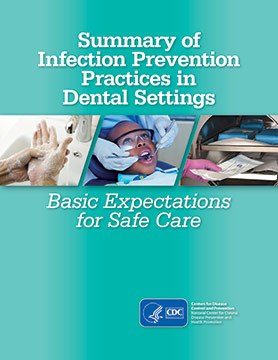
Overview
Although the principles
of infection control remain unchanged, new technologies, materials,
equipment, and data require continuous evaluation of current
infection-control practices. The unique nature of many dental procedures,
instrumentation, and patient-care settings also may require specific
strategies directed to preventing the transmission of pathogens among
dental healthcare workers and their patients. Recommended
infection control practices are applicable to all settings in which dental
treatment is provided.
More Information on Infection Control
Featured Items
Prevention
of MRSA Infections in Healthcare Settings
MRSA is typically spread from via unclean hands of healthcare personnel
or through the improper use or reuse of equipment. These basic infection
control practices are key to the prevention and control of MRSA in
healthcare settings.
Prevention of 2009 H1N1 Influenza
Transmission in Dental Health Care Settings (11/23/09)
CDC provides updated guidance on preventing 2009 H1N1 influenza transmission
in dental health care settings. Guidance includes new recommendations on
using airborne infection isolation rooms, N95 respirators, and infection
control measures for personnel with influenza-like illness.
Tuberculosis Infection Control Recommendations
The changing epidemiology of tuberculosis (TB) and discovery of new diagnostic
methods prompted a revision of
CDC's guidelines to
prevent TB transmission in healthcare settings*. View CDC’s TB infection
control recommendations for dental settings and learn how they should be
incorporated into an infection control program.
Patient-to-patient Transmission of Hepatitis B Virus Associated with
Oral Surgery
The Journal of Infectious Diseases describes the first documented case of
patient-to-patient hepatitis B virus transmission in a dental
office.
Educational Materials
Slide Presentation for Infection Control
Guidelines
This slide set and accompanying speaker notes provide an overview
of many of the basic principles of infection control in the CDC
Guidelines for Infection Control in
Dental Health-Care Settings. It can be downloaded as a PowerPoint
presentation or viewed on the Web site.
If Saliva Were Red:
A Visual Lesson on Infection Control*
The video training system,
If Saliva
Were Red, features an 8-minute video (VHS, CD-ROM) that uses dental
professionals to highlight common infection control and safety flaws; the cross
contamination dental workers would see if saliva were red; and how controlling
contamination by using personal barrier protection, safe work practices, and
effective infection control products reduces the risk of exposure.
From
Policy to Practice: OSAP's Guide to the Guidelines*
The Organization for Safety & Asepsis Procedures (OSAP) has produced this
170-page workbook, which contains practical information to help health care
professionals put the infection control recommendations into practice. These
resources were produced by OSAP through a CDC cooperative agreement.
Related Links
* Links to non-Federal organizations are
provided solely as a service to our users. Links do not constitute an
endorsement of any organization by CDC or the Federal Government, and none
should be inferred. The CDC is not responsible for the content of the individual
organization Web pages found at this link.
Page last reviewed: September 21, 2011
Page last modified: September 21, 2011
Content source:
Division of Oral Health,
National Center for Chronic Disease Prevention and
Health Promotion |