|
|
 |
 
Schistosomiasis
(SHIS-toe-SO-my-uh-sis)
Download
this document (PDF - 65 KB, 3 pages)
What is
schistosomiasis?
Schistosomiasis,
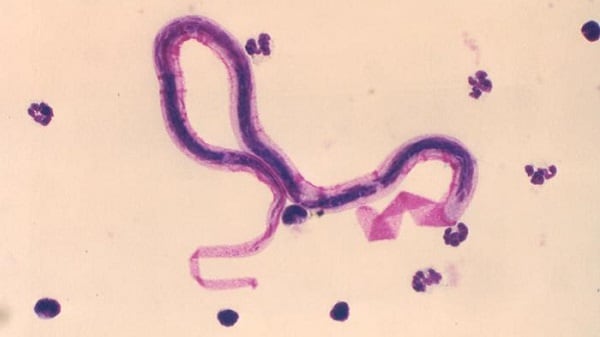
also known as bilharzia (bill-HAR-zi-a), is a disease caused by parasitic
worms. Infection with Schistosoma mansoni, S. haematobium, and S.
japonicum causes illness in humans. Although schistosomiasis is not found in
the United States, more than 200 million people are infected worldwide.

How can I get schistosomiasis?
Infection
occurs when your skin comes in contact with contaminated freshwater
in which certain types of snails that carry schistosomes are living.
Freshwater becomes contaminated by Schistosoma eggs when infected
people urinate or defecate in the water. The eggs hatch, and if certain
types of snails are present in the water, the parasites grow and develop
inside the snails. The parasite leaves the snail and enters the water
where it can survive for about 48 hours. Schistosoma parasites can
penetrate the skin of persons who are wading, swimming, bathing, or
washing in contaminated water. Within several weeks, worms grow inside
the blood vessels of the body and produce eggs. Some of these eggs
travel to the bladder or intestines and are passed into the urine or
stool.

What are the symptoms of schistosomiasis?
Within
days after becoming infected, you may develop a rash or itchy skin.
Fever, chills, cough, and muscle aches can begin within 1-2 months
of infection. Most people have no symptoms at this early phase of infection.
Eggs travel
to the liver or pass into the intestine or bladder, causing inflammation or scarring. Children who are repeatedly infected can develop anemia, malnutrition, and learning difficulties. After years of infection, the parasite can also damage the liver, intestines, lungs, and bladder. Rarely, eggs are
found in the brain or spinal cord and can cause seizures, paralysis,
or spinal cord inflammation.
Symptoms
of schistosomiasis are caused by the body's reaction to the eggs produced
by worms, not by the worms themselves.

What should I do if I think I have schistosomiasis?
See your
health care provider. If you have traveled to countries where schistosomiasis
is found and had contact with freshwater, describe in detail where
and for how long you traveled. Explain that you may have been exposed
to contaminated water.

How
is schistosomiasis diagnosed?
Your health
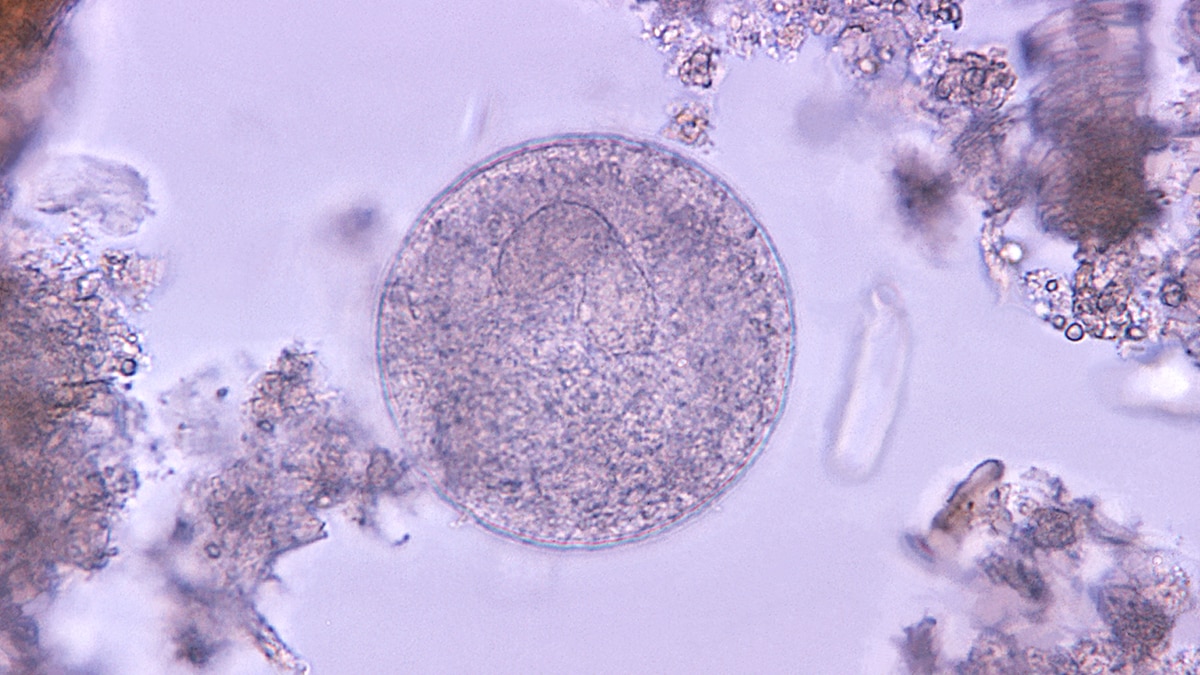
care provider may ask you to provide stool or urine samples to see
if you have the parasite. A blood test has been developed and is available
at CDC. For accurate results, you must wait 6-8 weeks after your last
exposure to contaminated water before the blood sample is taken.

What is
the treatment for schistosomiasis?
Safe and
effective drugs are available for the treatment of schistosomiasis.
You will be given pills to take for 1-2 days.

Am I at
risk?
If you
live in or travel to areas where schistosomiasis occurs and your skin
comes in contact with freshwater from canals, rivers, streams, or
lakes, you are at risk of getting schistosomiasis.

In what
areas of the world does schistosomiasis occur?
- Africa:
all freshwater in southern and sub-Saharan Africa–including the great lakes and rivers as well as smaller bodies of water–is considered to be at risk for schistosomiasis transmission. Transmission also occurs in the Nile River valley
in Egypt.
- South
America: including Brazil, Suriname, Venezuela
- Caribbean:
Antigua, Dominican Republic, Guadeloupe, Martinique, Montserrat, Saint
Lucia (risk is low)
- The Middle
East: Iran, Iraq, Saudi Arabia, Yemen
- Southern
China
- Southeast
Asia: Philippines, Laos, Cambodia, central Indonesia, Mekong
delta

How can I prevent schistosomiasis?
- Avoid
swimming or wading in freshwater when you are in countries in which
schistosomiasis occurs. Swimming in the ocean and in chlorinated swimming
pools is generally thought to be safe.
- Drink
safe water. Because there is no way to make sure that water coming
directly from canals, lakes, rivers, streams or springs is safe, you
should either boil water for 1 minute or filter water before drinking
it. Boiling water for at least 1 minute will kill any harmful parasites,
bacteria, or viruses present. Iodine treatment alone WILL NOT GUARANTEE
that water is safe and free of all parasites.
- Bath water
should be heated for 5 minutes at 150°F. Water held in a storage tank
for at least 48 hours should be safe for showering.
- Vigorous
towel drying after an accidental, very brief water exposure may help
to prevent the Schistosoma parasite from penetrating the skin. You
should NOT rely on vigorous towel drying to prevent schistosomiasis.

For more information:
- Meltzer E, Artom G, Marva E, Assous MV, Rahav G, Schwartzt E. Schistosomiasis among travelers: new aspects of an old disease. Emerg Infect Dis. 2006;11:1696-1700.
- Schwartz E, Kozarsky P, Wilson M, Cetron M. Schistosome infection among river rafters on Omo River, Ethiopia. J Travel Med. 2005 Jan-Feb;12(1):3-8.
- Bierman WF, Wetsteyn JC, van Gool T. Presentation and diagnosis of imported schistosomiasis: relevance of eosinophilia, microscopy for ova, and serology. J Travel Med. 2005 Jan-Feb;12(1):9-13.
- Centers for Disease Control and Prevention. Schistosomiasis in Peace
Corps volunteers - Malawi, MMWR. 1993;42:565-70.
- Cetron MS, Chitsulo
L, Sullivan JJ, et al. Schistosomiasis in Lake Malawi. Lancet. 1996;348:1274-8.
- Jordan P. Schistosomiasis. The St. Lucia Project. New York: Cambridge
University Press, 1985.
- Jordan P, Webbe G, Sturrock RF, eds. Human
schistosomiasis. Wallingford: CAB International, 1993.
- Rollinson
D. Simpson AJG, eds. The biology of schistosomes from genes to latrines.
London: Academic Press, 1987.
- Tsang VCW, Wilkins PP. Immunodiagnosis
of schistosomiasis. Screen with FAST-ELISA and confirm with immunoblot.
Clin Lab Med. 1991;11:1029-39.
- World Health Organization. The control
of schistosomiasis: Second report of the WHO Expert Committee. WHO
Technical Report Series 830. Geneva: WHO, 1993.
This fact sheet is for
information only and is not meant to be used for self-diagnosis or as a
substitute for consultation with a health care provider. If you have any
questions about the disease described above or think that you may have a
parasitic infection, consult a health care provider.
Schistosomiasis
Schistosomiasis
Schistosomiasis
|