Ascaris Infection
(Ass-kuh-ris)
Ascariasis
Download PDF version formatted for print
Ascaris is a worm that lives in the small intestine. Infection with Ascaris is called ascariasis (ass-kuh-rye-uh-sis). Adult female worms can grow over 12 inches in length, adult males are smaller.

Ascariasis is the most common human worm infection. Infection occurs worldwide and is most common in tropical and subtropical areas where sanitation and hygiene are poor. Children are infected more often than adults. In the United States, infection is rare, but most common in rural areas of the southeast.

Most people have no symptoms that are noticeable, but infection may cause slower growth and slower weight gain. If you are heavily infected, you may have abdominal pain. Sometimes, while the immature worms migrate through the lungs, you may cough and have difficulty breathing. If you have a very heavy worm infection, your intestines may become blocked.

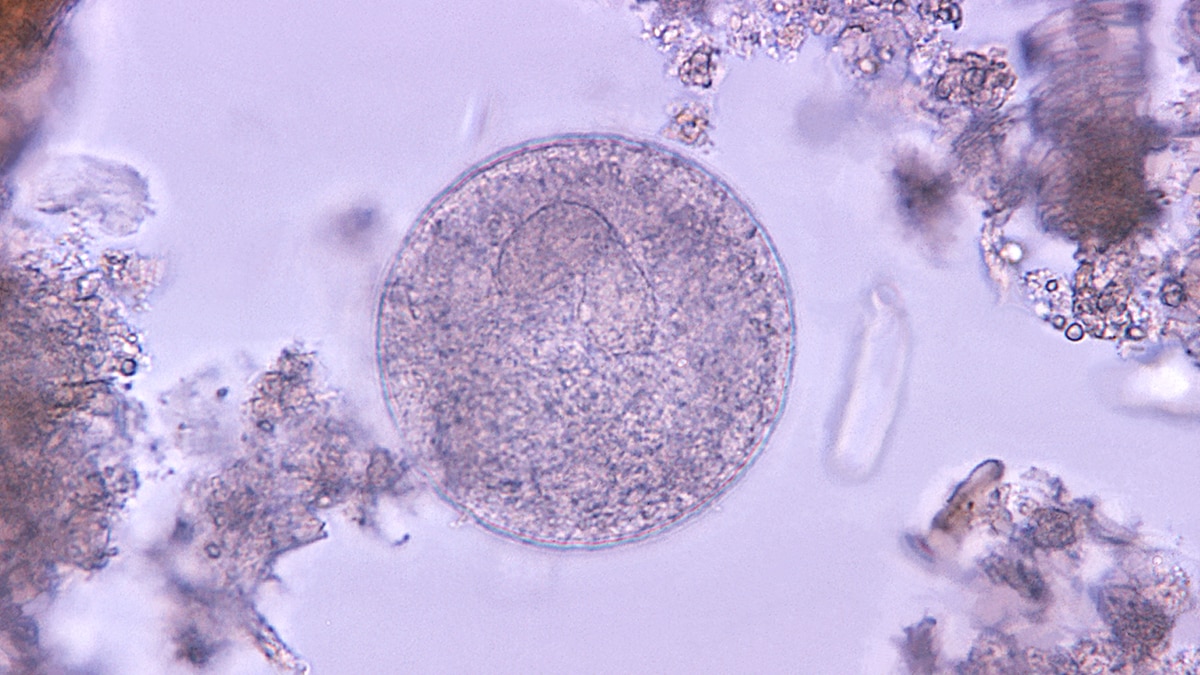
Ascaris eggs are found in human feces. After feces contaminates the soil, the eggs become infectious after a few weeks. Infection occurs when a person accidentally ingests (swallows) infectious Ascaris eggs. Once in the stomach, immature worms hatch from the eggs. The larvae are carried through the lungs and then to the throat where they are swallowed. Once swallowed, they reach the intestines and develop into adult worms. Adult female worms lay eggs that are then passed in feces; this cycle will take between 2-3 months.
Pigs can be infected with another species of Ascaris. Occasionally, a pig Ascaris infection can be spread to humans; this occurs when infective eggs, found in the soil and manure, are ingested. Infection is more likely if pig feces is used as fertilizer in the garden; crops then become contaminated with Ascaris eggs.

You or your children can become infected after touching your mouth with your hands that have become contaminated with eggs from soil or other contaminated surfaces or by ingesting contaminated food or water.

See your health care provider.

Your health care provider will ask you to provide stool samples for testing. Some people notice infection when a worm is passed in their stool or is coughed up. If this happens, bring in the worm specimen to your health care provider for diagnosis. There is no blood test used to diagnose an Ascaris infection.

In the United States, Ascaris infections are generally treated for 1-3 days with medication prescribed by your health care provider. The drugs are effective and appear to have few side effects. Your health care provider will likely request additional stool exams 1 to 2 weeks after therapy; if the infection is still present, treatment will be repeated.

Infection with Ascaris worms is generally light and is not considered an emergency. Unless your infection is heavy, and your health may be at risk, treatment is generally postponed until after delivery of the baby.

- Avoid contacting soil that may be contaminated with human feces.
- Do not defecate outdoors.
- Dispose of diapers properly.
- Wash hands with soap and water before handling food.
- When traveling to countries where sanitation and hygiene are poor, avoid water or food that may be contaminated.
- Wash, peel or cook all raw vegetables and fruits before eating.

No. Infection is not spread from person to person.

This fact sheet is for information only and is not meant to be used for self-diagnosis or as a substitute for consultation with a health care provider. If you have any questions about the disease described above or think that you may have a parasitic infection, consult a health care provider.
Revised September 23, 2004
Ascaris Infection
Ascaris Infection