Centers for Disease Control and Prevention
 CDC Home Search Health Topics A-Z

National Center for Chronic Disease Prevention and Health Promotion

Healthy Youth


Promoting Better Health
Strategies

School Programs

Schools provide many opportunities for young people to engage in physical activity and can play an important role in motivating young people to stay active. As detailed in CDC’s Guidelines for School and Community Programs to Promote Lifelong Physical Activity Among Young People (Appendix 5),21 a comprehensive approach to promoting physical activity through schools includes

  • Quality, daily physical education.
  • Classroom health education that complements physical education by giving students the knowledge and self-management skills needed to maintain a physically active lifestyle and to reduce time spent on sedentary activities such as watching television (Appendix 6).
  • Daily recess periods for elementary school students, featuring time for unstructured but supervised play (Appendix 7).
  • Extracurricular physical activity programs, especially inclusive, intramural programs and physical activity clubs (e.g., dance, hiking, yoga) that (1) feature a diverse selection of competitive and noncompetitive, structured and unstructured activities, (2) meet the needs and interests of all students with a wide range of abilities, particularly those with limited athletic skills, and (3) emphasize participation and enjoyment without pressure (Appendix 8).

Because school staff members spend a great deal of time with students and have considerable influence over students, they can be powerful role models for physical activity. Although schools cannot dictate the personal behaviors of staff members, they can make it easier for staff to become physical activity role models by sponsoring school-site health promotion programs. School staff also can play an important role in promoting youth physical activity by disseminating information about community-based sports and recreation programs to students and by helping these programs gain access to school facilities outside of school hours.

Quality Physical Education

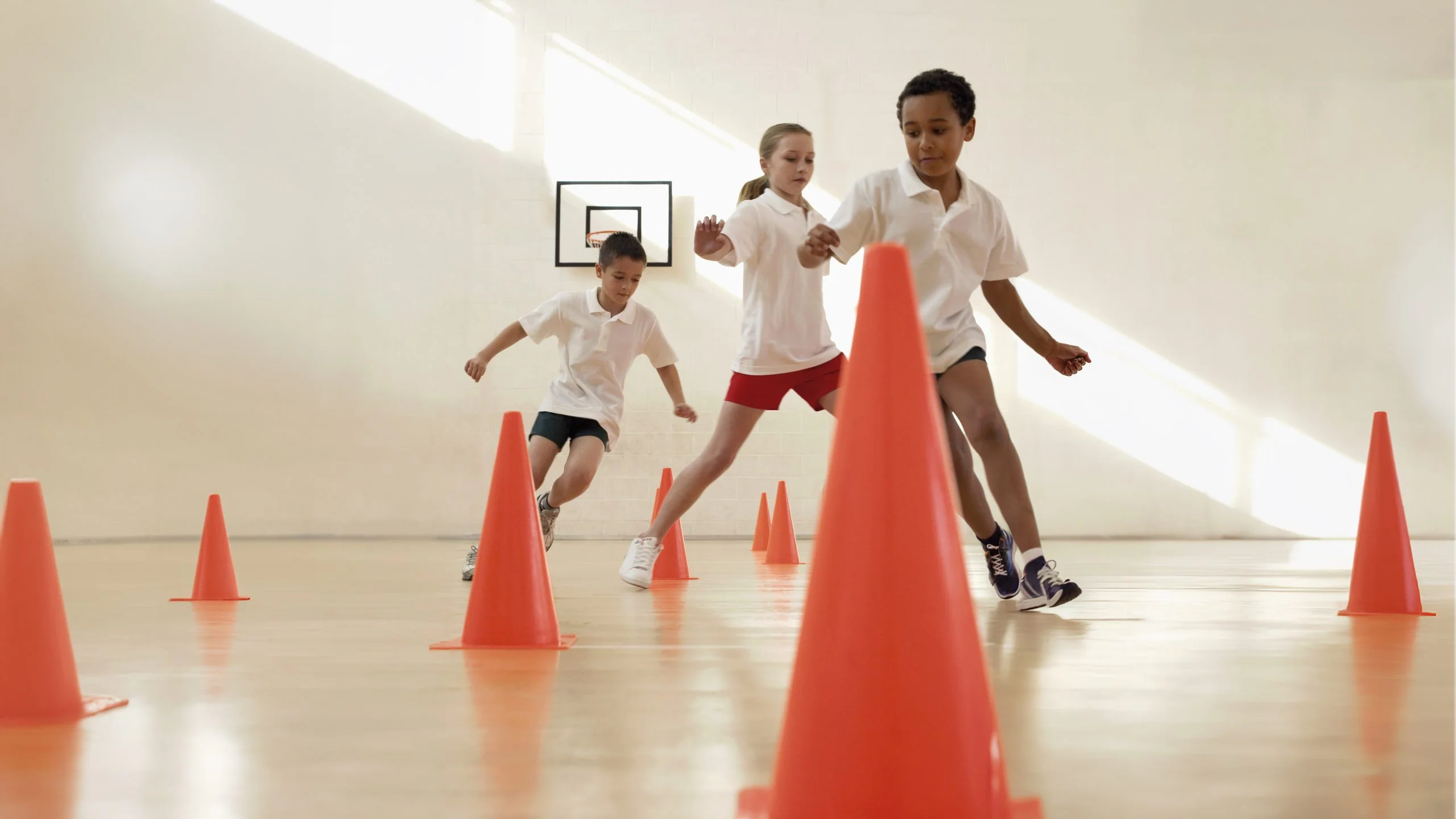
Physical education is at the core of a comprehensive approach to promoting physical activity through schools. All children, from pre-kindergarten through grade 12, should participate in quality physical education classes every school day. Physical education helps students develop the knowledge, attitudes, skills, behaviors, and confidence needed to be physically active for life, while providing an opportunity for students to be active during the school day (Appendix 9). Leading professionals in the field of physical education have developed a new kind of physical education that is fundamentally different from the stereotypical “roll out the balls and play” classes of decades past that featured little meaningful instruction and lots of humiliation for students who were not athletically coordinated. Professional associations, academic experts, and many teachers across the country are promoting and implementing quality physical education programs (Appendix 10) that emphasize participation in lifelong physical activity among all students.

Quality physical education is not a specific curriculum or program; it reflects, instead, an instructional philosophy that emphasizes

  • Providing intensive instruction in the motor and self-management skills needed to enjoy a wide variety of physical activity experiences, including competitive and noncompetitive activities.
  • Keeping all students active for most of the class period.
  • Building students’ confidence in their physical abilities.
  • Influencing moral development by providing students with opportunities to assume leadership, cooperate with others, and accept responsibility for their own behavior.
  • Having fun!

The importance of making physical education fun was illustrated by a national survey of students in grades 4–12, which found that enjoyment of physical education class was one of the most powerful factors associated with participation in physical activity outside of school.22

Quality physical education is more than just fun, however; it is also a serious academic discipline. Physical education and health education are recognized as important components of the education curricula.23 The National Standards for Physical Education24 explicitly identifies what students should know and be able to do as a result of a quality physical education program (Appendix 11). These standards provide a framework that can be used to design, implement, and evaluate physical education curricula.

  Graph: Percentage of High School Students Who Attended Physical Education Classes Daily, 1991-99To cover the necessary instructional components (Appendix 12) and to provide opportunities for adequate skill practice and health-enhancing physical activity, quality physical education should be offered every day to all students from pre-kindergarten through grade 12. Unfortunately, most U.S. students do not participate in daily physical education, and the proportion of students with daily physical education has been declining over time.14 In 1994, only 17% of middle/junior high schools and 2% of high schools required physical education 5 days per week each year.25 The majority of high school students take physical education for only 1 year between 9th and 12th grades.26 Healthy People 20105 includes objectives for increasing the percentage of schools offering, and the percentage of students participating in, daily physical education classes (Appendix 3).

Illinois is the only state that currently requires daily physical education in every grade, K-12, but it allows many schools to be exempted from this requirement (Appendix 13).26 The majority of states allow students to replace physical education courses with other experiences, including varsity athletics, ROTC, and marching band;25 this deprives students of the important learning experiences they can have in quality physical education. As one educator has written, exempting students from physical education because of their extracurricular activities is like exempting students from language arts requirements because they’re on the debate team or from science requirements because they’re in the astronomy club.27 Students should not be exempted from physical education courses because they participate in an extracurricular program.

Strategy 2: Help all children, from pre-kindergarten through grade 12, to receive quality, daily physical education. Help all schools to have certified physical education specialists; appropriate class sizes; and the facilities, equipment, and supplies needed to deliver quality, daily physical education.

Qualified and appropriately trained physical education teachers are the most essential ingredient of a quality physical education program. Unfortunately, many schools do not have qualified professionals teaching physical education. Only certified physical education teachers should be given the responsibility of teaching the skills and providing the motivation our young people need to adopt and maintain a physically active lifestyle. However, only seven states require physical education courses to be taught by certified physical education specialists in all grades. All the other states allow classroom teachers, without any required training in physical education, to teach some physical education courses.26 Studies have found that, compared with classroom teachers, physical education specialists teach longer and higher quality classes in which students spend more time being physically active.21,28

It must be noted, however, that some certified physical education teachers have not received the state-of-the-art training, either through undergraduate teacher training programs or at professional staff development sessions, that is needed to teach quality physical education. National standards are helpful in describing what a beginning physical education teacher should know and be able to do (Appendix 14).29 These standards can guide physical education teacher preparation programs and the physical education teacher certification process. Additional resources are needed to effectively disseminate these standards to colleges, universities, and school districts across the nation.

A 1994 national survey found that only half of the nation’s school districts had offered any staff development opportunities in physical education during the 2 years before the survey.25 Efforts to provide staff development for physical educators should be intensified, and guidelines for offering quality professional staff development sessions should be developed.

To provide quality physical education for all students, schools must be able to provide adapted physical education for students with disabilities. The regulations implementing the Individuals with Disabilities Education Act (IDEA) mandate that physical education services, specially designed if necessary, must be made available to every child with a disability receiving a free and appropriate public education. Each child with a disability must be afforded the opportunity to participate in the regular physical education program available to nondisabled children unless the child is enrolled full time in a separate facility or the child needs specially designed physical education, as prescribed in the child’s individualized education program. The Adapted Physical Education National Standards30 (Appendix 15) provide guidance on how physical educators can accommodate the needs of students with disabilities, and a national examination exists to certify adapted physical education teachers.

The large class sizes with which physical educators are often confronted are a key barrier to the implementation of quality physical education. Physical education should have the same class sizes as other subjects. Quality physical education must cover a great deal of content, and physical educators cannot do their jobs effectively or have enough time to work with individual students if classes are overcrowded. As one physical educator has said, “Try teaching English with 72 kids!”27

Even the best physical education teachers in the world will find it difficult to keep their students active during most of a physical education class if they don’t have adequate amounts of equipment and supplies. Many schools don’t have enough equipment or supplies to keep all their students active during physical education class; consequently, many students waste valuable time standing in line and watching others play while they wait for a turn. Support for the purchase of physical education equipment and supplies is an urgent priority for many of the nation’s schools.

Strategy 3: Publicize and disseminate tools to help schools improve their physical education and other physical activity programs.

In recent years, federal agencies and national organizations have developed a large number of practical tools that can help schools improve their physical education and other physical activity programs. These tools include

  • Guidelines for School and Community Programs to Promote Lifelong Physical Activity Among Young People (CDC; Appendix 5).21

  • School Health Index for Physical Activity and Healthy Eating: A Self-Assessment and Planning Guide (CDC; Appendix 16).31

  • Moving into the Future: National Standards for Physical Education (NASPE; Appendix 11).24

  • Adapted Physical Education National Standards (National Consortium for Physical Education and Recreation for Individuals with Disabilities; Appendix 15).30

  • National Standards for Beginning Physical Education Teachers (NASPE; Appendix 14).29

  • Concepts of Physical Education: What Every Student Needs to Know (NASPE).32

  • Fit, Healthy, and Ready to Learn: A School Health Policy Guide (National Association of State Boards of Education; Appendix 17).27

  • Physical Fitness Demonstration Centers (PCPFS; Appendix 18).

  • Programs That Work (CDC; Appendix 19).

  • Quality Coaches, Quality Sports: National Standards for Athletic Coaches (NASPE).33

  • Guidelines for School Intramural Programs (National Intramural Sports Council; Appendix 20).34

  • The NSACA Standards for Quality School-Age Care (National School-Age Care Alliance; Appendix 21).35

  • Developmentally Appropriate Practice in Movement Programs for Young Children, Ages 3-5 (NASPE).36

Many school administrators and educators do not have these materials, and only modest efforts have been made to disseminate them. Relevant Department of Health and Human Services agencies, working in close collaboration with the Department of Education, state and local agencies, and nongovernmental organizations, should implement an ongoing marketing initiative to systematically distribute these resources to the nation’s educators at the school district and school levels. Staff development must be provided to ensure the effective use of these tools.

One of the best ways to promote the widespread use of innovative practices and build support for quality school initiatives is to identify model programs that allow educators to learn from the successes of their peers. Two existing federal programs could be expanded to identify model programs:

  • PCPFS’s Physical Fitness Demonstration Centers (Appendix 18) initiative recognizes individual schools that do an outstanding job of emphasizing the physical fitness component of physical education, as determined by state departments of education according to criteria developed in cooperation with PCPFS. Expanding this initiative to more schools in more states would facilitate the dissemination of innovative practices.

  • CDC’s Programs That Work initiative (Appendix 19) identifies curricula with credible evidence of effectiveness in reducing health risk behaviors among young people. Training on implementing these curricula is provided for interested educators from state and local education agencies, departments of health, and national nongovernmental organizations. To date, curricula have been identified that address tobacco-use prevention and HIV, sexually transmitted diseases (STD), and pregnancy prevention. Expanding this initiative to include programs that promote physical activity would help states and school districts make more informed curricular decisions.

Perhaps the most urgently needed tool that has not yet been developed is a standardized assessment of student performance in physical education. Such a tool would measure achievement in knowledge, motor skills, and self-management skills. It could

  • Help educators monitor and improve the quality of physical education programs.
  • Provide a means of holding programs accountable.
  • Enable physical education to be included among the subjects on which students are tested as part of the state education assessments that are increasingly driving school management decisions.

Without the data on student performance that such a tool could provide, physical education will continue to be relegated to a low priority in school reform efforts.

Most states have not developed assessments of student performance in physical education and have not included physical education among the subjects that all schools must assess. NASPE has developed materials that could guide an assessment process, and several states have independently begun to develop their own assessments. These efforts should be sup-ported and final products should be widely disseminated by relevant Department of Health and Human Services agencies, in collaboration with the Department of Education, state and local agencies, and nongovernmental organizations.

Strategy 4: Enable state education and health departments to work together to help schools implement quality, daily physical education and other physical activity programs

  • With a full-time state coordinator for school physical activity programs.
  • As part of a coordinated school health program.
  • With support from relevant governmental and nongovernmental organizations.

Most states do not have physical education specialists at their state education agencies who can provide technical assistance to help schools implement quality physical education. A full-time coordinator for school physical activity programs in each state would play an important role in implementing the essential staff development, resource dissemination, student assessment, monitoring, and evaluation recommendations made in this report. He or she would also guide efforts to collaborate with and reinforce the complementary initiatives of relevant governmental and nongovernmental organizations (e.g., Governor’s or State Council for Physical Fitness and Sports, American Heart Association, state affiliate of the American Alliance for Health, Physical Education, Recreation, and Dance). Without a qualified, dedicated person coordinating efforts in each state, a national initiative to promote physical activity among young people will inevitably fall through the cracks and fail to get the statewide attention needed to make a difference.

To maximize impact and efficiency, physical activity efforts should be integrated within a state’s coordinated school health program. Other components of such a program include health education; nutrition services; health services; counseling, psychological, and social services; parent and community involvement; health promotion for staff; and a healthy school environment.

In fiscal year 2000, CDC funded 21 states to establish and run statewide programs for coordinated school health (Appendix 22). Funding is provided for program directors in the state education and health agencies, but not for a state school physical activity coordinator. With additional resources, this initiative could be expanded to support the remaining states and to include a physical activity coordinator in each state.

The President’s reauthorization proposal for the Elementary and Secondary Education Act includes funding for demonstration projects that would implement effective policies and programs to promote lifelong physical activity and healthy lifestyles among young people. This initiative also would support funding for

  • Training school personnel on how to provide instructional programs to promote enjoyable lifelong physical activity among children and adolescents.
  • Capacity-building activities to expand existing state and local coordinated school health programs to promote healthy lifestyles among children and adolescents.
  • Providing school staff with continuing education opportunities related to physical activity and coordinated school health programs.


Healthy Youth Home | Contact Us

CDC Home | Search | Health Topics A-Z

Policies and Regulations | Disclaimers

This page last updated May 10, 2007

Division of Adolescent and School Health
National Center for Chronic Disease Prevention and Health Promotion
Centers for Disease Control and Prevention
Department of Health and Human Services