



At a glance
- Children and adolescents should have 60 minutes (1 hour) or more of physical activity each day.
- Schools are in a unique position to promote healthy behaviors like physical education and physical activity.
- Learn how to encourage adults, children, and adolescents to be physically active.
Why it's important
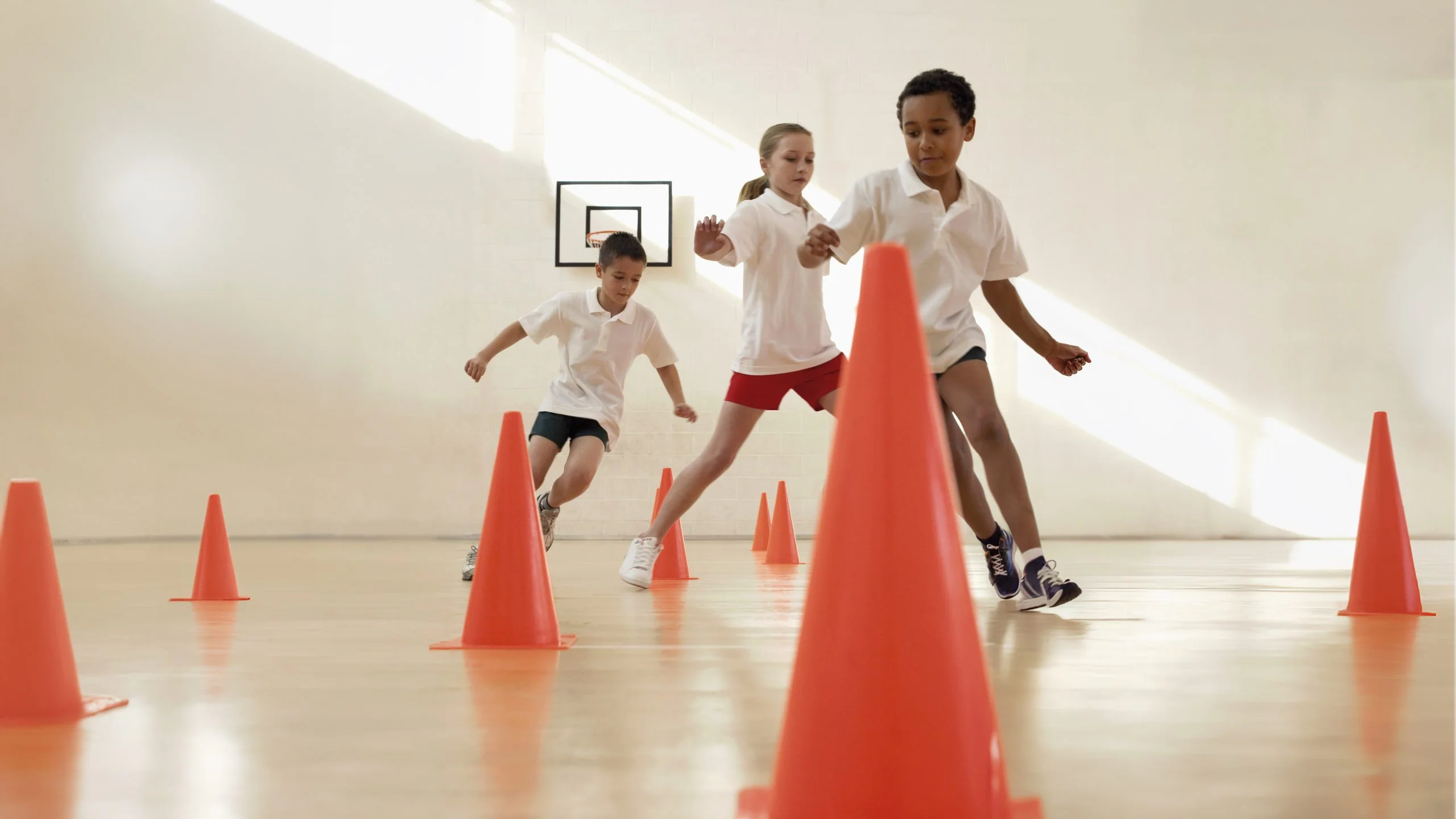
Physical education and physical activities in schools include physical activity before and after school, physical education, physical activity during school, family and community engagement, and staff involvement.
Download the circle of physical education and physical activity infographic.
Benefits of physical education for students
- Increases their level of physical activity.
- Improves their grades and test scores.
- Helps them focus while in class.
Developing healthy habits
Schools are in a unique position to help students get the daily recommended 60 minutes or more of moderate-to-vigorous physical activity. Regular physical activity in childhood and adolescence is important for:
- Promoting lifelong health and well-being.
- Preventing various health conditions.
For more information on the Physical Activity Guidelines, 2nd edition, visit Physical Activity Guidelines for School-Aged Children and Adolescents.
Physical activity before and after school
Physical activity before and after school includes:
- Walking or biking to and from school programs.
- Physical activity clubs.
- Intramural programs (sports organized by the school or community in which any child can participate).
- Interscholastic sports (competitive sports between schools).
- Activity in before-school and after-school extended day programs.
Encouraging students to be active before and after school helps them find activities they enjoy and might engage in long term.
What CDC is doing
Find out what CDC is doing nationwide to help more adults, children, and adolescents become physically active.
Resources for schools
The Comprehensive School Physical Activity Program (CSPAP) provides details about its suggested Physical Education and Physical Activity Framework. This document outlines professional development opportunities and resources to help schools implement the framework. The framework is helpful for school health professionals, school administrators, physical education teachers, other school staff, and parents.
CDC worked with SHAPE America to create a step-by-step guide: Comprehensive School Physical Activity Programs for schools and school districts. This physical activity program guide can help you develop new programs, evaluate programs, or improve existing programs. The guide can be helpful to an existing school health council or wellness committee, or to a new committee. These committees may comprise physical education coordinators and teachers, classroom teachers, school administrators, recess supervisors, before- and after-school program supervisors, parents, and community members.
Comprehensive School Physical Activity Program (CSPAP) e-learning module
This module is designed to help educators create and refine a Comprehensive School Physical Activity Program. The module can help users:
- Understand the importance and benefits of youth physical activity.
- Recognize the components of a CSPAP.
- Learn the process for developing, implementing, and evaluating a CSPAP.
Resources
- CDC Ideas for Parents: Physical Activity Before and After School
- Alliance for a Healthier Generation | Healthy Out-of-School Time Assessment
- Data Brief: Provide Physical Activity Before and After School
- Healthy Eating, Physical Activity, and Health Equity in Out-of-School Time
- Strategies for Physical Activity Through Community Design
- SHAPE America | Before- and After-School Physical Activity and Intramural Sport Programs (2013)
- U.S. Department of Health and Human Services. Physical Activity Guidelines for Americans. 2nd ed. 2018. Accessed September 24, 2024. https://odphp.health.gov/sites/default/files/2019-09/Physical_Activity_Guidelines_2nd_edition.pdf
- Association for Supervision and Curriculum Development (ASCD), Centers for Disease Control and Prevention. Whole School, Whole Community, Whole Child: A Collaborative Approach to Learning and Health. 2014. Accessed September 24, 2024. http://www.ascd.org/ASCD/pdf/siteASCD/publications/wholechild/wscc-a-collaborative-approach.pdf
- Centers for Disease Control and Prevention. School health guidelines to promote healthy eating and physical activity. MMWR Recomm Rep. 2011;60(RR-5):1–76.
- Institute of Medicine. Educating the Student Body: Taking Physical Activity and Physical Education to School. National Academies Press; 2013. Accessed September 24, 2024. https://nap.nationalacademies.org/catalog/18314/educating-the-student-body-taking-physical-activity-and-physical-education
- Centers for Disease Control and Prevention. School health guidelines to promote healthy eating and physical activity. MMWR Recomm Rep. 2011;60(RR-05):1–76.
- Centers for Disease Control and Prevention. Health and Academic Achievement. U.S. Department of Health and Human Services; 2014. Accessed September 24, 2024.
- If you do not have an eReader app installed on your iOS (iPad, iPhone, or iPod Touch) device, search the App Store for an eReader, like iBooks. If you do not have an eReader app installed on your Android device, search the Google Play Store for an eReader. After an eReader app is installed on your device, you can download the eBook and open it on your device.