



What to know
- If may be or have been exposed to anthrax, it's important to begin antibiotics quickly and take as directed to prevent serious illness and death from anthrax.
- Many children and others can't swallow pills, so caretakers can learn how to mix antibiotics into food or drink so they can still take the medicine to protect them.
- The antibiotic mixture should be taken every 12 hours for as long as public health or healthcare officials recommend.

Materials you'll need
Most people will get 100 mg tablets of doxycycline hyclate if they have potentially been exposed to anthrax. You need these items to make doses of doxycycline for those who can't swallow pills:
- 1 doxycycline hyclate tablet (100 mg)
- 1 metal teaspoon
- 1 oral syringe or medicine spoon (if available)
- 2 small bowls
- 4 teaspoons (20mL) of drinking water
Doxycycline works well whether you take it with or without food or milk. However, using 1 of these foods or drinks makes the dose taste better:
- Milk, including breast milk and formula for infants
- Chocolate milk
- Chocolate pudding
- Apple juice mixed with 2 to 4 teaspoons of sugar
Step 1: Crush
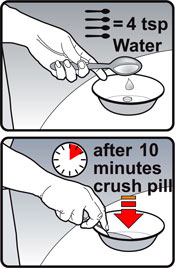
- Put 1 doxycycline hyclate tablet in a small bowl.
- Add 4 teaspoons (20 mL) of water to the same bowl.
- Let the tablet soak in the water for at least 10 minutes to soften it.
- Crush tablet with the back of the spoon until no pieces remain in water.
- Stir the tablet and water to mix it well.
You have now made the doxycycline and water mixture.
Step 2: Measure
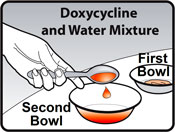
- Find your child's weight on the chart below. If unknown, find the age on the chart.
- Follow it across to the "Amount of Doxycycline & Water Mixture" column.
- The weight-range dosing is based on 2.2 mg/kg calculation.
4. Measure doxycycline mixture from first bowl for child's weight or age. For a 1/2 teaspoon dose, fill halfway or use an oral syringe (if available). It's better to give slightly more than not enough.
5. Place this amount into the second bowl. This is 1 dose, and it should be mixed with food or drink.
For adults who cannot swallow pills or children over 76 pounds
Use the entire doxycycline mixture (4 teaspoons) from the first bowl. The contents of the first bowl make 1 dose to be mixed with food or drink.
You have now measured the right dose.
Step 3: Mix
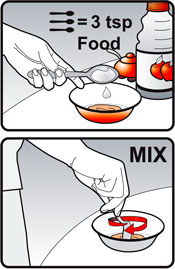
- Put the dose (measured amount of doxycycline and water mixture) in the second bowl.
- Add 3 teaspoons of one of the following:
- Milk, including breast milk and formula for infants
- Chocolate milk
- Chocolate pudding OR
- Apple juice mixed with 2 to 4 teaspoons of sugar
- Mix well before giving it to your child.
You now have 1 dose mixed with food or drink.
Step 4: Give the dose
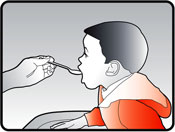
Give your child all of the doxycycline, water, and food mixture from the second bowl. Make sure your child swallows all of it. This is 1 dose.
Do this once every 12 hours (once in the morning AND once at night) each day for as long as directed.
Storage and side effects
If you have some of the mixture left over and:
- Your child weighs 51 pounds or more or is 6 years or older: throw it away. You do NOT have enough left over to make another dose.
- Your child weighs 50 pounds or less or is 5 years or younger: keep it. You DO have enough left over to make another dose.

To store the doxycycline mixture:
- Put the doxycycline mixture in a covered bowl or cup.
- Write the date, time, and container contents on a label.
- Keep the mixture in a safe place out of the reach of children or pets.
- Maintain the container at 68–77˚F (20–25˚C) for up to 24 hours.
- Throw away any unused mixture after 24 hours.
- Make a new doxycycline and water mixture for the next dose.
Side effects
Doxycycline may cause:
- Diarrhea
- Increased skin sensitivity to the sun
- Loss of appetite
- Nausea
- Vomiting
Even if you experience any of these side effects, continue to take your doxycycline as directed until your provider tells you to stop.
Do not take doxycycline if you are allergic to an ingredient in doxycycline hyclate or any tetracycline antibiotics.
When to seek emergency care
Report any reaction to doxycycline to MedWatch or 1-800-FDA-1088.