- Add this to...
- Añadir en...
- Favorites
- Delicious
- Digg
- Google Bookmarks
TB Personal Stories
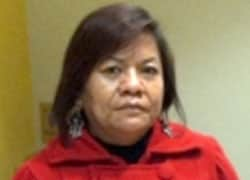
Martha’s Story
Martha
Martha is a nurse who worked in Juarez, Mexico, at a local community hospital, caring for patients at one of the poorest health centers. In October 2010, she was diagnosed with tuberculosis (TB) and later she learned she had multidrug-resistant TB (MDR TB). Martha wants to tell others how important it is to receive effective care, as she did from the Texas binational TB program Project Juntos.
My name is Martha, and I am a licensed nurse. I am also a diabetic. Being the head of my household, a single mother with two teenagers, and the sole support of my elderly mother, my priorities were my family and work. I now see it as ironic that despite being a health care provider, I did not take care of myself as I should have.
In August 2010, I developed a cough, but did not pay much attention to it. After 2 weeks, I went to see my physician, and he treated me for a cold. I developed a more persistent cough and started losing weight. A month passed, and I started having persistent night sweats; the cough was getting worse. Within 3 weeks, I had gone through two rounds of antibiotics.
In late September 2010, I visited my physician again, and he ordered a chest X-ray. It showed cavities in my lungs, a sign of TB disease, but he did not notice it and treated my illness as bronchitis. He prescribed one antibiotic after another, all of which failed to help. I had a lot of symptoms -- sweating, chills, raised temperature, loss of appetite, and fatigue. All I wanted to do was stay in bed. Finally, in late October 2010, I was tested for TB and told that I had TB disease. This was shocking news to me.
I was referred to the local TB program in Juarez and received a lot of support from the staff. I started treatment for TB right away, and took it for the next 2 months. But instead of getting better, I was still getting worse. I continued to lose weight every day -- there were days when I couldn’t eat.
In January 2011, my physician told me my treatment was not working. I was referred to Project Juntos in El Paso, Texas for my TB care because my case was so challenging. Project Juntos, supported by the Texas Department of State Health Services (DSHS), provides TB treatment services to binational patients in the border area, as well as to special cases—those that are especially hard to treat. My treatment was given as directly observed therapy (DOT) for the entire length of treatment, which meant a Project Juntos nurse made sure I took every dose of the drugs I needed. I also learned my treatment would include injections three times a week for 5 months—and I have always had a fear of injections. There were times that I was ready to give up, but the Texas DSHS Project Juntos nurses always encouraged me to make sure that I continued with my treatment.
Luckily, it appears that I did not infect anyone. My two teenage children and my mother were tested for TB infection and evaluated for disease, and fortunately all were negative; the Project Juntos nurses keep monitoring them with evaluations in 6-month intervals. The health center where I worked in Juarez carried out contact investigations among my co-workers. I know of no case being linked to me.
I received the new TB treatment for 6 months, January–June 2011. During treatment, I continued losing weight and began coughing up blood. I was hospitalized about four times due to coughing up blood. I even had to have a blood transfusion. Finally, the bleeding was controlled.
By the end of June 2011, it became clear that this new treatment was not working. New samples of sputum were collected and tested, and while we waited for the results, I was taken off treatment. By late August the results came back and showed that my TB was resistant to all six drugs I was taking.
In September 2011, I started a completely new course of treatment that included nine pills and two injections daily. These drugs, called second-line medications, are more toxic than the standard first-line drugs, as they are used to treat resistant bacteria. I would need to take this new regimen for 18-24 months, depending on how well they worked. By my second month on the new treatment, my tests showed that the medication was working.
“There were times that I was ready to give up, but the Texas DSHS Project Juntos nurses always encouraged me to make sure that I continued with my treatment.”
Finally, I completed treatment on November 28, 2012. The most significant side effects from these toxic medications included stomach pain, nausea and vomiting, and skin irritation. I now have profound deafness from the medication and have to wear hearing aids. But I am thankful for finally being healed and being alive.
As health care providers, some of us don’t think that we’ll ever be on the “other” side, someone with a serious disease. We think of ourselves as the ones giving treatment, providing care to patients. We need to learn to take care of ourselves, and pay more attention to diseases and illness, and give them priority over other things in our lives.
There were times that I was ready to give up rather than to continue with treatment. I lost a lot of things during the time I had TB. I did not have an income for 14 months. I lost my house, and we had to live with my brother. But I had the support of my family, friends, co-workers, and the staff from Project Juntos, who never left me alone. Thanks to the Texas DSHS Project Juntos staff, I was able to continue the ordeal of taking TB treatment for 18 months. And I found the strength to tolerate the painful and lengthy treatment because of my children.
The message I want to share is that TB is a serious disease, but if treated promptly and adequately, it can be cured. Taking care of one’s health is so important in preventing a disease from getting out of control or contributing to other conditions. I now take care of myself. My diabetes is under control, I follow a good nutritional regimen, take medication on schedule, and I rest and don’t abuse my health. Now that I’m recovered, I am working again. But my recovery would not have been possible without the help of the nurses in the Texas binational TB program Project Juntos.
More TB Personal Stories
Contact Us:
- Centers for Disease Control and Prevention
Division of Tuberculosis Elimination (DTBE)
1600 Clifton Rd., NE
MS E10
Atlanta, GA 30333 - 800-CDC-INFO
(800-232-4636)
TTY: (888) 232-6348 - Contact CDC–INFO
Tuberculosis
- Topics
- Basic TB Facts
- Treatment
- Testing & Diagnosis
- TB & HIV Coinfection
- Infection Control & Prevention
- Drug-Resistant TB
- TB in Specific Populations
- African-American Community
- Children
- Correctional Facilities
- Table of Contents
- Introduction
- Strengthen TB Information Systems and Program Assessment
- Strengthen TB Environmental Controls and Isolation Practices
- Provide More Comprehensive and Timely Screening and Diagnostic Evaluations
- Develop and Strengthen Contact Investigation Protocols
- Increase HIV Counseling and Testing
- Increase Staff Training
- Strengthen Collaboration Between Health Departments and Jails
- Homelessness
- International Travelers
- Pregnancy
- Vaccines & Immunizations
- Laboratory Information
- Drug Susceptibility Testing
- The Uses of Nucleic Acid Amplification Tests for the Diagnosis of TB
- Rapid Molecular Testing to Detect Drug-Resistant TB in the US
- Executive Summary
- Introduction
- Background on Tests for Molecular Detection of DR
- General Considerations and Principles for a Molecular DR Testing Service
- Possible Scenarios and Scope of Testing for a Molecular DR Testing Service
- Research Needs
- General Recommendations of the Expert Panel
- Communication Plan for the Report
- Recommendations
- References
- Panel Members and CDC Participants
- Appendix 1
- Appendix 2
- Appendix 3
- Interim Laboratory Biosafety Guidance for XDR Mycobacterium tuberculosis strains
- Research
- TB Epidemiologic Studies Consortium
- Background
- Infrastructure
- Research Projects
- Publications
- Meetings
- Directory
- TBESC Committee Members
- Translating Research into Practice (TRIP)
- Contact TBESC
- Prospective Evaluation of Immunogenetic and Immunologic Markers for Susceptibility to Tuberculosis Infection and Progression from M. Tuberculosisinfection to active TB
- Zero Tolerance for Pediatric TB
- Models for Incorporating HIV Counseling, Testing, and Referral into Tuberculosis Contact Investigations
- Prevalence of Latent TB Infection Among High Risk Populations in the United States
- Regional Capacity-Building in Low-Incidence Areas
- Use of Network Analysis Methods to Characterize M. tuberculosis Transmission Patterns Among Women and Other High-Risk Populations
- An Analysis of Molecular Epidemiology of Multi-Drug Resistant M. tuberculosisin the United States
- Missed Opportunities for TB Prevention in Foreign-Born Population in the United States and Canada
- New Model for Assessing TB Surveillance and Action Performance and Cost
- Addressing TB Among African Americans in the Southeast: Identifying and Overcoming Barriers to Treatment Adherence for Latent TB Infection and TB Disease
- Assessing the TB Knowledge, Attitudes, Beliefs, and Practices Among Private Providers Serving Foreign-born Populations at Risk for TB
- Factors Associated with Acceptance of, Adherence to and Toxicity From Treatment for Latent TB Infection and Pilot Study of Treatment for Latent TB Infection Effectiveness
- Culturally Appropriate TB Educational Materials for Leaders and Staff of Hispanic Service Organizations
- Enhancing TB Programs’ Capacity for Self-Evaluation: Testing New Tools and Developing an Evaluation Toolkit
- African Refugee Women’s Health Improvement Project
- Evaluation of the TK Medium: A New Rapid Solid Culture System for Tuberculosis
- Evaluation of New Interferon-y Release Assays in the Diagnosis of Latent TB Infection in Health Care Workers
- Request for Proposal
- TB Trials Consortium
- Behavioral & Social Science Research
- TB Epidemiologic Studies Consortium
- Data & Statistics
- Education & Training
- Resources for TB Programs
- Publications & Products
- Fact Sheets
- General
- Fact sheets - Spanish
- TB - General Information
- The Difference Between Latent TB Infection and Active TB Disease
- Diferencia entre la infección de tuberculosis latente y enfermedad de tuberculosis activa
- A Global Perspective on TB
- Tuberculosis Information for Employers in Non-Healthcare Settings
- Bovine Tuberculosis in Humans
- Tuberculosis Information for International Travelers
- TB Can Be Treated
- Exposure to TB
- TB and HIV/AIDS
- You Can Prevent TB
- Testing for TB
- Tuberculosis: información general
- Diferencia entre la infección de tuberculosis latente y enfermedad de tuberculosis activa
- Información sobre la tuberculosis para los viajeros internacionales
- Exposición a la tuberculosis
- Usted puede prevenir la tuberculosis
- La tuberculosis puede ser tratada
- Tuberculosis y VIH/SIDA
- Usted puede prevenir la tuberculosis
- Pruebas para detectar la tuberculosis
- Data & Statistics
- A Global Perspective on TB
- Trends in Tuberculosis – United States
- The Revised Report of Verified Case of Tuberculosis
- The National Tuberculosis Indicators Project (NTIP)
- National Tuberculosis Indicators Project (NTIP): Frequently Asked Questions
- TB Genotyping
- TB Genotyping Information Management System (TB GIMS)
- Drug-Resistant TB
- Multidrug-Resistant Tuberculosis (MDR TB)
- Extensively Drug-Resistant Tuberculosis (XDR TB)
- CDC’s Role in Preventing Extensively Drug-Resistant Tuberculosis (XDR TB)
- Tuberculosis multirresistente (MDR)
- Tuberculosis extremadamente resistente (XDR)
- El papel de los CDC en la prevención de la tuberculosis extremadamente resistente (XDR)
- Infection Control & Prevention
- TB in Specific Populations
- Tuberculosis Information for Employers in Non-Healthcare Settings
- Tuberculosis in Minorities
- Tuberculosis Information for International Travelers
- TB and HIV/AIDS
- Recommendations for Human Immunodeficiency Virus (HIV) Screening in Tuberculosis (TB) Clinics
- Treatment of Drug-Susceptible Tuberculosis Disease in HIV-Infected Persons
- Tuberculosis in Blacks
- Tuberculosis and Pregnancy
- Tuberculosis y embarazo
- Treatment
- TB Can Be Treated
- Treatment of Latent TB Infection
- Treatment of Latent Tuberculosis Infection: Maximizing Adherence
- Treatment Options for Latent Tuberculosis Infection
- Treatment of Drug-Resistant Tuberculosis
- Treatment of Drug-Susceptible Tuberculosis Disease in Persons Not Infected with HIV
- Treatment of Drug-Susceptible Tuberculosis Disease in HIV-Infected Persons
- Tratamiento de la infección de tuberculosis latente
- Testing & Diagnosis
- TB Can Be Treated
- Testing for TB
- Recommendations for Human Immunodeficiency Virus (HIV) Screening in Tuberculosis (TB) Clinics
- Interferon-Gamma Release Assays (IGRAs)
- Tuberculin Skin Testing
- Diagnosis of Tuberculosis Disease
- Targeted Tuberculin Testing and Interpreting Tuberculin Skin Test Results
- Prueba cutánea de la tuberculina
- Diagnóstico de la tuberculosis activa
- Vaccines & Immunizations
- General
- Guidelines
- Guides & Toolkits
- Core Curriculum
- Self-Study Modules
- Report of Verified Case of Tuberculosis (RVCT)
- Forging Partnerships to Eliminate TB
- Understanding the TB Cohort Review Process
- Latent Tuberculosis Infection: A Guide for Primary Health Care Providers
- Effective TB Interviewing for Contact Investigation
- Mantoux Tuberculin Skin Testing Products
- Ethnographic Guides
- Newsletters
- Pamphlets, Brochures, Booklets
- Posters
- Mantoux Tuberculin Skin Test Wall Chart
- World TB Day
- Afiches
- 2011 Poster (English)
- 2011 Poster (Spanish)
- 2010 Poster (English)
- 2010 Poster (Spanish)
- 2008 Poster (English)
- 2008 Poster (Spanish)
- 2006 Poster (English)
- 2004 Poster (English)
- 2004 Poster (Spanish)
- 2003 Poster (English)
- 2003 Poster (Spanish)
- 2003 Now is the Time Poster (English)
- 2003 Now is the Time Poster (Spanish)
- Think TB
- Stop TB
- Reports & Articles
- Morbidity and Mortality Weekly Reports (MMWRs)
- Contact Investigations
- Control and Elimination
- Data & Statistics
- Drug-Resistant Tuberculosis
- Infection Control & Prevention
- Laboratory
- TB in Specific Populations
- Foreign-Born
- High-Risk Settings
- Homeless
- International
- Occupational Groups
- Travel
- TB & HIV
- Testing & Diagnosis
- Treatment
- LTBI Updates
- Vaccines & Immunizations
- World TB Day
- DTBE Authored Journal Articles
- Tuberculosis Laboratory Aggregate Reports
- Morbidity and Mortality Weekly Reports (MMWRs)
- Slide Sets
- Core Curriculum
- Self-Study Modules
- Prevention and Control of Tuberculosis in Correctional and Detention Facilities
- Guidelines for Preventing the Transmission of M. TB in Health care Settings
- Investigation of Contacts of Persons with Infectious TB
- Text-Only version
- Introduction
- Decisions to Initiate a Contact Investigation
- Investigating the Index Patient and Sites of Transmission
- Assigning Priorities to Contacts
- Diagnostic and Public Health Evaluation of Contacts
- Medical Treatment for Contacts with LTBI
- When to Expand a Contact Investigation
- Communicating Through the News Media
- Data Management and Evaluation of Contact Investigations
- Confidentiality and Consent in Contact Investigations
- Staff Training for Contact Investigations
- Contact Investigations in Special Circumstances
- Source-Case Investigations
- Cultural Competency and Social Network Analysis
- Resources
- Epidemiology of Pediatric Tuberculosis in the United States
- Text-Only version
- Introduction
- Pediatric TB Cases by Age and Race
- Pediatric TB Cases by Origin of Birth
- Pediatric Cases, Percentages and Rates by States
- Pediatric TB Cases by Case Verification Criterion and Site of Disease
- Pediatric TB Cases in Specific Groups
- Pediatric TB Cases Case Completion
- Slide 1
- Slide 2
- Slide 3
- Slide 4
- Slide 5
- Slide 6
- Slide 7
- Slide 8
- Slide 9
- Slide 10
- Slide 11
- Slide 12
- Slide 13
- Slide 14
- Slide 15
- Slide 16
- Slide 17
- Slide 18
- Slide 19
- Slide 20
- Slide 21
- Slide 22
- Slide 23
- Slide 24
- Slide 25
- Slide 26
- Slide 27
- Slide 28
- Slide 29
- Slide 30
- Slide 31
- Treatment of TB
- Targeted Tuberculosis Testing and Treatment of Latent Tuberculosis Infection
- CD Roms
- Electronic Tools & Resources
- Web-Based Courses & Webinars
- Content Syndication
- Fact Sheets
- Global TB
- Events
- Links
- About Us
- Mission Statement and Activities
- Organization Chart
- Advisory Groups
- Federal TB Task Force
- Table of Contents
- Executive Summary
- Introduction
- Chronology in the Development of This Report
- Strategies for Maintaining Control of TB
- Strategies for Accelerating the Decline of TB
- Activities for Developing New Tools
- Global U.S. Actions
- Assessing the Impact of Actions Taken
- Federal TB Task Force Members and Others Involved in the Development of This Report
- Glossary
- References
- Federal TB Task Force Roster
- Table of Contents
- Executive Summary
- Introduction
- How to Eliminate TB? – The IOM Report
- Why Eliminate TB? – Rationale for Elimination
- Who Will Lead? – CDC's Response
- Goal I: Maintain control of TB
- Goal II: Accelerate the decline
- Goal III: Create new tools
- Goal IV: Reduce the global burden of TB
- Goal V: Summon and sustain support
- Goal VI: Track progress
- References
- Federal TB Task Force
- Funding