- Add this to...
- Añadir en...
- Favorites
- Delicious
- Digg
- Google Bookmarks
TB Personal Stories
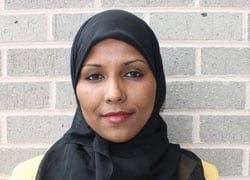
Mabruka’s Story
Mabruka
My name is Mabruka and I am 29 years old. I am a mother of two, a wife, a daughter, and a sister. I am a peer counselor for patients who are diagnosed with tuberculosis (TB). I am also a TB survivor who has lived through the pain of TB disease and its treatment.
When I first heard of TB, I was a little frightened because I knew of a family member back in Ethiopia who had died of TB. I didn’t think that I could get TB since I lived in America. However, I learned that anyone can get TB.
I was diagnosed with TB disease here in the United States at the age of 18. One day, I came home from school and started to cough forcefully. I felt like I couldn’t stop myself from coughing. I had been feeling sick for about 2 months at this point, but my coughing had not been this extreme. Suddenly, I noticed that I was coughing up blood. At this point I hid it from my family because I didn’t want them to worry, especially my mom. Many times I had gone to the doctor and all they gave me was cough medicine. There was another day where my coughing up blood worsened, so I went into the emergency room. The physician took an x-ray of my lungs and asked me if I had noticed anything different about my health. I told him that I had been experiencing unexplained weight loss, tiredness, shortness of breath, fever, night sweats, chills, loss of appetite, coughing up blood, chest pain, and pain with breathing and coughing. He then told me that I had TB disease. It was evident from my x-ray and the symptoms that I had.
Being diagnosed with TB disease changed my life. Treatment included taking 9 to 10 pills a day over a span of 6 months. I was always fearful that I could get sick again. I didn’t want to participate in any extracurricular activities because I would start to cough forcefully, and I always felt tired. From the moment I woke up to when I went to bed, I remember just feeling so tired. One of the people who helped me stick to the treatment for TB was my mother. She was always so encouraging and supportive in my times of poor health and illness. I also told myself that I had a lot to live for, such as my family, and that I wanted to get better for them. I was young and in high school. I was looking forward to graduating, going to college, getting married, and starting a family.
My family always was there for me, every step of the way during my treatment. They knew what it felt like because my mother, father, brother, and sister were diagnosed with latent TB infection and they had gone through treatment previously. These were the things that I kept in mind as I went through my 6 months of treatment.
"When I first heard of TB, I was a little frightened because I knew of a family member back in Ethiopia who had died of TB. I didn’t think that I could get TB since I lived in America. However, I learned that anyone can get TB."
The most difficult part of the treatment was taking so many pills every day. I also stayed home from school often because I felt sick a lot. I loved school, so I was very sad when I stayed home. However, my mother took very good care of me. She was always there, cooking and taking care of me. She would try to take my mind off the treatment by telling me stories of people back in our homeland of Ethiopia. There were times that I had to wear a mask over my mouth because the doctor had recommended it. One of the hardest parts was feeling different because people would stare at me when I wore a mask to go outside. However, I was very fortunate to have my very caring, supportive, and loving family by my side.
During my treatment, I also benefitted from having a public health worker check on me every day and watch me take every dose of my medicine, which is called directly observed therapy (DOT). The local TB program was also very supportive. To help me take my medicine, I received $15 vouchers for groceries and protein drinks. In addition, my physician always encouraged me by telling me that I was doing better and that I would be fine soon.
Having TB has given me a new perspective on life. I knew the treatment was good for me and I told myself that I was not going to die of TB. And I am living proof of that. Now that I am a peer counselor at the DeKalb County Board of Health near Atlanta, and I see patients going through the same experience that I went through as a young adult, I share my story with them. I tell them that it will be okay, and that TB is treatable. I always try to help those who need some hope and encouragement by educating them about TB. Educating myself about TB also helped me to overcome my fears. My gift to the patients I work with is simply being a supportive person. It is something that helped me through my journey, and this is what I want to do for others.
I share my story because I want to motivate and inspire others who are diagnosed with latent TB infection, are living with TB disease, or know someone who is diagnosed with TB disease. I want to bring about awareness and educate the public about this disease. TB is misunderstood at times, but I want people to know that it is treatable and that educating yourself is the first and most important step.
More TB Personal Stories
Contact Us:
- Centers for Disease Control and Prevention
Division of Tuberculosis Elimination (DTBE)
1600 Clifton Rd., NE
MS E10
Atlanta, GA 30333 - 800-CDC-INFO
(800-232-4636)
TTY: (888) 232-6348 - Contact CDC–INFO
Tuberculosis
- Topics
- Basic TB Facts
- Treatment
- Testing & Diagnosis
- TB & HIV Coinfection
- Infection Control & Prevention
- Drug-Resistant TB
- TB in Specific Populations
- African-American Community
- Children
- Correctional Facilities
- Table of Contents
- Introduction
- Strengthen TB Information Systems and Program Assessment
- Strengthen TB Environmental Controls and Isolation Practices
- Provide More Comprehensive and Timely Screening and Diagnostic Evaluations
- Develop and Strengthen Contact Investigation Protocols
- Increase HIV Counseling and Testing
- Increase Staff Training
- Strengthen Collaboration Between Health Departments and Jails
- Homelessness
- International Travelers
- Pregnancy
- Vaccines & Immunizations
- Laboratory Information
- Drug Susceptibility Testing
- The Uses of Nucleic Acid Amplification Tests for the Diagnosis of TB
- Rapid Molecular Testing to Detect Drug-Resistant TB in the US
- Executive Summary
- Introduction
- Background on Tests for Molecular Detection of DR
- General Considerations and Principles for a Molecular DR Testing Service
- Possible Scenarios and Scope of Testing for a Molecular DR Testing Service
- Research Needs
- General Recommendations of the Expert Panel
- Communication Plan for the Report
- Recommendations
- References
- Panel Members and CDC Participants
- Appendix 1
- Appendix 2
- Appendix 3
- Interim Laboratory Biosafety Guidance for XDR Mycobacterium tuberculosis strains
- Research
- TB Epidemiologic Studies Consortium
- Background
- Infrastructure
- Research Projects
- Publications
- Meetings
- Directory
- TBESC Committee Members
- Translating Research into Practice (TRIP)
- Contact TBESC
- Prospective Evaluation of Immunogenetic and Immunologic Markers for Susceptibility to Tuberculosis Infection and Progression from M. Tuberculosisinfection to active TB
- Zero Tolerance for Pediatric TB
- Models for Incorporating HIV Counseling, Testing, and Referral into Tuberculosis Contact Investigations
- Prevalence of Latent TB Infection Among High Risk Populations in the United States
- Regional Capacity-Building in Low-Incidence Areas
- Use of Network Analysis Methods to Characterize M. tuberculosis Transmission Patterns Among Women and Other High-Risk Populations
- An Analysis of Molecular Epidemiology of Multi-Drug Resistant M. tuberculosisin the United States
- Missed Opportunities for TB Prevention in Foreign-Born Population in the United States and Canada
- New Model for Assessing TB Surveillance and Action Performance and Cost
- Addressing TB Among African Americans in the Southeast: Identifying and Overcoming Barriers to Treatment Adherence for Latent TB Infection and TB Disease
- Assessing the TB Knowledge, Attitudes, Beliefs, and Practices Among Private Providers Serving Foreign-born Populations at Risk for TB
- Factors Associated with Acceptance of, Adherence to and Toxicity From Treatment for Latent TB Infection and Pilot Study of Treatment for Latent TB Infection Effectiveness
- Culturally Appropriate TB Educational Materials for Leaders and Staff of Hispanic Service Organizations
- Enhancing TB Programs’ Capacity for Self-Evaluation: Testing New Tools and Developing an Evaluation Toolkit
- African Refugee Women’s Health Improvement Project
- Evaluation of the TK Medium: A New Rapid Solid Culture System for Tuberculosis
- Evaluation of New Interferon-y Release Assays in the Diagnosis of Latent TB Infection in Health Care Workers
- Request for Proposal
- TB Trials Consortium
- Behavioral & Social Science Research
- TB Epidemiologic Studies Consortium
- Data & Statistics
- Education & Training
- Resources for TB Programs
- Publications & Products
- Fact Sheets
- General
- Fact sheets - Spanish
- TB - General Information
- The Difference Between Latent TB Infection and Active TB Disease
- Diferencia entre la infección de tuberculosis latente y enfermedad de tuberculosis activa
- A Global Perspective on TB
- Tuberculosis Information for Employers in Non-Healthcare Settings
- Bovine Tuberculosis in Humans
- Tuberculosis Information for International Travelers
- TB Can Be Treated
- Exposure to TB
- TB and HIV/AIDS
- You Can Prevent TB
- Testing for TB
- Tuberculosis: información general
- Diferencia entre la infección de tuberculosis latente y enfermedad de tuberculosis activa
- Información sobre la tuberculosis para los viajeros internacionales
- Exposición a la tuberculosis
- Usted puede prevenir la tuberculosis
- La tuberculosis puede ser tratada
- Tuberculosis y VIH/SIDA
- Usted puede prevenir la tuberculosis
- Pruebas para detectar la tuberculosis
- Data & Statistics
- A Global Perspective on TB
- Trends in Tuberculosis – United States
- The Revised Report of Verified Case of Tuberculosis
- The National Tuberculosis Indicators Project (NTIP)
- National Tuberculosis Indicators Project (NTIP): Frequently Asked Questions
- TB Genotyping
- TB Genotyping Information Management System (TB GIMS)
- Drug-Resistant TB
- Multidrug-Resistant Tuberculosis (MDR TB)
- Extensively Drug-Resistant Tuberculosis (XDR TB)
- CDC’s Role in Preventing Extensively Drug-Resistant Tuberculosis (XDR TB)
- Tuberculosis multirresistente (MDR)
- Tuberculosis extremadamente resistente (XDR)
- El papel de los CDC en la prevención de la tuberculosis extremadamente resistente (XDR)
- Infection Control & Prevention
- TB in Specific Populations
- Tuberculosis Information for Employers in Non-Healthcare Settings
- Tuberculosis in Minorities
- Tuberculosis Information for International Travelers
- TB and HIV/AIDS
- Recommendations for Human Immunodeficiency Virus (HIV) Screening in Tuberculosis (TB) Clinics
- Treatment of Drug-Susceptible Tuberculosis Disease in HIV-Infected Persons
- Tuberculosis in Blacks
- Tuberculosis and Pregnancy
- Tuberculosis y embarazo
- Treatment
- TB Can Be Treated
- Treatment of Latent TB Infection
- Treatment of Latent Tuberculosis Infection: Maximizing Adherence
- Treatment Options for Latent Tuberculosis Infection
- Treatment of Drug-Resistant Tuberculosis
- Treatment of Drug-Susceptible Tuberculosis Disease in Persons Not Infected with HIV
- Treatment of Drug-Susceptible Tuberculosis Disease in HIV-Infected Persons
- Tratamiento de la infección de tuberculosis latente
- Testing & Diagnosis
- TB Can Be Treated
- Testing for TB
- Recommendations for Human Immunodeficiency Virus (HIV) Screening in Tuberculosis (TB) Clinics
- Interferon-Gamma Release Assays (IGRAs)
- Tuberculin Skin Testing
- Diagnosis of Tuberculosis Disease
- Targeted Tuberculin Testing and Interpreting Tuberculin Skin Test Results
- Prueba cutánea de la tuberculina
- Diagnóstico de la tuberculosis activa
- Vaccines & Immunizations
- General
- Guidelines
- Guides & Toolkits
- Core Curriculum
- Self-Study Modules
- Report of Verified Case of Tuberculosis (RVCT)
- Forging Partnerships to Eliminate TB
- Understanding the TB Cohort Review Process
- Latent Tuberculosis Infection: A Guide for Primary Health Care Providers
- Effective TB Interviewing for Contact Investigation
- Mantoux Tuberculin Skin Testing Products
- Ethnographic Guides
- Newsletters
- Pamphlets, Brochures, Booklets
- Posters
- Mantoux Tuberculin Skin Test Wall Chart
- World TB Day
- Afiches
- 2011 Poster (English)
- 2011 Poster (Spanish)
- 2010 Poster (English)
- 2010 Poster (Spanish)
- 2008 Poster (English)
- 2008 Poster (Spanish)
- 2006 Poster (English)
- 2004 Poster (English)
- 2004 Poster (Spanish)
- 2003 Poster (English)
- 2003 Poster (Spanish)
- 2003 Now is the Time Poster (English)
- 2003 Now is the Time Poster (Spanish)
- Think TB
- Stop TB
- Reports & Articles
- Morbidity and Mortality Weekly Reports (MMWRs)
- Contact Investigations
- Control and Elimination
- Data & Statistics
- Drug-Resistant Tuberculosis
- Infection Control & Prevention
- Laboratory
- TB in Specific Populations
- Foreign-Born
- High-Risk Settings
- Homeless
- International
- Occupational Groups
- Travel
- TB & HIV
- Testing & Diagnosis
- Treatment
- LTBI Updates
- Vaccines & Immunizations
- World TB Day
- DTBE Authored Journal Articles
- Tuberculosis Laboratory Aggregate Reports
- Morbidity and Mortality Weekly Reports (MMWRs)
- Slide Sets
- Core Curriculum
- Self-Study Modules
- Prevention and Control of Tuberculosis in Correctional and Detention Facilities
- Guidelines for Preventing the Transmission of M. TB in Health care Settings
- Investigation of Contacts of Persons with Infectious TB
- Text-Only version
- Introduction
- Decisions to Initiate a Contact Investigation
- Investigating the Index Patient and Sites of Transmission
- Assigning Priorities to Contacts
- Diagnostic and Public Health Evaluation of Contacts
- Medical Treatment for Contacts with LTBI
- When to Expand a Contact Investigation
- Communicating Through the News Media
- Data Management and Evaluation of Contact Investigations
- Confidentiality and Consent in Contact Investigations
- Staff Training for Contact Investigations
- Contact Investigations in Special Circumstances
- Source-Case Investigations
- Cultural Competency and Social Network Analysis
- Resources
- Epidemiology of Pediatric Tuberculosis in the United States
- Text-Only version
- Introduction
- Pediatric TB Cases by Age and Race
- Pediatric TB Cases by Origin of Birth
- Pediatric Cases, Percentages and Rates by States
- Pediatric TB Cases by Case Verification Criterion and Site of Disease
- Pediatric TB Cases in Specific Groups
- Pediatric TB Cases Case Completion
- Slide 1
- Slide 2
- Slide 3
- Slide 4
- Slide 5
- Slide 6
- Slide 7
- Slide 8
- Slide 9
- Slide 10
- Slide 11
- Slide 12
- Slide 13
- Slide 14
- Slide 15
- Slide 16
- Slide 17
- Slide 18
- Slide 19
- Slide 20
- Slide 21
- Slide 22
- Slide 23
- Slide 24
- Slide 25
- Slide 26
- Slide 27
- Slide 28
- Slide 29
- Slide 30
- Slide 31
- Treatment of TB
- Targeted Tuberculosis Testing and Treatment of Latent Tuberculosis Infection
- CD Roms
- Electronic Tools & Resources
- Web-Based Courses & Webinars
- Content Syndication
- Fact Sheets
- Global TB
- Events
- Links
- About Us
- Mission Statement and Activities
- Organization Chart
- Advisory Groups
- Federal TB Task Force
- Table of Contents
- Executive Summary
- Introduction
- Chronology in the Development of This Report
- Strategies for Maintaining Control of TB
- Strategies for Accelerating the Decline of TB
- Activities for Developing New Tools
- Global U.S. Actions
- Assessing the Impact of Actions Taken
- Federal TB Task Force Members and Others Involved in the Development of This Report
- Glossary
- References
- Federal TB Task Force Roster
- Table of Contents
- Executive Summary
- Introduction
- How to Eliminate TB? – The IOM Report
- Why Eliminate TB? – Rationale for Elimination
- Who Will Lead? – CDC's Response
- Goal I: Maintain control of TB
- Goal II: Accelerate the decline
- Goal III: Create new tools
- Goal IV: Reduce the global burden of TB
- Goal V: Summon and sustain support
- Goal VI: Track progress
- References
- Federal TB Task Force
- Funding