Skip directly to search Skip directly to A to Z list Skip directly to navigation Skip directly to site content Skip directly to page options
CDC Home
  • Sodium - Most Americans should consume less sodium.
  • Secondhand Smoke - Even brief exposure can trigger a heart attack.
  • Podcasts - Heart disease and stroke podcasts.


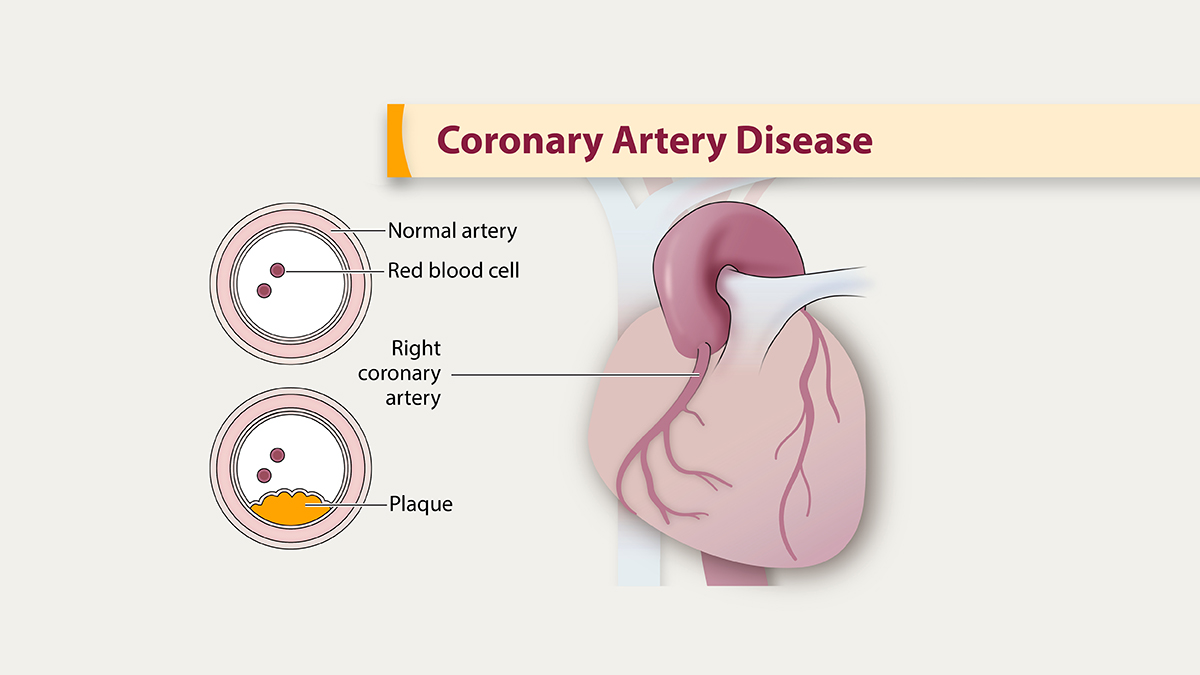
In the United States, the most common type of heart disease is coronary artery disease (CAD), which can lead to heart attack. You can greatly reduce your risk for CAD through lifestyle changes and, in some cases, medication.

Coronary artery disease can cause a heart attack. If you have a heart attack, you are more likely to survive if you know the signs and symptoms, call 9-1-1 right away, and get to a hospital quickly. People who have had a heart attack can also reduce the risk of future heart attacks or strokes by making lifestyle changes and taking medication.

Featured Items


IOM coverNew Institute of Medicine Report Finds Even Brief Exposure to Secondhand Smoke Can Trigger a Heart Attack
Tobacco smoke can cause health problems not only for smokers, but also for people around them. Breathing secondhand smoke increases a person's risk for a heart attack and other heart conditions.


Food full of sodium.Most Americans Should Consume Less Sodium
Most of the sodium we consume is in the form of salt. Too much sodium is bad for your health. It can increase your blood pressure and your risk for a heart attack or stroke. Heart disease and stroke are the first and third killers of men and women in the United States each year.


A doctor talking to a patient.H1N1 Interim Guidance for Adults with Cardiovascular Disease
The 2009–2010 flu season is upon us and many people are likely to get ill with either the usual seasonal flu or 2009 H1N1 flu. People with heart disease, cardiovascular disease, or who have had a stroke are at increased risk of having medical complications of flu. This information is intended to help this group prevent getting seasonal and 2009 H1N1 flu.

Five-part economic webcast series.Five-Part Webcast on Economic Evaluation
This webcast series is designed to help you understand the value of economic evaluation and how to incorporate these methods into your programs. The five-part webcast will assist you in choosing the appropriate economic analysis for your heart disease and stroke prevention program or policy.


Contact Us:
  • CDC/NCCDPHP/DHDSP
    4770 Buford Hwy, NE
    Mail Stop K-47
    Atlanta, GA 30341-3717
  • Call: 1-800-CDC-INFO
    TTY: 1-888-232-6348
    Fax: 770-488–8151
  • cdcinfo@cdc.gov
USA.gov: The U.S. Government's Official Web PortalDepartment of Health and Human Services
Centers for Disease Control and Prevention   1600 Clifton Rd. Atlanta, GA 30333, USA
800-CDC-INFO (800-232-4636) TTY: (888) 232-6348, 24 Hours/Every Day - cdcinfo@cdc.gov

A-Z Index

  1. A
  2. B
  3. C
  4. D
  5. E
  6. F
  7. G
  8. H
  9. I
  10. J
  11. K
  12. L
  13. M
  14. N
  15. O
  16. P
  17. Q
  18. R
  19. S
  20. T
  21. U
  22. V
  23. W
  24. X
  25. Y
  26. Z
  27. #