Stroke Facts
Find facts and statistics about stroke in the United States.
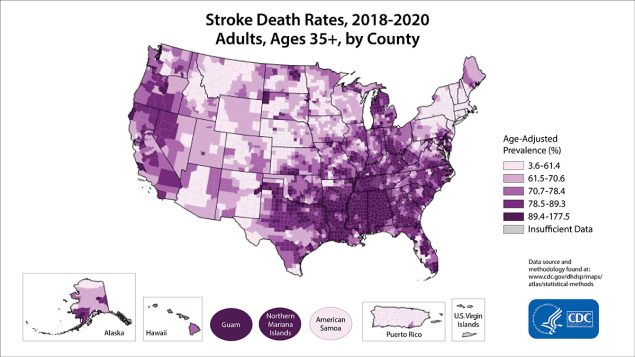
Stroke statistics
- In 2021, 1 in 6 deaths from cardiovascular disease was due to stroke.1
- Every 40 seconds, someone in the United States has a stroke.2 Every 3 minutes and 14 seconds, someone dies of stroke.1
- Every year, more than 795,000 people in the United States have a stroke. About 610,000 of these are first or new strokes.2
- About 185,000 strokes—nearly 1 in 4—are in people who have had a previous stroke.2
- About 87% of all strokes are ischemic strokes, in which blood flow to the brain is blocked.2
- Stroke-related costs in the United States came to nearly $56.5 billion between 2018 and 2019.2 This total includes the cost of health care services, medicines to treat stroke, and missed days of work.
- Stroke is a leading cause of serious long-term disability.2 Stroke reduces mobility in more than half of stroke survivors age 65 and older.2
Stroke statistics by race and ethnicity
- Stroke is a leading cause of death for Americans, but the risk of having a stroke varies with race and ethnicity.
- Risk of having a first stroke is nearly twice as high for non-Hispanic Black adults as for White adults,2 and non-Hispanic Black adults and Pacific Islander adults have the highest rates of death due to stroke.1
- The death rate for stroke increased from 38.8 per 100,000 in 2020 to 41.1 per 100,000 in 2021.1
Stroke risk varies by age
- Stroke risk increases with age, but strokes can—and do—occur at any age.
- In 2014, 38% of people hospitalized for stroke were less than 65 years old.3
Early action is important for stroke
Know the warning signs and symptoms of stroke so that you can act fast if you or someone you know might be having a stroke. The chances of survival are greater when emergency treatment begins quickly.
- In one survey, most respondents—93%—recognized sudden numbness on one side as a symptom of stroke. Only 38% were aware of all major symptoms and knew to call 9-1-1 when someone was having a stroke.4
- Patients who arrive at the emergency room within 3 hours of their first symptoms often have less disability 3 months after a stroke than those who received delayed care.4
Americans at risk for stroke
High blood pressure, high cholesterol, smoking, obesity, and diabetes are leading causes of stroke. One in 3 U.S. adults has at least one of these conditions or habits.2
Learn how to take steps to prevent stroke.
What is CDC doing about stroke?
CDC and its partners are leading national initiatives and programs to reduce rates of death and disability caused by stroke and to help women live longer, healthier lives.
CDC’s Division for Heart Disease and Stroke Prevention (DHDSP) provides resources to all 50 states to address heart disease and stroke, as well as helping lead or support the following:
- The WISEWOMAN program provides low-income, underinsured, or uninsured women with chronic disease risk factor screening, lifestyle programs, and referral services in an effort to prevent heart disease and strokes.
- The Paul Coverdell National Acute Stroke Program funds states to measure, track, and improve the quality of care for stroke patients. The program works to reduce death and disabilities from stroke.
- The Million Hearts® initiative, which is co-led by CDC and the Centers for Medicare & Medicaid Services, works with other federal agencies and private-sector partners to raise awareness about heart disease and stroke and prevent attacks and strokes.
More information
CDC
- Vital Signs: Preventing Stroke Deaths
- Signs and Symptoms of Stroke
- Facts About Hypertension
- High Cholesterol Facts
- Smoking & Tobacco Use: Fast Facts and Fact Sheets
- Diabetes Fast Facts
- Adult Obesity Facts
Other organizations
- National Institute of Neurological Disorders and Stroke (NINDS): Stroke Information Page
- NINDS Know Stroke Campaign
- National Institutes of Health: Mind Your Risks®
- MedlinePlus: Stroke
- Brain Attack Coalition
- American Heart Association/American Stroke Association: Help and Support
- World Stroke Organization