General Information
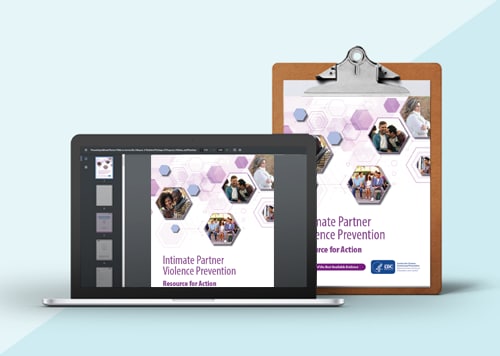
- Understanding Intimate Partner Violence
This fact sheet provides a basic overview of intimate partner violence. It is intended for the general public.
- Understanding Teen Dating Violence [PDF 314KB] This fact sheet provides a basic overview of teen dating abuse. It is intended for the general public.
- Preventing Intimate Partner and Sexual Violence: Program Activities Guide This guide describes CDC’s public health activities and research related to intimate partner and sexual violence.
- World Report on Violence and Health [PDF 222KB] This report is the first comprehensive review of violence on a global scale. Chapter 4 provides detailed information on intimate partner violence.
What's New
- The 2010 National Intimate Partner and Sexual Violence Survey (NISVS)
- Applying Science. Advancing Practice. (ASAP) is a series of informational briefs to help apply scientific knowledge to the practice of primary prevention of violence.
- Training Professionals in the Primary Prevention of Sexual and Intimate Partner Violence: A Planning Guide
- Evaluation for Improvement: A Seven-Step Empowerment Evaluation Approach
- CDC-TV presents Break the Silence: Stop the Violence
- DELTA Program: At-a-Glance
- When Closeness Goes Wrong
[Podcast 0:59] - When Closeness Goes Wrong
[Podcast 8:22] - Physical Dating Violence Among High School Students - United States, 2003
- Measuring Intimate Partner Violence Victimization and Perpetration: A Compendium of Assessment Tools
- Intimate Partner Violence and Sexual Violence Victimization Assessment Instruments for Use in Health Care Settings
Scientific Information
- Definitions Consistent definitions are necessary for obtaining accurate and reliable estimates of intimate partner violence.
- Data Sources Data, including the number of violence-related injuries and deaths, help define the magnitude of the problem.
- Risk & Protective Factors Risk and protective factors are important considerations in the development of prevention programs.
- Consequences Intimate partner violence can have a devastating impact individuals, families, and communities.
- Prevention Strategies The current science base includes information on best practices and promising prevention strategies.
- TranslationStrategies for distributing prevention information and ensuring widespread adoption within communities.
Featured Resources
- National Domestic Violence Hotline If you are, or know someone who is, the victim of intimate partner violence, contact your local battered women's shelter or the National Domestic Violence Hotline at 800-799-SAFE (7233), 800-787-3224 TYY.
- Choose RespectChoose Respect is CDC's award-winning initiative to promote health relationships and stop dating abuse before it begins.
- Domestic Violence Prevention Enhancement and Leadership Through Alliances (DELTA) Program
- National Violent Death Reporting SystemThe system collects data on violent deaths from death certificates, police reports, medical examiner and coroner reports, and crime laboratories.
- National Youth Violence Prevention Resource Center
- CDC's Extramural Research Program
- Online Resource Information
Contact Us:
- Centers for Disease Control and Prevention
National Center for Injury Prevention and Control (NCIPC)
4770 Buford Hwy, NE
MS F-63
Atlanta, GA 30341-3717 - 800-CDC-INFO
(800-232-4636)
TTY: (888) 232-6348
New Hours of Operation:
8am-8pm ET/
Monday-Friday
Closed Holidays - cdcinfo@cdc.gov