



What to know
- CDC’s Study to Explore Early Development (SEED) helps us learn more about autism spectrum disorder (ASD). SEED began in 2007 as one of the largest studies of young children (ages 2–5 years) with ASD in the United States. It looks at their risk factors for ASD and developmental characteristics.
- In 2021, SEED was expanded to learn more about the health, functioning, and needs of people with ASD and other developmental disabilities as they mature into adolescence and adulthood.

Overview of SEED activities
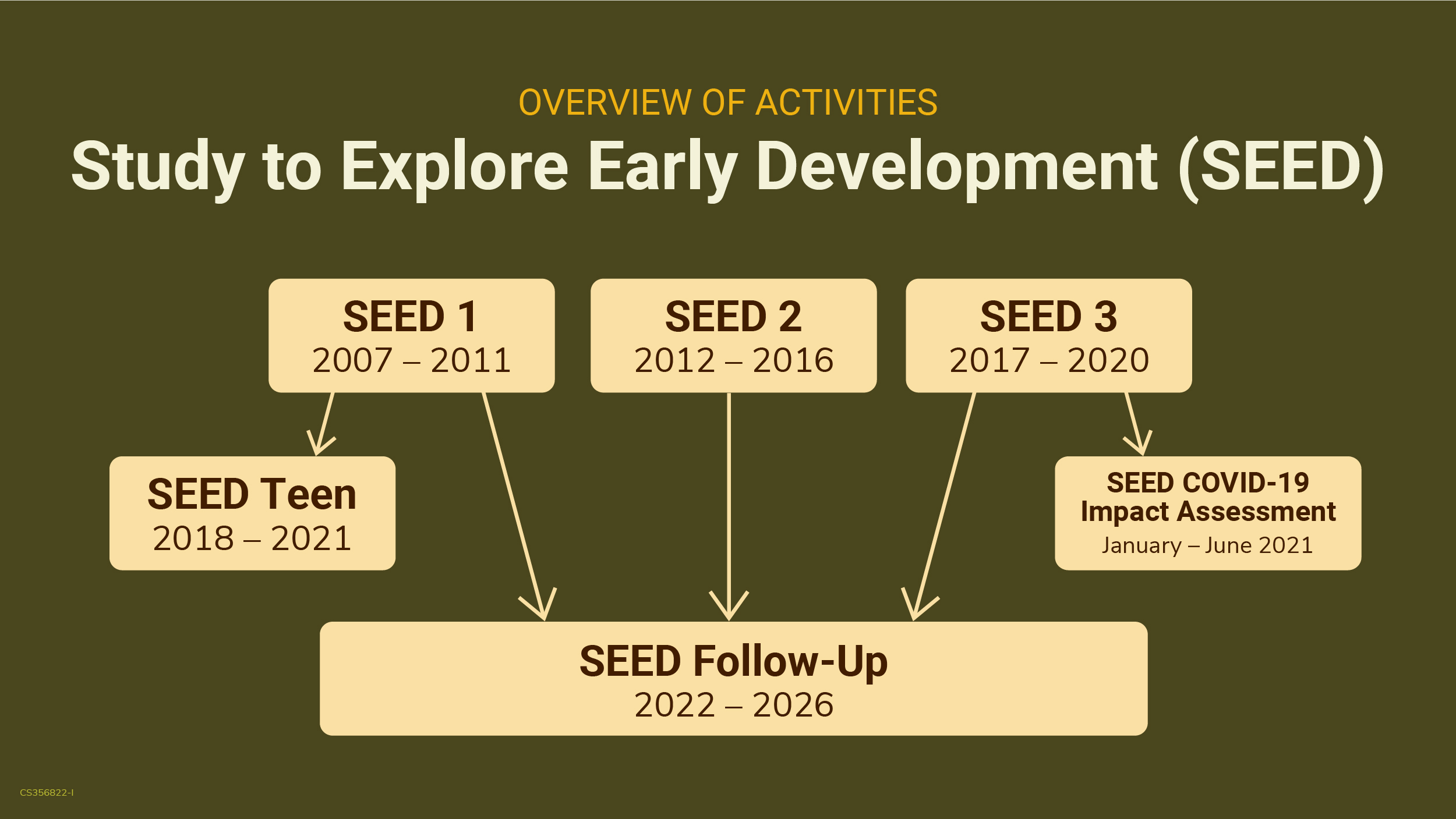
Learn more about SEED
A study to better understand ASD and other developmental disabilities in pre-school aged children.
A study to better understand changes from childhood to adolescence in teenagers with ASD.
A study to better understand ASD as children become adolescents and young adults.
A study looking at the impact of public health emergencies on children with ASD and their families.
Research findings from data collected through CDC's SEED study.
Content Source
National Center on Birth Defects and Developmental Disabilities
About This Page
Published: May 15, 2024
Updated: August 25, 2026
This page was last updated on this date. Updates may include minor edits, image changes, or other modifications to page content.
Reviewed: June 10, 2026
The information on this page was last reviewed by subject matter experts to ensure accuracy.