Signs and Symptoms
Seek medical attention immediately if you or your child develops symptoms of meningococcal disease. Symptoms of meningococcal disease can first appear as a flu-like illness and rapidly worsen.
The two most common types of meningococcal infections are meningitis and septicemia. Both of these types of infections are very serious and can be deadly in a matter of hours.
Meningococcal meningitis
Doctors call meningitis caused by the bacteria Neisseria meningitidis meningococcal meningitis. When someone has meningococcal meningitis, the bacteria infect the lining of the brain and spinal cord and cause swelling.
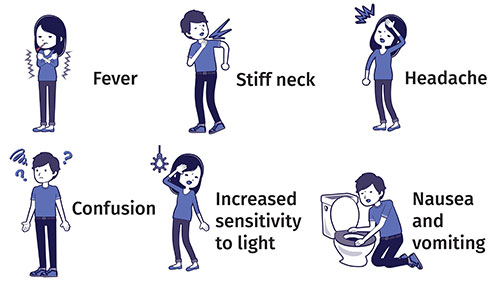
The most common symptoms include:
- Fever
- Headache
- Stiff neck
There are often additional symptoms, such as
- Nausea
- Vomiting
- Photophobia (eyes being more sensitive to light)
- Altered mental status (confusion)
Newborns and babies may not have the classic symptoms listed above, or it may be difficult to notice those symptoms in babies. Instead, babies may be slow or inactive, irritable, vomiting, feeding poorly, or have a bulging anterior fontanelle (the soft spot of the skull). In young children, doctors may also look at the child’s reflexes for signs of meningitis.
If you or your child has any of these symptoms, call the doctor right away.
Meningococcal septicemia (aka meningococcemia)
Doctors call septicemia (a bloodstream infection) caused by Neisseria meningitidis meningococcal septicemia or meningococcemia. When someone has meningococcal septicemia, the bacteria enter the bloodstream and multiply, damaging the walls of the blood vessels. This causes bleeding into the skin and organs.
Symptoms may include:
- Fever and chills
- Fatigue (feeling tired)
- Vomiting
- Cold hands and feet
- Severe aches or pain in the muscles, joints, chest, or abdomen (belly)
- Rapid breathing
- Diarrhea
- In the later stages, a dark purple rash
If you or your child has any of these symptoms, call the doctor right away.