The Centers for Disease Control and Prevention (CDC) estimates that each year, foodborne diseases cause illness in 1 in 6 Americans (or about 48 million people) resulting in 128,000 hospitalizations and 3,000 deaths. In 2012, CDC monitored between 16 and 57 potential food poisoning clusters each week and investigated more than 200 multistate clusters. These investigations led to the identification of contaminated sources, which resulted in actions to stop the outbreaks. These actions, which kept further illnesses from happening, included the recalls of more than 300 products, such as peanut butter and peanut butter products, leafy greens, cantaloupes, sprouts, ground beef, raw scraped ground tuna, mangoes, dry dog food, and ricotta salata cheese.
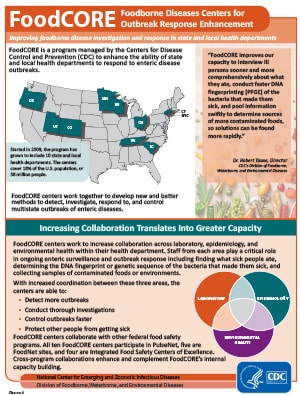
Foodborne Diseases Centers for Outbreak Response Enhancement (FoodCORE) centers work together to develop new and better methods to detect, investigate, respond to, and control multistate outbreaks of foodborne diseases. Efforts are primarily focused on outbreaks caused by bacteria, including Salmonella, Shiga toxin-producing E. coli, and Listeria. The ability to detect and investigate viral and parasitic foodborne disease outbreaks will also be strengthened.

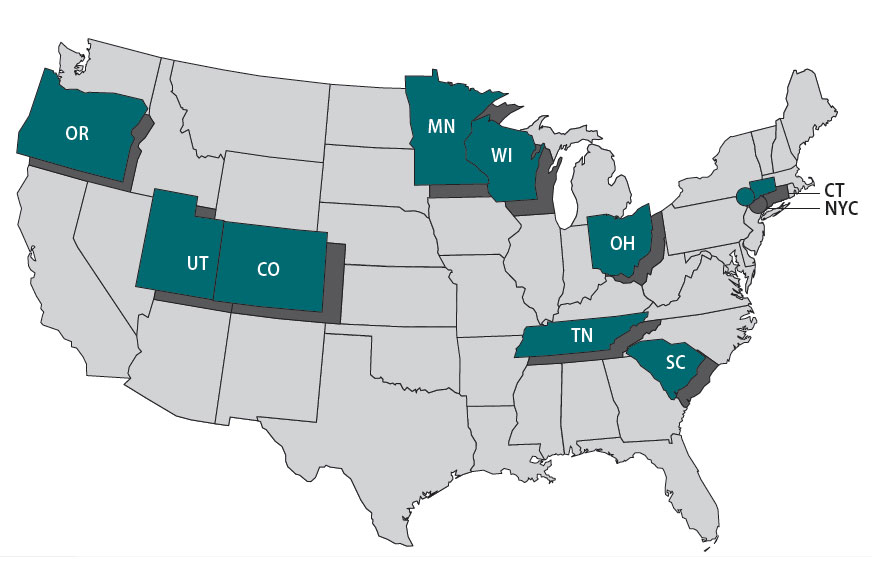
FoodCORE Centers, 2013
FoodCORE Topics
About FoodCORE
Program overview, metrics, and key areas of focus.
Introduction, center information, success stories, and program highlights.
Performance metrics, measurable activities, and minimum reporting requirements.
FoodCORE success stories and accomplishments.
Roles and responsibilities, and contact information.
FoodCORE partners, publications, and presentations.
Highlights and Successes
In 2012, CDC scientists monitored between 16 and 57 potential food poisoning clusters each week and investigated more than 200 multistate clusters nationwide. Two of CDC’s food safety programs partner with 15 jurisdictions to get ahead of stubborn foodborne outbreaks: FoodCORE and FoodNet.
What is the difference between FoodCORE and FoodNet?
FoodCORE is one of the newest and most promising programs at CDC. Seven FoodCORE centers, covering about 14% of the US population, work together to develop new and better methods to detect, investigate, respond to, and control multistate outbreaks of foodborne diseases.
FoodNet, established in 1996, is an active population- based surveillance system that collects information in 10 states and covers 15% of the US population. It estimates the number of foodborne illnesses, monitors trends in incidence of specific foodborne illnesses over time, attributes illnesses to specific foods and settings, and disseminates this information. One of the states where these two programs overlap is in Connecticut.
Contact Us:
- Centers for Disease Control and Prevention
1600 Clifton Rd
Atlanta, GA 30333 - 800-CDC-INFO
(800-232-4636)
TTY: (888) 232-6348 - cdcinfo@cdc.gov