Be a Safe Patient
Everyone has a role to play in preventing infections and improving dialysis patient safety. You can be a safe patient and take action to help prevent infections.
- Wash your hands often or use hand sanitizer.
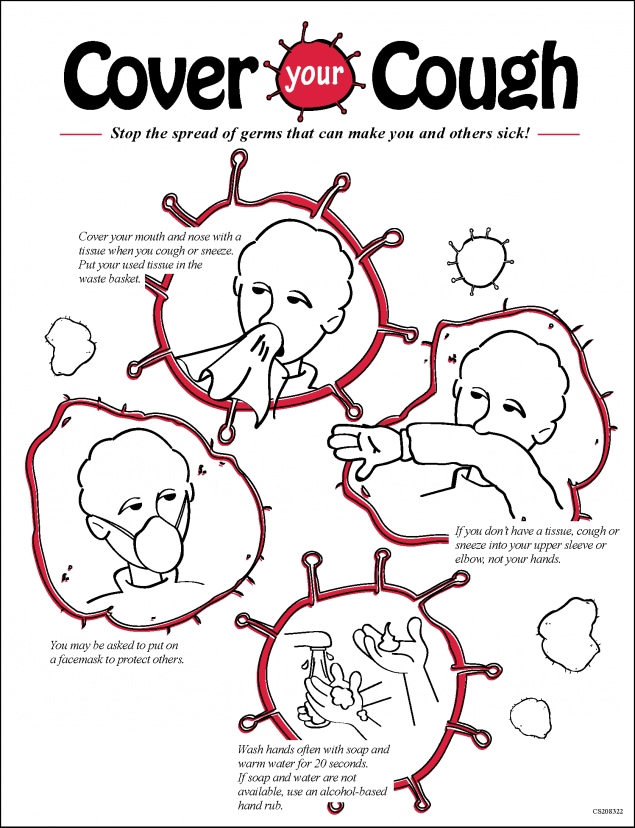
- Cover your nose and mouth when you cough or sneeze.
- Learn about the dialysis process and know what to expect during treatment.
- Learn about things staff do to protect you from infections and read the CDC Audit Tools and Checklists.
- Watch the Speak Up Video and ask questions during your dialysis treatments.
Dialysis Treatment Options
Your kidneys play a vital role in cleaning your blood, eliminating waste from your body, and supporting other important functions. Dialysis is a medical treatment for people with kidney failure or kidneys that do not work properly, but it is not a cure to restore kidney function.
There are several different dialysis treatment options which include:
- In-center hemodialysis,
- Home hemodialysis, or
- Peritoneal dialysis (PD).
Each treatment option has varying risks for infection. It is important to discuss the different treatment options with your doctor and decide which is best based on your individual needs.
Vein Access and Infection Risk
A vein access, also known as a vascular access, is needed to move blood between your body and the dialysis machine during hemodialysis treatments. An arteriovenous (AV) fistula or graft should be placed before hemodialysis treatments begin. However, if you have damaged veins and arteries, this type of access may not be possible and a central line catheter may be used. Central line catheters are designed for short-term use and can be placed quickly.
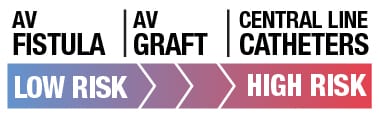
Any of the three access types (AV Fistula, AV Graft, or central line catheter) could develop an infection, but AV fistulas have the lowest risk of infection, while central line catheters have the highest risk of infection.
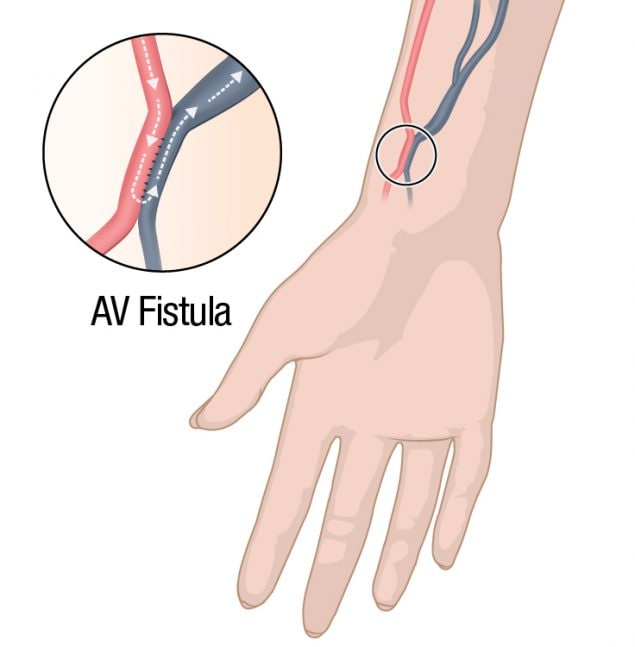
Arteriovenous (AV) Fistula: an access created by joining an artery and vein, typically in the arm. This access type lasts longer than a graft and is less likely to become infected.
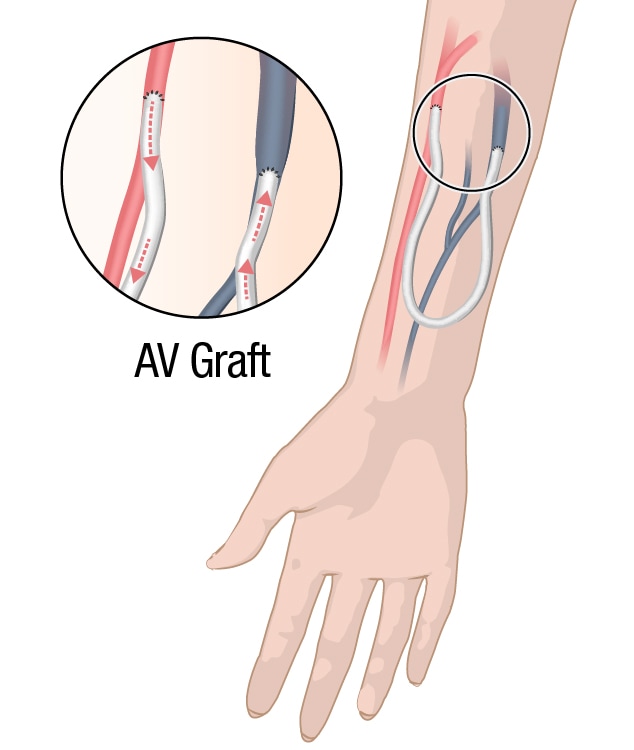
Arteriovenous (AV) Graft: an access created when doctors put in a tube that connects an artery and vein. This access type has a higher risk of infection than an AV fistula, but lower than a central line catheter.
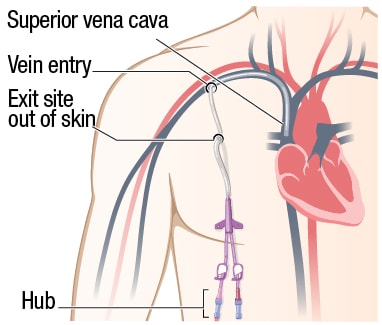
Central Line Catheter: an access created by inserting a tube into a vein. The tube is inserted through the skin into a vein in the neck, chest, or groin and the tip of the tube ends near the heart. This access type has the highest risk of infection.
Infections in Dialysis
Bloodstream Infections (BSI)
- Fever
- Chills
- Low blood pressure
Chronic Viral Infections
Infections caused by viruses are also a concern for people receiving dialysis. Viruses in the blood spread when an infected persons blood enters the body of someone who is not infected. This could happen in a variety of ways, including through surfaces and equipment in the dialysis facility. Symptoms of viral infections vary. Examples of viral infections are:
Other Infections
People receiving dialysis may also be at risk for infections that are not related to the blood and can lead to serious outcomes. These infections may include intestinal and respiratory infections such as:
Take Action to Prevent Infections During Dialysis Treatments
You can be a safe patient and take action to help prevent infections.
- Wash your hands often or use hand sanitizer.
- Cover your nose and mouth when you cough or sneeze.
- Learn about the dialysis process and know what to expect during treatment.
- Learn about things staff do to protect you from infections and read the CDC Audit Tools and Checklists.
- Watch the Speak Up Video and ask questions during your dialysis treatments.
- Check your access daily and notify staff if you notice any of these signs of infection:
- Redness
- Pus or unusual drainage
- Swelling
- If your catheter bandage gets dirty or wet, notify staff.
- If you have a central line catheter, ask staff if you can use a fistula or graft for your dialysis treatment.
- Make sure all staff clean their hands before and after caring for you or your access.
- In some cases, you may be asked to take additional actions to prevent infections. For example, during the COVID-19 pandemic.