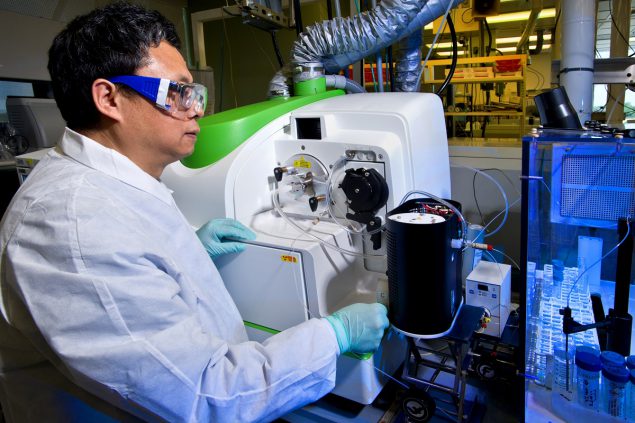
Inorganic and Radiation Analytical Toxicology Branch
The Inorganic and Radiation Analytical Toxicology (IRAT) Branch conducts research, develops methods, and analyzes elemental metals such as mercury (total and organic), arsenic (total and speciated), cadmium, lead, cobalt, tungsten, uranium, molybdenum, antimony, and other trace, toxic, and essential metals. For each of these metals, the Branch produces population-based exposure levels segmented by age, sex, and race or ethnicity. The Branch publishes this information in CDC's National Report on Human Exposure to Environmental Chemicals. The Branch also collaborates with academic institutions and other partners, including state public health departments, on exposure studies and studies that examine the connection between exposure levels and health effects.
IRAT is home to a total of 34 staff members, including 9 people with Ph.D.s, 5 people with M.S. degrees, and 20 people with B.S. or other degrees.
Did You Know?
- In 2006, ESA Biosciences, a clinical diagnostics company, unveiled a portable blood lead testing instrument, LeadCare II, which was developed in consultation with IRAT. This instrument provides results rapidly—within 3 minutes—so that in one visit, a child with an elevated blood lead level can be identified and appropriate interventions initiated right away. In the past, at least two visits to a public health clinic or a doctor's office were required for obtaining results, and some families did not return for follow up.
Get email updates
To receive email updates about this page, enter your email address:
Contact Us:
- Centers for Disease Control and Prevention
1600 Clifton Rd
Atlanta, GA 30333 - 800-CDC-INFO
(800-232-4636)
TTY: (888) 232-6348 - New Hours of Operation
8am-8pm ET/Monday-Friday
Closed Holidays - Contact CDC-INFO