Skip directly to search Skip directly to A to Z list Skip directly to navigation Skip directly to site content Skip directly to page options
CDC Home
Share
Compartir

CDC in Lesotho

Download PDF Version

Lesotho at a Glance

  • Population: 2,193,800
  • Per capita income: $1,800
  • Life expectancy at birth women/men: 48/49 yrs
  • Infant mortality rate: 91/1000 live births
Source: Population Reference Bureau World Population Data Sheet, 2011

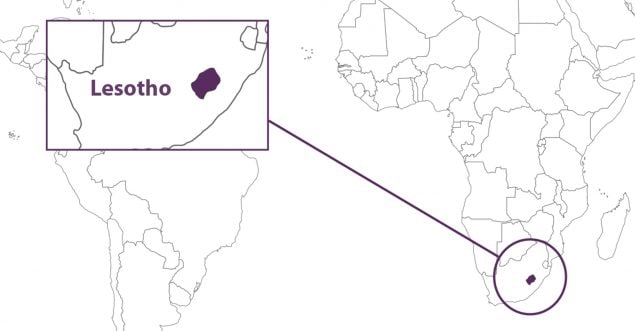
Image map of LethosoThe Centers for Disease Control and Prevention (CDC) has collaborated since 2007 with Lesotho’s Ministry of Health and Social Welfare (MOHSW) and its implementing partners to improve public health policies, services, and capacity development. CDC plays a pivotal role in the U.S. President’s Emergency Plan for AIDS Relief (PEPFAR) program in Lesotho. CDC, along with other U.S. government agencies and implementing partners, signed the PEPFAR Partnership Framework with the government of Lesotho in 2009. This document provides guidance for implementing PEPFAR funding in Lesotho. CDC’s work focuses on HIV/AIDS counseling and testing, tuberculosis (TB)/HIV care, blood safety, laboratory infrastructure, and strategic information. CDC initiatives have improved access to HIV/AIDS care and treatment, bolstered prevention programs, and strengthened health systems.

TB/HIV Care and Treatment

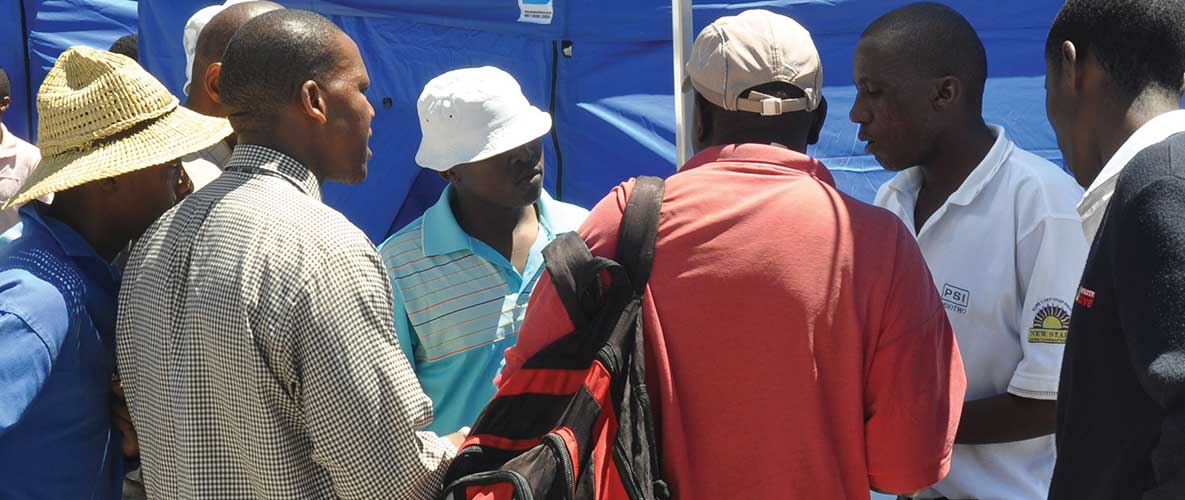
Image of TB and TB/HIV collaboarative activity groupTB is the most common and most important co-infection among persons with HIV/AIDS. In Lesotho, approximately 23% of the population is currently infected with HIV; of those, 80% are also infected with TB. CDC, through its partners, supports activities to reduce TB/HIV-related sickness and death by providing comprehensive TB/HIV services to people living with HIV/AIDS. Key achievements include:

  • the nationwide roll-out of proven TB and TB/HIV collaborative activities including intensive case finding, isoniazid preventative therapy, and infection control national guidelines
  • the creation of national and regional TB reference laboratories with capacity to diagnose drug resistant TB
  • the establishment of a TB/HIV technical advisory committee

CDC continues to support efforts to coordinate TB/HIV collaborative activities and to strengthen TB/HIV monitoring and evaluation systems. CDC also supports focusing on high-risk groups that include prisoners and migrant mine workers.

Prevention: Blood Safety

CDC supports national blood transfusion services to ensure an adequate supply of safe blood. More than 140 health care providers have been trained in donor recruitment skills, pre- and post-donation counseling, operation of mobile blood donor clinics, and blood transfusion safety to improve the quality of services and to increase blood collection targets. In 2011, CDC helped build infrastructure and human resource capacity of Lesotho Blood Transfusion Services and established two regional blood collection centers. The blood collection targets increased by 25% and 4,000 blood units were collected and tested for HIV/AIDS by the end of 2011.

Impact in Lesotho

  • Collection targets for units of blood increased by 25% in 2011
  • Laboratory information systems were established in 25% of clinical laboratories within one year
  • Infant diagnosis of HIV was established in 2010, with approximately 10,000 dried blood spot diagnostic tests processed
  • 23,675 individuals received HIV test results and counseling services in 2011

Laboratory Infrastructure

CDC has partnered with MOHSW to support the development of a national laboratory strategic plan, development of infrastructure, and implementation of a national quality assurance program. This program's goal is to expand and improve the quality of laboratory diagnosis and treatment monitoring. In 2011, CDC and its partners supported 18 hospital laboratories with training and quality assurance resulting in service improvement, safe blood services, inventory management, and strengthened laboratory management in preparation for accreditation. A WHO Regional Office for Africa quality improvement and laboratory accreditation process was implemented in 50% of enrolled labs and 4 of 18 labs successfully instituted an electronic-based laboratory information system. To improve the diagnosis of multi-drug resistant TB and diagnosis of TB in HIV patients, a national roll-out plan was completed and a pilot phase was initiated for implementing a rapid TB test. In addition, laboratories now have expanded capacity for early infant diagnosis of HIV and can perform the DNA-PCR tests in-country that are required for early diagnosis. CDC's work has produced measurable improvement in supply chain management, blood sample transport, and referral testing systems in Lesotho.

Strategic Information

Image of a healthcare providers in LesothoCDC provides technical and logistic support for collecting strategic information such as a demographic and health survey conducted in 2010 showing that the HIV infection rate had stabilized at 23%. In 2011 biannual HIV sentinel surveillance began, which monitors occurrence of HIV in specific clinics and hospitals and provides data for policy and program planning. CDC supported a facility assessment of neonatal male circumcision services and continues to work with the MOHSW through a contractor to evaluate the ongoing decentralization of health services. To build the monitoring and evaluation capacity of Lesotho's public health workforce, CDC supports and leverages other partners' investments to improve systems with the goal of achieving one national monitoring and evaluation system. The focus was on building capacity at district and local levels through revision of data collection tools and implementing a system for collecting community data. As a result, the MOHSW now conducts quarterly district reviews to measure performance in each district. Another strategic information activity for CDC is working with partners in supporting the MOHSW to develop and implement integrated HIV/AIDS registers that interface with software products to improve data flow. A Health Management Information System will include a central data repository serving health centers, hospitals, district health management teams, and central levels, where all health data can be stored and accessed. The system will include a dashboard to extract integrated reports. Data quality will be assured by built-in computer tools and techniques to check the reliability and accuracy of the data.

Top 10 Causes of Death in Lesotho

  1. HIV/AIDS 63 %
  2. Lower respiratory infections 4%
  3. Diarrheal diseases 3%
  4. Cerebrovascular disease 3%
  5. Ischaemic heart  disease 3%
  1. Perinatal conditions 3%
  2. Tuberculosis 2%
  3. Measles 2%
  4. Chronic obstructive pulmonary disease 1%
  5. Road traffic accidents 1%
Staffing:
CDC office (physical presence)
2 U.S. Assignees
5 Locally Employed
 
  • Page last reviewed: August 3, 2012
  • Page last updated: August 3, 2012
  • Content source: Global Health
  • Notice: Linking to a non-federal site does not constitute an endorsement by HHS, CDC or any of its employees of the sponsors or the information and products presented on the site.
USA.gov: The U.S. Government's Official Web PortalDepartment of Health and Human Services
Centers for Disease Control and Prevention   1600 Clifton Rd. Atlanta, GA 30333, USA
800-CDC-INFO (800-232-4636) TTY: (888) 232-6348 - Contact CDC-INFO