Skip directly to search Skip directly to A to Z list Skip directly to navigation Skip directly to site content Skip directly to page options
CDC Home

Diagnosis

Español: Diagnóstico

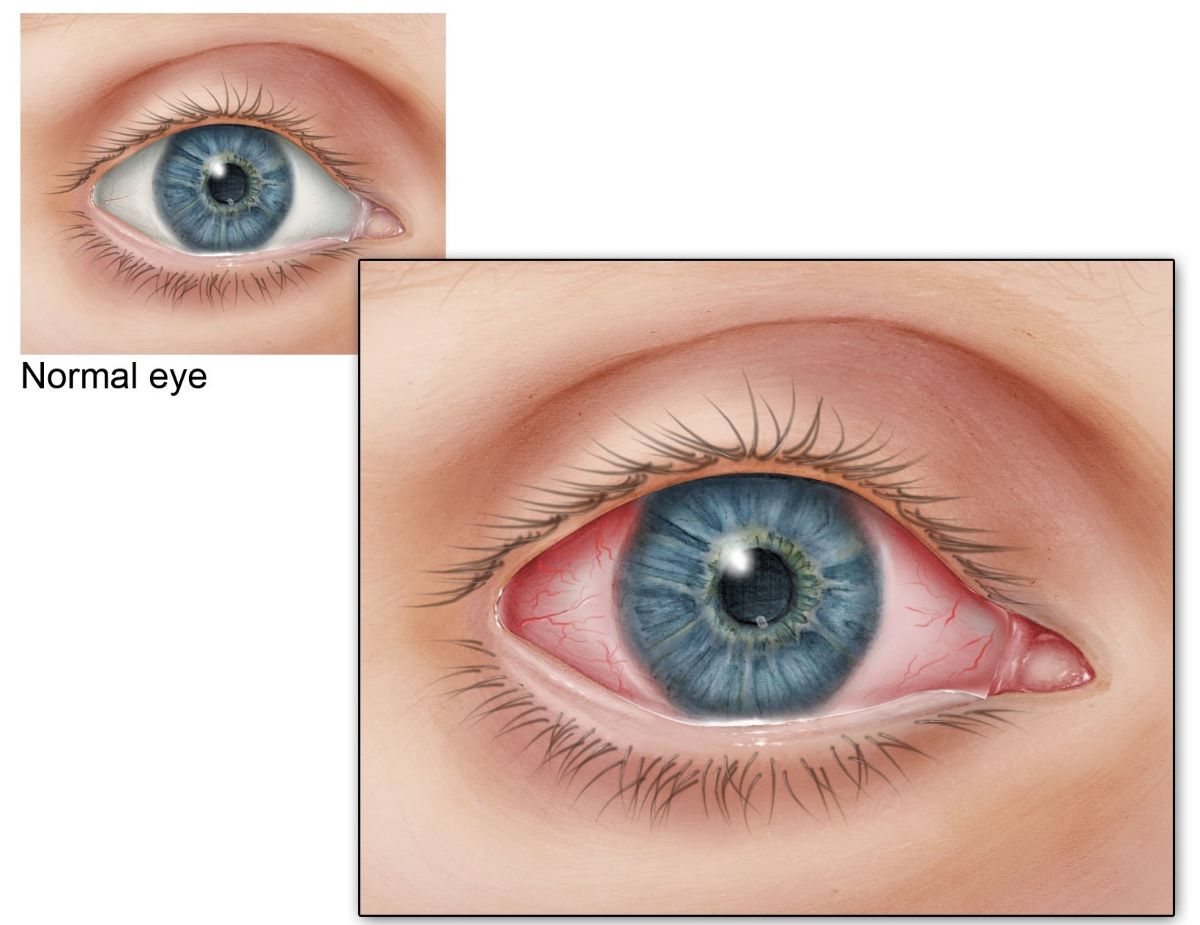
Conjunctivitis has many causes, but in most cases it results from infection with a virus or bacterium or from a reaction to an allergen. No matter the cause, conjunctivitis always involves inflammation (swelling) of the thin layer that lines the inside of the eyelid and covers the white part of the eye (the conjunctiva). But conjunctivitis also has other signs and symptoms, which may vary, depending on the cause. These signs and symptoms can be used to diagnose the type of conjunctivitis.

Viral Conjunctivitis

Doctor examining child.Viral conjunctivitis can often be diagnosed from signs and symptoms, and patient history. For example, if conjunctivitis accompanies a common cold or respiratory tract infection and if discharge from the eye is watery rather than thick, the cause is likely a virus. The history the patient gives (for example, having contact with someone with conjunctivitis or having allergies) and examination of the eye can also help a doctor make a firm diagnosis.

Laboratory tests are not usually needed to diagnose viral conjunctivitis. However, testing may be done if a more severe form of viral conjunctivitis is suspected, such as conjunctivitis caused by herpes simplex virus or varicella-zoster virus. This testing is done using a sample of the discharge from an infected eye.

Depending on the cause of viral conjunctivitis, some patients may have additional symptoms or conditions, such as the following:

  • Common cold, flu, or other respiratory infection — conjunctivitis often occurs with respiratory infections; sometimes the lymph node near the front of the ear is enlarged and painful.
  • Pharyngoconjunctivial fever — conjunctivitis as well as a fever and sore throat can occur with this syndrome, which is most commonly caused by infection with adenovirus serotypes 3, 4, and 7.
  • Epidemic keratoconjunctivitis — this is a more severe type of conjunctivitis; it is caused by infection with adenovirus serotypes 8, 19, and 37.
  • Acute hemorrhagic conjunctivitis — this type of conjunctivitis is sometimes accompanied with nervous system involvement; it is associated with enterovirus 70 and coxsackievirus A24.
  • Herpetic keratoconjunctivitis — this type of conjunctivitis is associated with herpes simplex virus and blister-like lesions on the skin; it may affect only one eye.
  • Rubella and rubeola (measles) — conjunctivitis can occur with these viral rash illnesses, which are usually accompanied by rash, fever, and cough.
  • Newcastle disease — conjunctivitis can accompany this disease, which usually occurs among poultry workers and veterinarians, not the general population; Newcastle disease is caused by Newcastle disease virus.

Top of Page

Bacterial Conjunctivitis

Bacterial conjunctivitis can usually be diagnosed by a doctor, nurse, or other healthcare provider from signs and symptoms, and patient history. For example, if conjunctivitis accompanies an ear infection and if discharge from the eye is thick rather than watery, the cause may be a bacterium. Although not routinely done, your healthcare provider may obtain a sample of eye discharge from the conjunctiva for laboratory analysis to determine which form of infection you have and how best to treat it.

Depending on the cause of bacterial conjunctivitis, some patients may have additional symptoms or conditions, such as the following:

  • Hyperacute bacterial conjunctivitis — this is a more severe type of conjunctivitis that develops rapidly and is accompanied by a lot of yellow-green discharge that returns even after being wiped away from the eye(s).
  • Chronic bacterial conjunctivitis — often develops along with another inflammatory condition (blepharitis) that promotes bacteria growing in the eyelid; flaky debris and warmth along the lid may also be present.
  • Inclusion (chlamydial) conjunctivitis — more common in newborns; includes redness of the eye(s), swelling of the eyelids, and discharge of pus, usually 5 to 12 days after birth.
  • Gonococcal conjunctivitis — more common in newborns; includes red eyes, thick pus in the eyes, and swelling of the eyelids, usually 2 to 4 days after birth.
  • Trachoma — chronic follicular conjunctivitis that leads to scarring in the conjunctiva and cornea; repeat infections occur in children less than 10 years of age and is common in developing countries.

Allergic Conjunctivitis

Allergic conjunctivitis can be diagnosed from signs and symptoms, and patient history; for example, allergic conjunctivitis may occur seasonally when pollen counts are high, and it can cause the patient's eyes to itch intensely. This type of conjunctivitis is a common occurrence in people who have other signs of allergic disease, such as hay fever, asthma, or eczema. Allergic conjunctivitis results from a person's reaction to substances they are allergic to, such as pollen, dust mites, animal dander, medications, cosmetics, and other allergy-provoking substances.

Top of Page


Images and logos on this website which are trademarked/copyrighted or used with permission of the trademark/copyright or logo holder are not in the public domain. These images and logos have been licensed for or used with permission in the materials provided on this website. The materials in the form presented on this website may be used without seeking further permission. Any other use of trademarked/copyrighted images or logos requires permission from the trademark/copyright holder...more

External Web Site Policy This graphic notice means that you are leaving an HHS Web site. For more information, please see the Exit Notification and Disclaimer policy.

 
Contact Us:
  • Centers for Disease Control and Prevention
    1600 Clifton Rd
    Atlanta, GA 30333
  • 800-CDC-INFO
    (800-232-4636)
    TTY: (888) 232-6348
  • New Hours of Operation
    8am-8pm ET/Monday-Friday
    Closed Holidays
  • cdcinfo@cdc.gov
USA.gov: The U.S. Government's Official Web PortalDepartment of Health and Human Services
Centers for Disease Control and Prevention   1600 Clifton Rd. Atlanta, GA 30333, USA
800-CDC-INFO (800-232-4636) TTY: (888) 232-6348 - cdcinfo@cdc.gov
A-Z Index
  1. A
  2. B
  3. C
  4. D
  5. E
  6. F
  7. G
  8. H
  9. I
  10. J
  11. K
  12. L
  13. M
  14. N
  15. O
  16. P
  17. Q
  18. R
  19. S
  20. T
  21. U
  22. V
  23. W
  24. X
  25. Y
  26. Z
  27. #