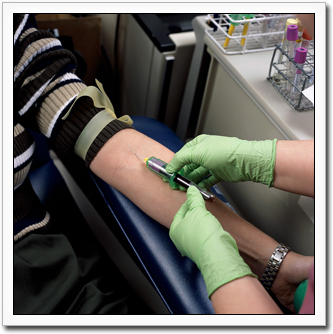
Diagnosis of Acute Chagas Disease
During the acute phase, the level of parasitemia is high, and diagnosis relies primarily on demonstration of circulating parasites.
Diagnostic methods include:
- Microscopy of fresh or Giemsa-stained smears of peripheral blood
- Culture of whole blood in special media
- Polymerase chain reaction (PCR) based assays in whole blood. PCR is typically more sensitive than smear or culture
Patients who receive an organ from a T. cruzi-infected donor or have been accidentally exposed to T. cruzi in laboratory accidents should be monitored carefully for evidence of acute infection. The earliest evidence of infection will be positive results on conventional or real time PCR, or visualization of parasites by microscopy of peripheral blood.