


At a glance
The Binational Border Infectious Disease Surveillance (BIDS) program works with U.S. southern border states and other partners to strengthen detection, reporting, and prevention of infectious diseases of binational importance.
About BIDS
The BIDS program partners with U.S. southern border states, the U.S.-Mexico Border Health Commission, and the Naval Health Research Center to strengthen surveillance, contact investigations, notification, and response for infectious diseases of binational importance. These diseases may affect communities in the U.S.-Mexico border regionA and beyond or spread through travel between the two countries.
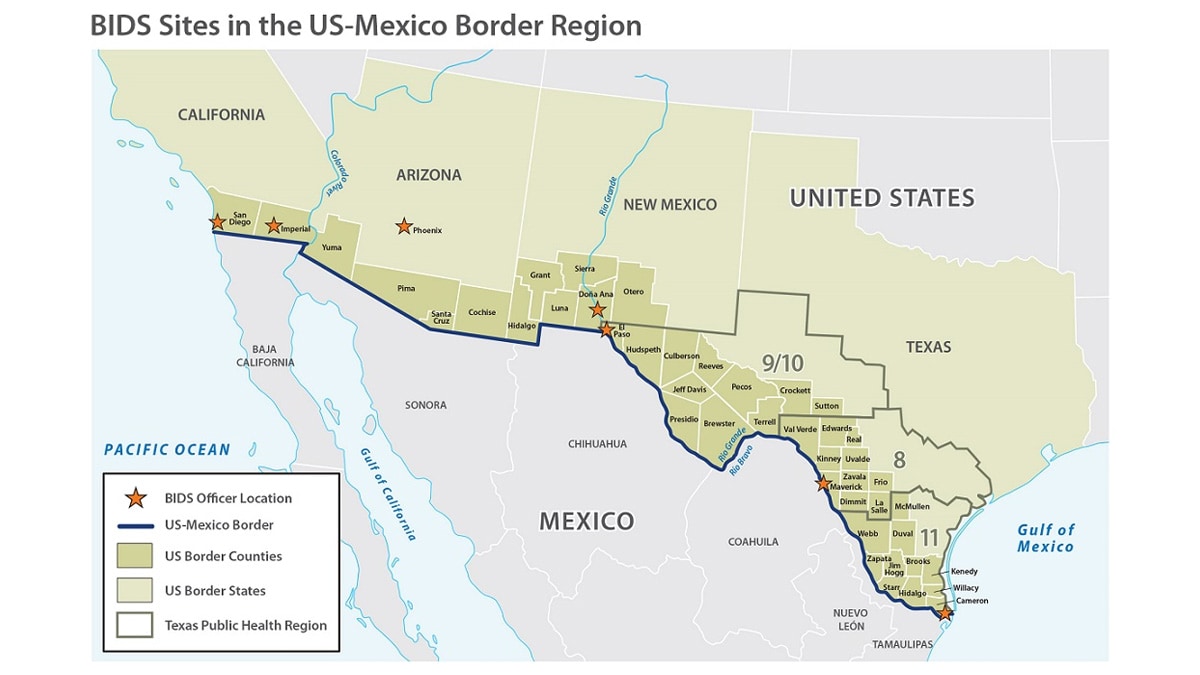
BIDS helps strengthen U.S. health security by supporting BIDS officers based in state and local health departments along the U.S. southern border states. These officers sustain partnerships, update communication protocols, and strengthen the capacity of public health agencies in detecting, investigating, and responding to infectious diseases in the region.
In alignment with the Global Health Security Agenda, BIDS projects address priority diseases including tuberculosis, vector-borne and foodborne diseases, influenza and other respiratory diseases, infections caused by antimicrobial-resistant bacteria, and emerging diseases of public health concern.
Program goals
- Improve infectious disease surveillance along the U.S. southern border by enhancing systems that help states identify and respond to disease cases and outbreaks that meet established binational criteria
- Identify public health gaps and needs related to binational health and develop or test strategies to prevent and control infectious diseases in the U.S. southern border regionA
- Strengthen bilateral infectious disease preparedness and response through partnerships and by updating local and regional protocols aligned with the Operational Protocol for U.S.-Mexico Binational Communication and Coordination on Disease Notifications and Outbreaks
Support to states
CDC provides guidance, technical assistance, coordination, resources, and oversight of funded activities to help U.S. southern border state public health agencies strengthen disease detection and response and address the border region's unique epidemiologic needs. BIDS projects involve state and local health departments, academic institutions, nongovernmental agencies, healthcare organizations, and public health agencies in Mexico.
State partners:
- Arizona Department of Health Services (ADHS)
- California Department of Public Health (CDPH)
- New Mexico Department of Health (NMDOH)
- Texas Department of State Health Services (DSHS)
Activities
Surveillance
BIDS partners tailor surveillance activities to local disease control priorities and may conduct special projects to inform surveillance needs.
Examples include:
- Strengthening surveillance systems to identify binational cases
- Investigating binational contacts of people with reportable infectious diseases that can spread from person to person
- Enhancing surveillance for respiratory illnesses among border communities and travelers
- Conducting assessments at land ports of entry to understand travelers' mobility patterns, knowledge, attitudes, and practices related to infectious diseases
Communication and preparedness
BIDS strengthens systematic communication and preparedness among partners to support coordinated response to infectious disease cases and outbreaks of binational importance.
Activities include:
- Developing, adopting, and updating guidelines and protocols that support coordination and information sharing, including:
- Technical Guidelines for United States-Mexico Coordination on Public Health Events of Mutual Interest
- Operational Protocol for Binational Communication and Coordination on Disease Notifications and Outbreaks
- Infectious Disease Prioritization for Multijurisdictional Engagement at the United States Southern Border Region
- Coordinating and facilitating public health preparedness exercises to build binational partnerships with Mexico and test communication procedures for disease notification, information sharing, and response
BIDS past to present
Public health authorities in the United States and Mexico have collaborated on infectious disease detection along the border since 1999. BIDS has evolved over time to support changing epidemiologic and preparedness priorities.
To learn more about how BIDS started, read the U.S.-Mexico Border Infectious Disease Surveillance Project: Establishing Binational Border Surveillance (2003)
This page was last updated on this date. Updates may include minor edits, image changes, or other modifications to page content.
The information on this page was last reviewed by subject matter experts to ensure accuracy.
- The U.S.-Mexico border region is made up of 44 counties across four U.S. states and 80 border districts across six Mexican states within 62 miles (100 km) of the 2,000-mile-long (3,218 kilometers) international boundary.