CDC in Tanzania
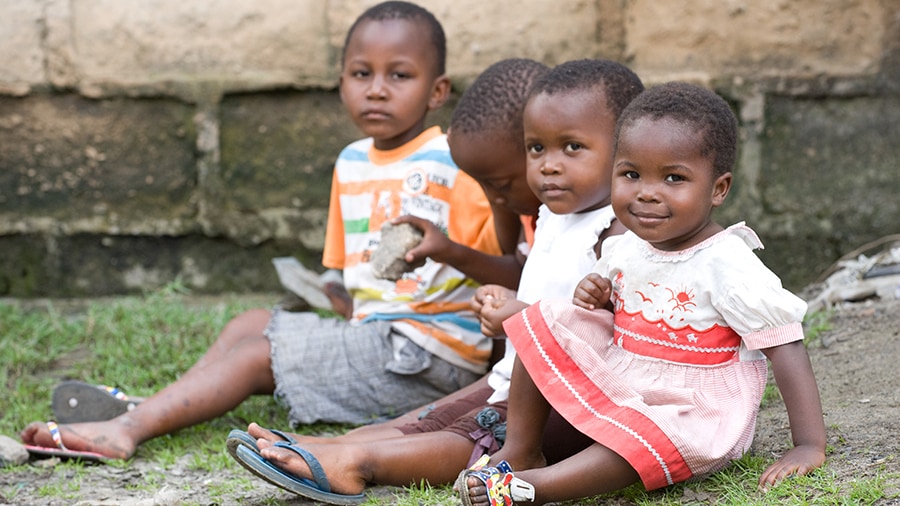
Children in Tanzania. Photo by David Snyder.
The Centers for Disease Control and Prevention (CDC) established an office in Tanzania in 2001 to support HIV/AIDS prevention. The CDC office expanded through the U.S. President’s Emergency Plan for AIDS Relief (PEPFAR) in 2003. CDC works with the Government of Tanzania to strengthen tuberculosis prevention efforts for people living with HIV; enhance laboratory, surveillance, and workforce capacity to respond to disease outbreaks through the Global Health Security Agenda; prevent and control malaria under the U.S. President’s Malaria Initiative (PMI); and respond to COVID-19.
Global Health Security
In today’s globally connected world, disease threats like COVID-19 spread faster and more unpredictably than ever before. Tanzania’s borders span eight countries, including the African Great Lakes region, which increases the country’s risk for cross-border disease outbreaks and epidemics. CDC and partners are well-placed to leverage past successful initiatives and rapidly respond to emerging and existing public health challenges.
CDC supports Tanzania to strengthen International Health Regulations core capacities to comprehensively prevent, rapidly detect, and effectively respond to public health threats. CDC also supports strengthened disease surveillance activities including:
- Expansion of the electronic community and facility-based surveillance for detection of early warning alerts
- Training the global public health workforce, including district-level epidemiologists
- Strengthened border health capabilities
- Enhanced laboratory testing for pathogens like Ebola and COVID-19
- Establishment of national and subnational Emergency Operations Centers (EOCs)

CDC helped establish one national and five regional EOCs to coordinate and respond to national public health emergencies

Since 2008, more than 860 residents have graduated from the advanced, intermediate, and frontline Field Epidemiology and Laboratory Training Programs (FELTP)
COVID-19
The first case of COVID-19 in Tanzania was confirmed in March 2020. Since the pandemic was declared, CDC has supported Tanzania with surveillance, infection prevention and control (IPC), border health efforts, and activation of rapid response teams and FELTP graduates and trainees. As of December 2022, CDC supported the Government of Tanzania to distribute more than 11 million vaccinations.

FELTP residents conducted an in-depth data review and reconstructed the COVID-19 epi-curve data. These efforts filled in data gaps from 2020-2021

More than 30 FELTP graduates and residents support COVID-19 surveillance and outbreak response in 15 regions

More than 1,680 community health care workers and 750 health care workers trained on event-based disease surveillance, including COVID-19 alert detection and reporting since 2020
HIV/AIDS and Tuberculosis (TB)
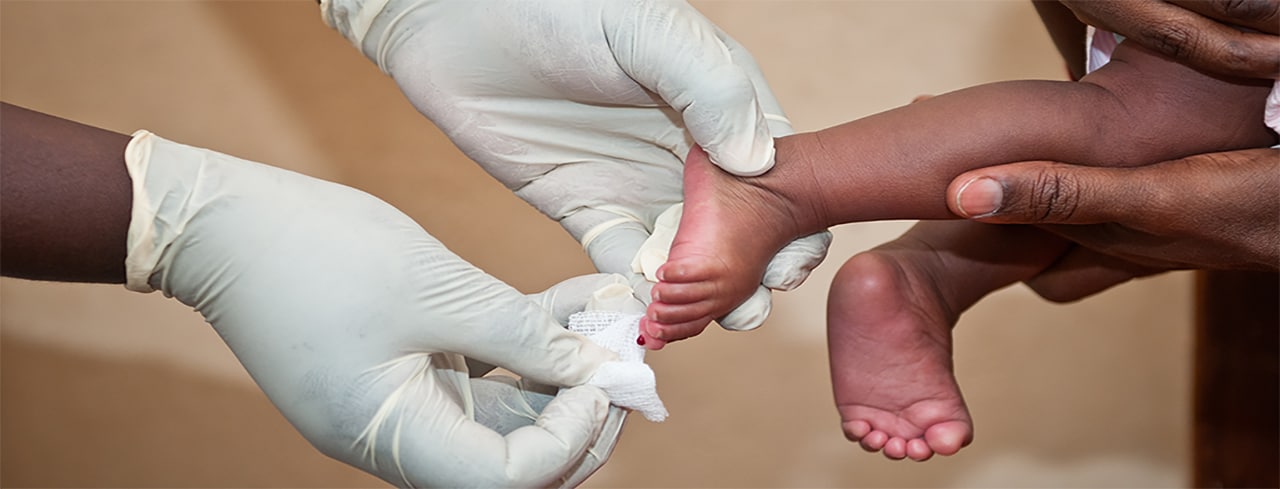
A healthcare worker takes blood from an infant’s foot in Mwanza to test for HIV. Photo by Ariel Glaser/Pediatric AIDS Healthcare Initiative.
HIV is a leading cause of death and a health threat to millions worldwide. As a key implementer of PEPFAR, CDC works with Tanzania to build a sustainable, high-impact national HIV response program to accelerate progress toward the UNAIDS global goals to control the HIV epidemic. CDC adapts and adopts new technology and evidence-based approaches to enhance service delivery, improve patient outcomes, achieve HIV epidemic control, and end TB.
CDC works with the Ministry of Health (MOH) in Tanzania and the MOH on the island of Zanzibar to support:
- HIV testing, prevention, and treatment services
- HIV rapid testing quality assurance
- Early infant HIV diagnosis
- Viral load testing
- Strengthening health information systems
- Using data to inform decision-making
- Health worker training, retention, and participation in outbreak response
CDC supports Tanzania’s lab systems to strengthen laboratory detection capacities for HIV and TB. CDC also supports TB prevention efforts for people living with HIV. This work includes supporting the roll-out of laboratory initiatives for TB diagnostics, points of care, and surveillance for TB drug resistance.

In 2021, nearly 115,000 adults and children initiated antiretroviral therapy (ART) for HIV

In 2021, over 70,000 people with HIV were identified through index testing – the process of offering HIV tests to contacts of people living with HIV

In 2021 over 800,000 adults and children received ART through CDC support

As of 2021, 44 laboratories received international-standards accreditation

With CDC and WHO support, 74 laboratories in Tanzania have enrolled in the Strengthening Laboratory Management Towards Accreditation program since 2008

CDC helped train more than 356 laboratory scientists and technologists in microbiology and quality management systems since 2008
Malaria
Malaria is a leading cause of death and disease in many countries, and young children and pregnant women are most affected. CDC and partners in Tanzania have engaged in malaria projects since the late 1990s. Under the U.S. President’s Malaria Initiative, CDC assigned a resident advisor to malaria-endemic Tanzania to support the implementation of malaria prevention and control activities, including:
- Long-lasting insecticide-treated nets and indoor residual spraying
- Preventing malaria in pregnancy
- Improving diagnostics and case management

Malaria prevalence among children under age 5 decreased from 18% to 7% over 10 years
Project ECHO
CDC launched Project ECHO (Extension for Community Healthcare Outcomes) in Tanzania in 2016. The project uses teleconferencing to facilitate case-based learning and knowledge sharing between participants and subject matter experts. ECHO virtual sessions cover various topics, including HIV and TB clinical care and COVID-19 case management. CDC manages the Project ECHO sites with support from implementing partners.

More than 271 health facilities and eight large hospitals across 31 regions in Tanzania and Zanzibar use Project ECHO teleconferencing for knowledge sharing

In 2022, CDC supported the establishment of a virtual community of practice that supports clinicians and other responders with emergency response to pandemic diseases. This community of practice operates through Project Echo at Muhimbi National Hospital and reaches over 300 sites throughout the country
CDC and Tanzania Speed Up COVID-19 Vaccinations | CDC
CDC Director Visits Health Programs in Tanzania and Uganda | CDC
Paths to Prevention: CDC Shares HPV Vaccination Lessons | CDC
Adolescent Girls in Tanzania Adapt to COVID-19 Restrictions to Continue Work Against HIV/AIDS | CDC
A One CDC Response to COVID-19: Surveillance Support in Tanzania | CDC
CDC Tanzania DREAMS Program Empowers Adolescent Girls l CDC
Strengthening Local Epidemiological Capacity in Tanzania | CDC
Building the Cadre of Disease Detectives in Tanzania l CDC
Tanzania’s Disease Detectives Crack a Complicated Case | CDC
- 16 U.S. Assignees
- 60 Locally Employed
- Population: > 65.5 million (mid-2022)
- Per capita income: $2,920
- Life expectancy: F 68 / M 64 years
- Infant mortality rate: 34/1,000 live births
Sources: Population Reference Bureau 2022, Tanzania
CDC in Tanzania: Program Highlights
Tanzania, including Zanzibar | Travelers’ Health | CDC
Global HIV and TB Tanzania Country Profile
CDC’s Global Malaria Activities – Tanzania | CDC
Publications: Tanzania | Emerging Infectious Diseases journal | CDC
Video: CDC Responds to HIV in Tanzania
Photos: Tanzania | CDCGlobal Flickr


