CDC in the Democratic Republic of the Congo
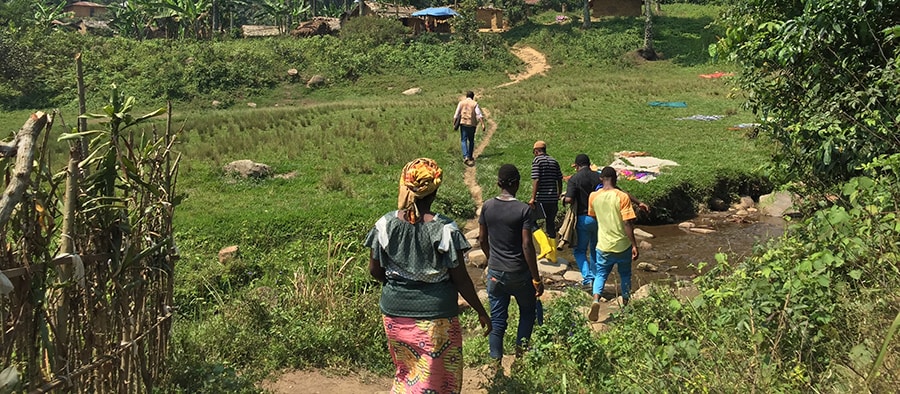
A surveillance team from the Ministry of Health works with local community healthcare workers to list and monitor contacts of people diagnosed with Ebola in Chowe during the 2018-2020 Ebola outbreak in Eastern DRC. Photo by Mary Claire Worrell/CDC
The Centers for Disease Control and Prevention (CDC) began working in the Democratic Republic of the Congo (DRC) in 2002 with an initial focus on health systems strengthening. CDC’s support expanded with the launches of the U.S. President’s Emergency Plan for AIDS Relief (PEPFAR) in 2004 and U.S. President’s Malaria Initiative (PMI) in 2005. Since 2015, CDC works with the Government of DRC through the Global Health Security Agenda (GHSA) to address other infectious diseases and strengthen laboratory systems, preparedness and disease outbreak response, surveillance, and workforce capacity to respond to disease outbreaks.
Download the Democratic Republic of the Congo Fact Sheet [PDF – 1 MB]
Global Health Security
The DRC has a large population, covers a wide geographic area, and shares borders with nine other countries. CDC works with the DRC Ministry of Health (MOH) and other partners to prevent, detect, respond, and control infectious disease outbreaks. Strong rapid response capacity in DRC is critical to addressing public health threats within the country and preventing the spread of disease regionally and globally. CDC supports a working group that provides technical expertise in outbreak preparedness and response. CDC also helped develop standardized training materials for rapid response teams and public health emergency management.

CDC partners with the MOH to implement the National Public Health Institute (NPHI) that was established in April 2022. The NPHI is a hub of expertise and coordinates core public health functions, including preparedness and outbreak response, surveillance, laboratory systems, and workforce development

Five DRC health officials participated in trainings at CDC headquarters to develop a core team of experts who support various emergency management trainings in the DRC

CDC supported emergency management training for more than 80 MOH staff in four provinces. These staff support various outbreak responses, including COVID-19

CDC trained 20 trainers who support Rapid Response Team (RRT) managers and team members

CDC helped develop standard operating procedures for the National Public Health Emergency Operations Center (PHEOC) and RRTs

In November 2021, CDC supported a high-level visit to Cameroon by a DRC MOH delegation to discuss implementation of national PHEOCs
Field Epidemiology Training Program (FETP)
Through FETP, CDC strengthens the DRC’s workforce capacity to investigate and respond to disease outbreaks before they become epidemics. Participants strengthen their skills in data collection and translation of data into evidence-based action. FETP graduates primarily include national and district public health staff whose expertise have been critical to DRC’s Ebola and COVID-19 responses.

Since 2015, more than 430 trainees graduated from DRC’s FETP. 118 trainees graduated from FETP-Advanced and 321 from FETP-Frontline

CDC helped launch FETP-Intermediate, which focuses on training mid-level public health officials

Since the first FETP cohort graduated in 2015, graduates have supported Ebola outbreak responses in 2014, 2017, 2018, 2021, and 2022
COVID-19
The first case of COVID-19 in the DRC was confirmed on March 10, 2020. The Kinshasa province accounts for the majority of cases but all 26 provinces in the country have reported cases. Since the pandemic was declared, CDC has supported the DRC with disease surveillance and data management, laboratory systems, and vaccination. CDC’s community-based surveillance support was critical to the country’s COVID-19 response. FETP graduates are also crucial to the country’s COVID-19 response as they lead risk assessments, case investigations, contact tracing, and risk communication in Haut Katanga, Kinshasa, and North Kivu.
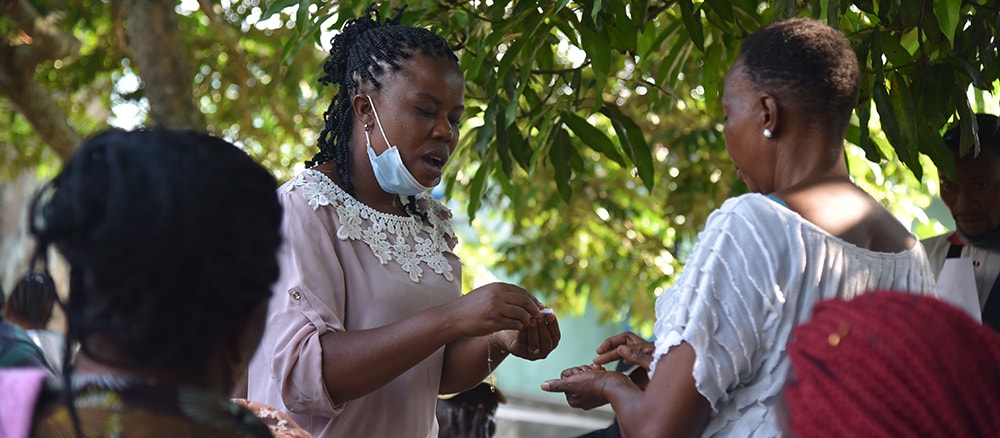
During the COVID-19 pandemic response, a community animator facilitates a village-level assembly in Mont Ngafula Health Zone and counts votes during the Community Animation Cell election in 2022. Photo by Eric Ahassa/Bizzell

To support COVID-19 service delivery and response, CDC helped develop guidelines for care and treatment, laboratory testing, and infection prevention and control (IPC)

With CDC support, 30 epidemiologists deployed across the DRC to respond to COVID-19 in 2021. Seventeen epidemiologists deployed in 2022

CDC experts engaged in technical collaboration with partners to implement COVID-19 vaccination and mass communication campaigns in two provinces

CDC supported four Intra-Action Reviews (IARs) in four provinces to assess vaccination activities and recommend strategies to increase COVID-19 vaccine uptake in the DRC

CDC provided COVID-19 equipment and reagents to 16 laboratories in six provinces. CDC also supported the external quality assurance (EQA) program to monitor testing quality, and provided personal protective equipment (PPE), job aids, standard operating procedures (SOPs), and equipment maintenance

CDC provided COVID-19 equipment and reagents to 16 laboratories in six provinces. CDC also supported the external quality assurance (EQA) program to monitor testing quality, and provided personal protective equipment (PPE), job aids, standard operating procedures (SOPs), and equipment maintenance

CDC supports the Laboratory Information System (LIS) for COVID-19 testing data management and provided materials for sample collection and storage

CDC and the MOH expanded regional laboratory capacities to provide rapid diagnostic and conventional testing for COVID-19 and other emerging infectious diseases in Equateur and Haute Katanga
HIV and Tuberculosis (TB)
HIV is a leading cause of death and a health threat to millions worldwide. As a key implementer of PEPFAR, CDC partners with the DRC government to continue strengthening health systems and provide patient-centered, integrated HIV and TB services. CDC works with the MOH to sustain epidemic control by providing services in Kinshasa and Haut-Katanga, including:
- Scale-up of HIV prevention and treatment programs through case-finding, treatment initiation and continued treatment for people with HIV, elimination of mother-to-child transmission, increased viral load coverage, and increased access and uptake of pre-exposure prophylaxis (PrEP)
- Integration of HIV and TB care and treatment programs
- Strengthening of disease surveillance, health information systems, laboratory capacity, and health workforce development

Participants of a "Training of Trainers" session discuss recency testing for HIV surveillance in November 2021. Recency testing is critical to informing public health responses that are tailored to the geographies and subpopulations with increasing HIV cases. Photo by Yves Banze/ICAP DRC

CDC and implementing partners provided HIV testing to more than 480,000 clients

CDC and partners provided antiretroviral treatment (ART) to more than 100,000 people with HIV

CDC helped provide ART to more than 1,500 pregnant women living with HIV to prevent mother-to-child transmission

More than 90% of people receiving ART also completed preventative TB treatment
CDC and partners provided waste management guidance to more than 500 facilities

CDC supported EQA for TB proficiency panels in fourteen laboratories

CDC worked with partners to provide services to more than 29,500 orphans, children, and caregivers who are impacted by or at higher risk of HIV

CDC strengthened HIV surveillance in three provinces (Kinshasa, Haut Katanga & Lualaba) by establishing recency testing capacity
Laboratory Capacity Building
CDC helps strengthen laboratory functions, such as diagnostics, network optimization, and quality management systems. CDC helps enhance laboratory infrastructure to meet the increasing need for early diagnosis of HIV in infants, viral load testing, TB, and emerging infectious diseases. CDC also helped develop the national laboratory strategic plan that guides laboratory systems strengthening in the DRC. In Lubumbashi, CDC donated a high-temperature incinerator to the provincial public health laboratory to enhance waste management. CDC also assessed a sample system to optimize the diagnostic network in Lubumbashi. During the COVID-19 pandemic, CDC donated equipment and safety materials to laboratories to promote safe sample processing.
CDC established a laboratory accreditation program for 16 laboratories in partnership with Global Health System Solutions (GHSS) and MOH

CDC supported the installation of a laboratory information system in 10 laboratories to streamline laboratory processes
CDC supported EQA for 7 laboratories that perform viral load testing and early infant diagnosis of HIV. CDC also supported EQA for TB testing in 14 laboratories and COVID-19 testing in 13 laboratories

CDC supported training for 14 laboratory staff at the national laboratory in Kinshasa to use molecular diagnosis for bacterial meningitis. CDC’s support increases the country’s local capacity to detect cases instead of sending samples to other countries for testing

CDC sent three biosafety cabinets to three public health laboratories in Kinshasa to enhance working conditions according to biosafety standards
CDC launched a Continuous Quality Improvement (CQI) for HIV rapid testing (RT-CQI) and supports more than 1,900 HIV testing sites
As part of the HIV rapid test CQI, 23 quality mentors (or auditors) were trained to facilitate program implementation
Ebola
As of July 2022, the DRC has experienced 14 Ebola outbreaks since the first case was reported in 1976. In the last four years, six outbreaks occurred in two provinces (North Kivu and Equateur). On August 1, 2018, the DRC MOH reported an outbreak of Ebola virus disease (EVD) in the North Kivu province that was the second largest Ebola outbreak after the 2014-2016 West Africa Ebola outbreak. CDC supported the MOH’s outbreak responses through disease surveillance, laboratory support, border health, data management, IPC, vaccination, risk communication, and community engagement.

For each of the last five Ebola outbreaks, CDC supported laboratory testing and deployment of epidemiologists to investigate alerts, find active cases, and trace contacts

CDC upgraded the EVD data system to collect data on Ebola vaccines and therapeutics
Since the 11th Ebola outbreak in 2020, CDC supported the Ingende health zone to establish the laboratory diagnostic capacity to test samples from Ingende and neighboring health zones
Since the 13th outbreak in 2021, CDC helped deploy a mobile sequencing laboratory to perform real-time data that link cases and orient response activities
Since 2019, CDC has supported implementation of the Ebola survivor program in DRC, which provides follow-up services to more than 1,000 Ebola survivors in the North Kivu and Equateur provinces

In collaboration with partners, CDC led the development of the IPC Score Card during the 10th outbreak in 2018-2020. These cards are used to assess IPC capacities in various health centers, which informs the level and type of support CDC and partners provide

CDC supported validation of the Orasure Ebola rapid diagnostic test (RDT) during the 10th Ebola outbreak in 2018-2020. These RDTs are used for postmortem surveillance of Ebola in the bodies of patients who die from the disease
Meningitis
The northern part of the DRC forms the southern border of the meningitis belt. In 2021, the DRC MOH reported an outbreak of bacterial meningitis in the Banalia health zone, Tshopo province. The first suspected cases were reported in June 2021 and the outbreak was confirmed in September 2021. At the end of the outbreak, the country reported more than 2,660 suspected cases, 40 confirmed cases, and 200 deaths. CDC partnered with the World Health Organization (WHO) to train MOH staff and establish the latest testing technology for bacterial meningitis to increase in-country laboratory diagnostic capacity. CDC is supporting decentralization of meningitis bacterial testing in the Tshopo provincial laboratory.
To strengthen laboratory capacity to efficiently diagnose bacterial meningitis, CDC provided a PCR machine and trained 14 MOH staff. The national laboratory now tests samples from across the country

CDC and WHO’s capacity-strengthening efforts shortened the turnaround time of laboratory-confirmed diagnosis of meningitis from two months to one week
Typhoid Fever
CDC supports the DRC MOH’s responses to recurrent typhoid fever outbreaks. In 2021, the DRC national laboratory (INRB) confirmed two distinct salmonella outbreaks in the Popokabaka and Mushie health zones. In 2022, the Popokabaka health zone experienced an increase in the number of suspected typhoid fever cases and intestinal holes that required surgery. CDC supported MOH staff to conduct an outbreak investigation and pilot new rapid diagnostic tests. CDC also works with national authorities and other partners to support water, sanitation and hygiene (WASH) activities to permanently establish a safe water supply in the Popokabaka health zone.

CDC supported ten national and provincial MOH epidemiologists and laboratory experts to investigate and confirm a new typhoid fever outbreak in the Popokabaka health zone in 2022
While investigating the 2022 typhoid fever outbreak, the MOH team also engaged with the local population to raise awareness of effective hygiene practices
Malaria
Malaria, a disease transmitted by mosquitoes, is a leading cause of preventable illness and deaths around the world. The DRC accounts for 11% of global malaria deaths, with 60% of all hospital visits in the country attributed to malaria. Through PMI, CDC supports implementation and scale-up of malaria prevention and control activities and research in DRC. CDC-supported activities include:
- Monitoring mosquito behavior and resistance to insecticides
- Providing long-lasting insecticide-treated bed nets (LLINs)
- Preventing malaria during pregnancy
- Enhancing diagnostics, case management, surveillance, and monitoring and evaluation of malaria-related activities
- Researching social and behavioral changes that impacting malaria prevention and case management.

CDC helped train more than 3,800 healthcare providers in malaria diagnosis and treatment between 2020 and 2021

Since 2017, CDC has helped purchase and distribute more than 16 million LLINs in DRC

CDC has supported enhanced malaria treatment at more than 2,600 community healthcare sites since 2017
Over the past five years, CDC helped provide more than 40 million doses of artemisinin-combination therapy (ACT) and more than 38 million rapid diagnostic tests

CDC supports the National Malaria Control Program (NMCP) to develop and update monitoring and evaluation plans for malaria

Since 2011, the proportion of children under the age of five who sleep under a net increased from 5% to 51%
In 2021, CDC and the NMCP updated the national treatment guidelines to include use of injectable artesunate for treatment of severe malaria cases
Monkeypox
Monkeypox is a disease that causes symptoms similar to smallpox. However, monkeypox is associated with milder symptoms than smallpox and is rarely fatal. Historically, monkeypox is endemic to West and Central Africa, with the majority of annual cases reported in the Congo Basin. CDC has supported laboratory-based monkeypox surveillance in DRC’s Tshuapa province since 2010. This robust surveillance system is a platform for clinical research and enhanced understanding of monkeypox transmission.

Since 2010, CDC has supported molecular diagnosis of monkeypox at the national laboratory

In 2017, CDC partnered with the MOH and Kinshasa School of Public Health (KSPH) to conduct a clinical trial to examine the effectiveness and safety of a monkeypox vaccine

CDC continues to partner with KSPH to research human behavior related to wild animals in DRC’s Tshuapa province. CDC also supports research to understand monkeypox transmission
Influenza
With financial and technical support from CDC, the DRC began influenza surveillance in 2006. Currently, there are four sentinel sites conducting influenza surveillance in Kinshasa, DRC’s capital. Influenza surveillance is focused among outpatients with influenza-like illness and inpatients with severe acute respiratory illness. These surveillance activities served as the backbone for conducting COVID-19 surveillance in DRC.

In 2006, CDC partnered with DRC to begin sentinel surveillance for influenza and increase the National Influenza Reference Laboratory’s capacity to receive and process influenza specimens
CDC works with the MOH to enhance diagnostic capacity for seasonal and pandemic influenza viruses and increase local capabilities to rapidly detect and respond to viruses with pandemic potential

With CDC support, the MOH participates in the WHO Global Influenza Surveillance Network and contributes virus strains to the WHO Collaborating Center to inform annual seasonal vaccine development
Ebola outbreak in the Democratic Republic of the Congo declared over | CDC
Photos from the Field: The Ebola Response in the Democratic Republic of the Congo | CDC
Ebola Outbreak Becomes a “class” Act for EIS Officers | CDC
Getting Creative in Goma | CDC
Fighting Ebola: Every day is a Monday | CDC
Laying Down A Foundation for Preparedness | CDC
- 12 U.S. Assignees
- 32 Locally Employed
- Population: >92.3 million
- Per capita income: $580
- Life expectancy: F 63 / M 59 years
- Infant mortality rate: 64/1,000 live births
Sources: World Bank 2021, Democratic Republic of the Congo
- Malaria
- Tuberculosis
- Lower respiratory infections
- Neonatal disorders
- Diarrheal diseases
- Stroke
- Ischemic heart disease
- Road injuries
- Hypertensive heart disease
- Cirrhosis and other chronic liver diseases
Source: GBD Compare 2019, Democratic Republic of the Congo
Global HIV and TB | Democratic Republic of the Congo Country Profile | CDC
Democratic Republic of the Congo | Travelers’ Health | CDC
Photos: DRC | CDC Global Flickr
Publications:
-
- DRC Articles All Issues | Emerging Infectious Diseases journal | CDC
- Ebola Virus Disease Outbreak in DRC, August 2018–November 2019 | MMWR
- Population Movement Patterns Among the Democratic Republic of the Congo, Rwanda, and Uganda During an Outbreak of Ebola Virus Disease: Results from Community Engagement in Two Districts | MMWR


