Skip Navigation Links
Centers for Disease Control and Prevention
 CDC Home Search Health Topics A-Z

National Center for Chronic Disease Prevention and Health Promotion

Healthy Youth


Health Topics
Asthma

ON THIS PAGE
Data & Statistics
Science-based Strategies
National, State, and Local Programs
References
SEE ALSO
Asthma Publications
Asthma Links
Asthma resources in PDF format [pdf 750K]

Wildfires & Asthma
Wildfires & Air Quality

Managing Asthma in Schools
Managing Asthma in Schools: What Have We Learned?


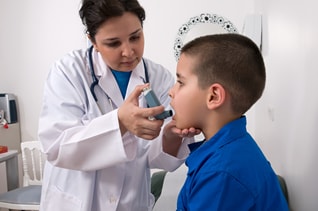
Asthma is a leading chronic illness among children and youth in the United States. In 2004, 5.1 million school-aged children and youth were reported to currently have asthma and 3.2 million had an asthma episode or attack within the previous year.1 On average, in a classroom of 30 children, about 3 are likely to have asthma.

In addition:

  • Asthma is one of the leading causes of school absenteeism. In 2003, an estimated 12.8 million school days were missed due to asthma among the more than 4 million children who reported at least one asthma attack in the preceding year.2
     
  • Low-income populations, minorities, and children living in inner cities experience more emergency department visits, hospitalizations, and deaths due to asthma than the general population.3
     
  • Estimates from 2004-2005 indicate that Non-Hispanic Black and Puerto Rican children had higher prevalence rates compared to non-Hispanic White children.2
    • Non-Hispanic Black – 12.7%
    • Non-Hispanic White – 8.0%
    • Puerto Rican – 19.2%
  • The estimated cost of treating asthma in those under 18 is $3.2 billion per year.4
     
  • Asthma is the third-ranking cause of hospitalization among children under 15.5
     
  • Asthma attacks, also referred to as episodes, can be caused by tobacco smoke, dust mites, furred and feathered animals, certain molds, chemicals, and strong odors in the school environment.
     
  • Asthma can be controlled with proper diagnosis, appropriate asthma care, and management activities.

checkmark

How CDC's Division of Adolescent and School Health is Addressing Asthma [pdf 2.1MB]

checkmarkAsthma At-A-Glance [pdf 263KB]


Data & Statistics

School Health Policies and Programs Study
SHPPS is a national survey periodically conducted to assess school health policies and programs at the state, district, school, and classroom levels, including those related to asthma.

School Health Profiles
Profiles assists states, territories, and local education and health agencies in monitoring and assessing characteristics of, and trends in, health education and health policies among secondary schools, including policies related to asthma management. See School Health Profiles.

Percentage of Secondary Schools that Implemented
School-based Asthma Management Activities
6
United States, 2002

Activity

Range
%
Median
%
Assured immediate access to medications 66.6% to 100.0% 91.8%
Had a full-time registered nurse 1.4% to 98.0% 41.2%
Obtained and used an asthma action plan for all students with asthma 26.8% to 79.7% 56.4%
Taught asthma awareness to all students in at least one grade 13.5% to 47.6% 24.8%
Educated school staff about asthma 25.0% to 67.4% 51.9%

Youth Risk Behavior Surveillance System
The YRBSS monitors behaviors that contribute markedly to the leading causes of death, disability, and social problems among youth and adults in the United States. This biennial national, state, and school-based survey includes questions to measure lifetime asthma, current asthma, and asthma episodes and attacks.

National Health Interview Survey
This survey, conducted annually by interviewers of the U. S. Census Bureau for the CDC’s National Center for Health Statistics, collects data for all family members during face-to-face interviews. Additional information about children is collected for one randomly selected child per family in face-to-face interviews with an adult proxy respondent familiar with the child’s health, including asthma related issues.

Science-based Strategies

Asthma Strategies

Strategies for Addressing Asthma Within a Coordinated School Health Program offers concrete suggestions for schools working to improve the health and school attendance of students with asthma. The six strategies identified by the CDC can be effective whether your program is for the entire school district or just one school.

Resources for Addressing Asthma in Schools [pdf 742K] provides a list of CDC and other federal and nonfederal publications and website links for addressing asthma in schools. This list provides valuable resources, but it is not intended to be exhaustive.

Managing Asthma in Schools- What Have We Learned? This special issue of the American School Health Association’s Journal of School Health features more than 25 research articles, brief reports, and case studies that cover a range of activities, such as asthma education programs for students and staff members, asthma-related health services, and policy changes. It also includes a list of resources for school-based asthma programs.

See School Health Guidelines: Tobacco Use for strategies most likely to be effective in preventing tobacco use and addiction among young people. Tobacco smoke can trigger asthma episodes.

New!The School Health Index, which now includes a section on asthma, can help schools implement school health guidelines and strategies. This self-assessment and planning tool enables schools to identify the strengths and weaknesses of health promotion policies and programs and assists schools in developing an action plan for improving the school environment.

Potentially Effective Interventions for Asthma Control provides information on methodology for identification of the interventions, results, lessons learned, information on the interventions themselves, a bibliography of reviewed literature, and case studies of several interventions. It includes interventions targeting children and schools.

Managing Asthma: A Guide for Schools is intended to assist schools that are planning or maintaining an asthma management program. This guide provides follow-up steps for schools that currently identify students with asthma through health forms or emergency cards or plan to do so. It is designed to offer practical information to school staff members of every position.

National, State, and Local Programs

CDC's Division of Adolescent and School Health (DASH) supports the development and implementation of effective health promotion policies and programs that address priority health topics among youth. See DASH-funded state, territorial, and local agencies and tribal governments and national nongovernmental organizations.

CDC’s National Asthma Control Program, funded through the National Center for Environmental Health, supports the goals and objectives of Healthy People 2010 for asthma: to reduce the number of deaths, hospitalizations, emergency department visits, school or work days missed, and limitations on activity due to asthma. Federally funded state asthma control programs and CDC are conducting asthma tracking, intervention, partnership, and public health research activities.

Steps to a HealthierUS is an initiative from the U.S. Department of Health and Human Services (HHS) that advances the goal of helping Americans live longer, better, and healthier lives. The Steps Cooperative Agreement Program funds 40 communities nationwide to implement school and other community-based programs that address obesity, diabetes, and asthma, as well as their related risk behaviors: physical inactivity, poor nutrition, and tobacco use.

References

  1. American Lung Association, Epidemiology and Statistics Unit, Research and Program Services. Trends in Asthma Morbidity and Mortality* [pdf 225K], July 2006.
     
  2. Akinbami LJ. The State of Childhood Asthma [pdf 365K], United States, 1980-2005. Advance Data from Vital and Health Statistics: no 381, Revised December 29, 2006. Hyattsville, MD: National Center for Health Statistics, 2006.
     
  3. Lieu TA, Lozano P, Finkelstein JA, Chi FW, Jensvold NG, Capra AM. Racial/Ethnic Variation in Asthma Status and Management Practices Among Children in Managed Medicaid. Pediatrics 2002; 109:857–865.
     
  4. Weiss KB, Sullivan SD, Lytle CS. Trends in the Cost of Illness for Asthma in the United States, 1985-1994. Journal of Allergy Clinical Immunology 2000;106:493-499.
     
  5. Popovic JC. 1999 National Hospital Discharge Survey: Annual Summary with Detailed Diagnosis and Procedure Data. National Center for Health Statistics. Vital Health Statistics 2001;13(151):21, Table 10.
     
  6. Whalen LG, Grunbaum JA, Kann L, Hawking J. McManus T, Davis KS. School Heath Profiles: Surveillance for Characteristics of Health Programs Among Secondary Schools (Profiles 2002). Atlanta, GA: Centers for Disease Control and Prevention, 2004.

Back to Top

Links to non-Federal organizations are provided solely as a service to our users. Links do not constitute an endorsement of any organization by CDC or the Federal Government, and none should be inferred. The CDC is not responsible for the content of the individual organization Web pages found at this link.


Documents on this page are available in Portable Document Format (PDF). Learn more about viewing and printing these documents with Acrobat Reader.


Healthy Youth Home | Contact Us

CDC Home | Search | Health Topics A-Z

Policies and Regulations | Disclaimers

Page last reviewed: June 08, 2007
Page last modified: March 5, 2008
Content source: National Center for Chronic Disease Prevention and Health Promotion, Division of Adolescent and School Health

Division of Adolescent and School Health
National Center for Chronic Disease Prevention and Health Promotion
Centers for Disease Control and Prevention
Department of Health and Human Services